
Going through a divorce is challenging enough without the added complexity of dividing a business. If you or your spouse owns a Limited Liability Company (LLC), understanding how it will be handled during divorce proceedings is crucial for protecting your financial future.
This comprehensive guide explains how courts treat LLCs in divorce, from classification and valuation to division options and protective strategies.
Understanding LLCs in Divorce Proceedings
An LLC combines the pass-through taxation benefits of a partnership with the limited liability protection of a corporation. While this structure protects personal assets from business debts during normal operations, divorce proceedings introduce unique considerations.
Why LLCs matter in divorce:
- They often represent substantial financial value
- They may serve as a primary income source
- They involve complex valuation challenges
- Their division affects future earnings and business operations

Is Your LLC Marital or Separate Property?
The first critical step is determining whether your LLC is classified as marital or separate property—a distinction that fundamentally affects how it’s divided.
When an LLC Is Marital Property
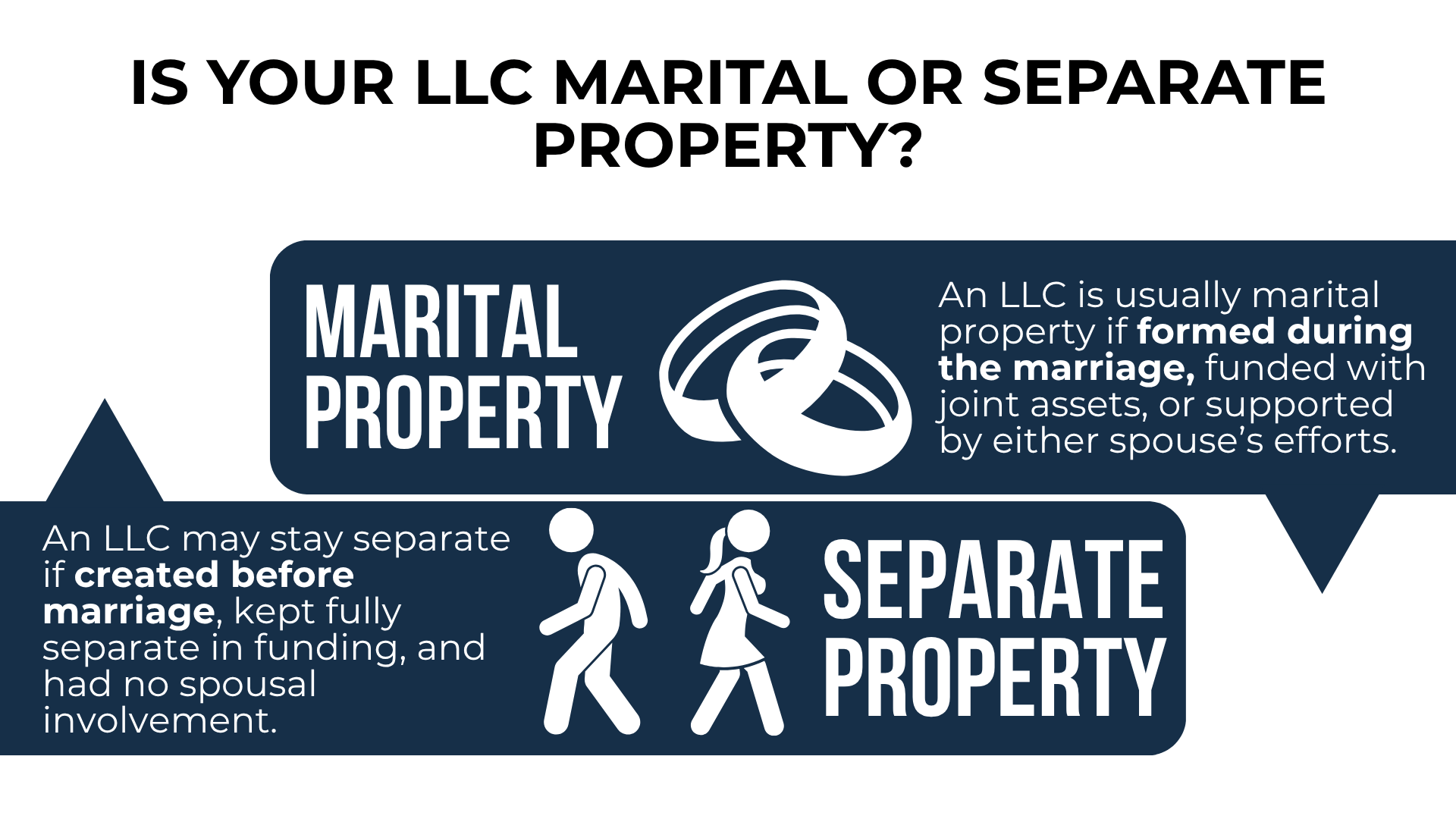
Your LLC is typically considered marital property if:
- Formed during marriage – Even if only one spouse’s name appears on ownership documents
- Funded with marital assets – Joint bank accounts, shared income, or marital savings were used
- Benefited from marital contributions – Either spouse contributed effort, time, or resources to operations
When an LLC Remains Separate Property
An LLC may be classified as separate property when:
- Established before marriage – With clear documentation of pre-marital formation
- No marital funds used – Completely funded and maintained with separate assets
- No spousal involvement – The non-owner spouse had zero participation in operations
Important caveat: Even separate property LLCs may have divisible components. Any appreciation in value during the marriage could be subject to division, especially if marital contributions enhanced that growth.
How Courts Value an LLC in Divorce
Accurate valuation is essential for fair division. Unlike easily appraised assets like real estate, LLCs require professional analysis due to their mix of tangible and intangible components.
Common Valuation Methods
Income Approach
- Analyzes future earning potential through discounted cash flow analysis
- Best suited for LLCs with consistent revenue streams
- Considers projected profits and growth potential
Market Approach
- Compares your LLC to similar recently sold businesses
- Requires available comparable sales data
- Useful when market comparisons exist
Asset-Based Approach
- Calculates net value: assets minus liabilities
- Appropriate for LLCs with significant tangible assets
- May undervalue businesses with strong goodwill or brand value
Why Professional Valuation Matters
Valuation disputes are common in divorce proceedings. Each spouse may have different perspectives on the LLC’s worth and future potential. Hiring forensic accountants or business valuation specialists helps ensure:
- Objective, defensible valuations
- Reduced conflict between parties
- Fair division based on accurate numbers

Options for Dividing an LLC in Divorce
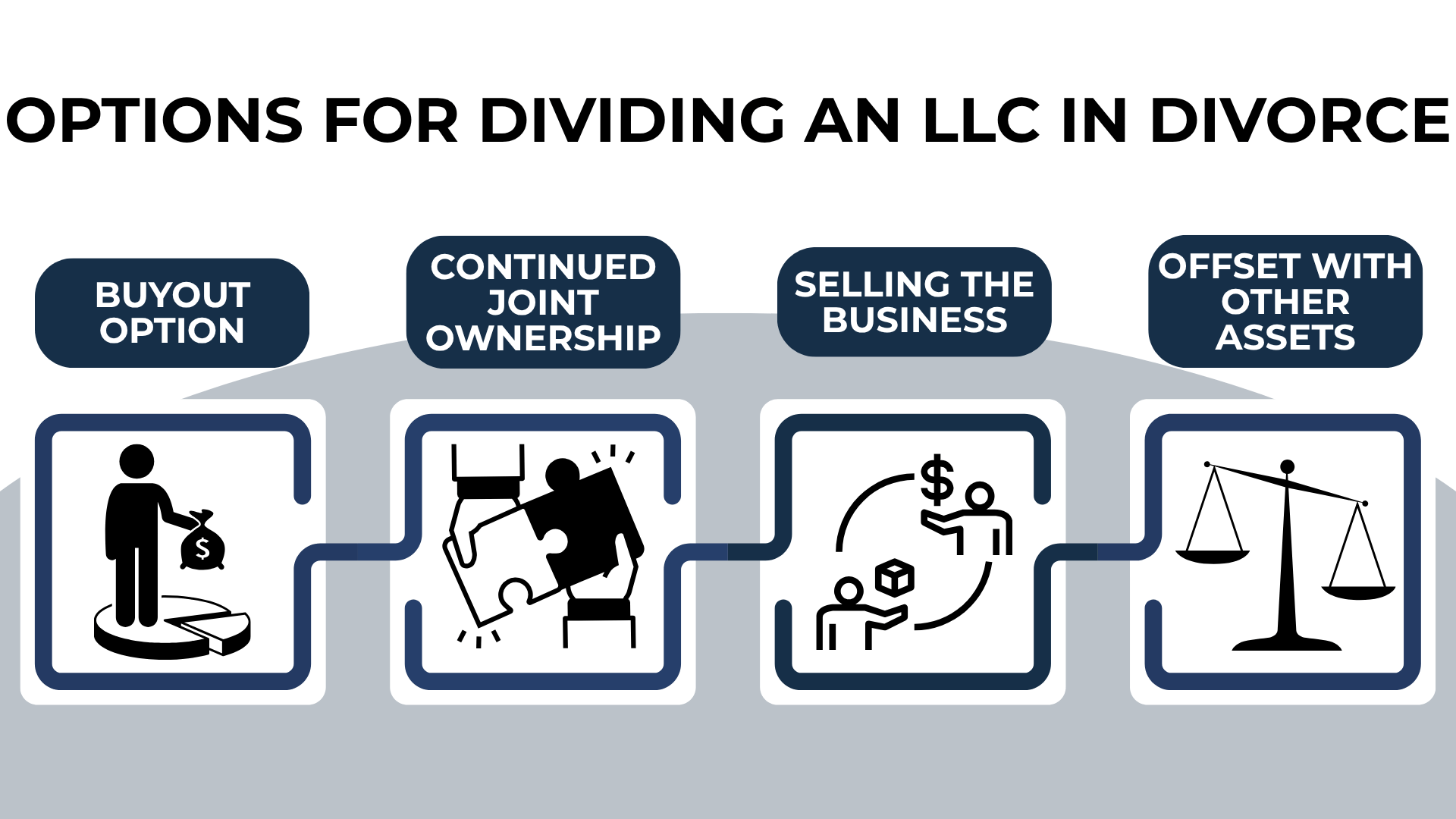
Once valued, several division strategies are available, each with distinct advantages and challenges.
1. Buyout Option
One spouse purchases the other’s interest in the LLC, allowing:
- Full control for the operating spouse
- Clean break for the non-operating spouse
- Continued business operations without disruption
Challenges: May require substantial financing or creative payment arrangements for valuable LLCs.
2. Continued Joint Ownership
Both ex-spouses maintain ownership stakes, which:
- Preserves the business without immediate financial strain
- Maintains income streams for both parties
- Avoids forced sales at unfavorable times
Challenges: Requires ongoing cooperation and can complicate business decisions post-divorce.
3. Selling the Business
The LLC is sold with proceeds divided, providing:
- Clean financial break between spouses
- Immediate liquidity for both parties
- Simplified division without ongoing ties
Challenges: May result in loss of valuable income source and potential tax consequences.
4. Offset with Other Assets
Courts may award the LLC to one spouse while compensating the other with equivalent marital assets, such as:
- The marital home
- Retirement accounts
- Investment portfolios
- Other property of similar value
Protecting Your LLC Through Legal Agreements
Proactive planning can safeguard your LLC from complex division scenarios.
Prenuptial and Postnuptial Agreements
These agreements can:
- Explicitly classify the LLC as separate property
- Define ownership percentages and rights
- Establish buyout procedures if divorce occurs
- Protect business operations from disruption
Operating Agreements
Well-drafted operating agreements include provisions that:
- Require member consent for ownership transfers
- Prevent automatic membership for ex-spouses
- Establish valuation methods in advance
- Protect other members’ interests

State Laws and Your LLC
Division approaches vary significantly based on your state’s property laws.
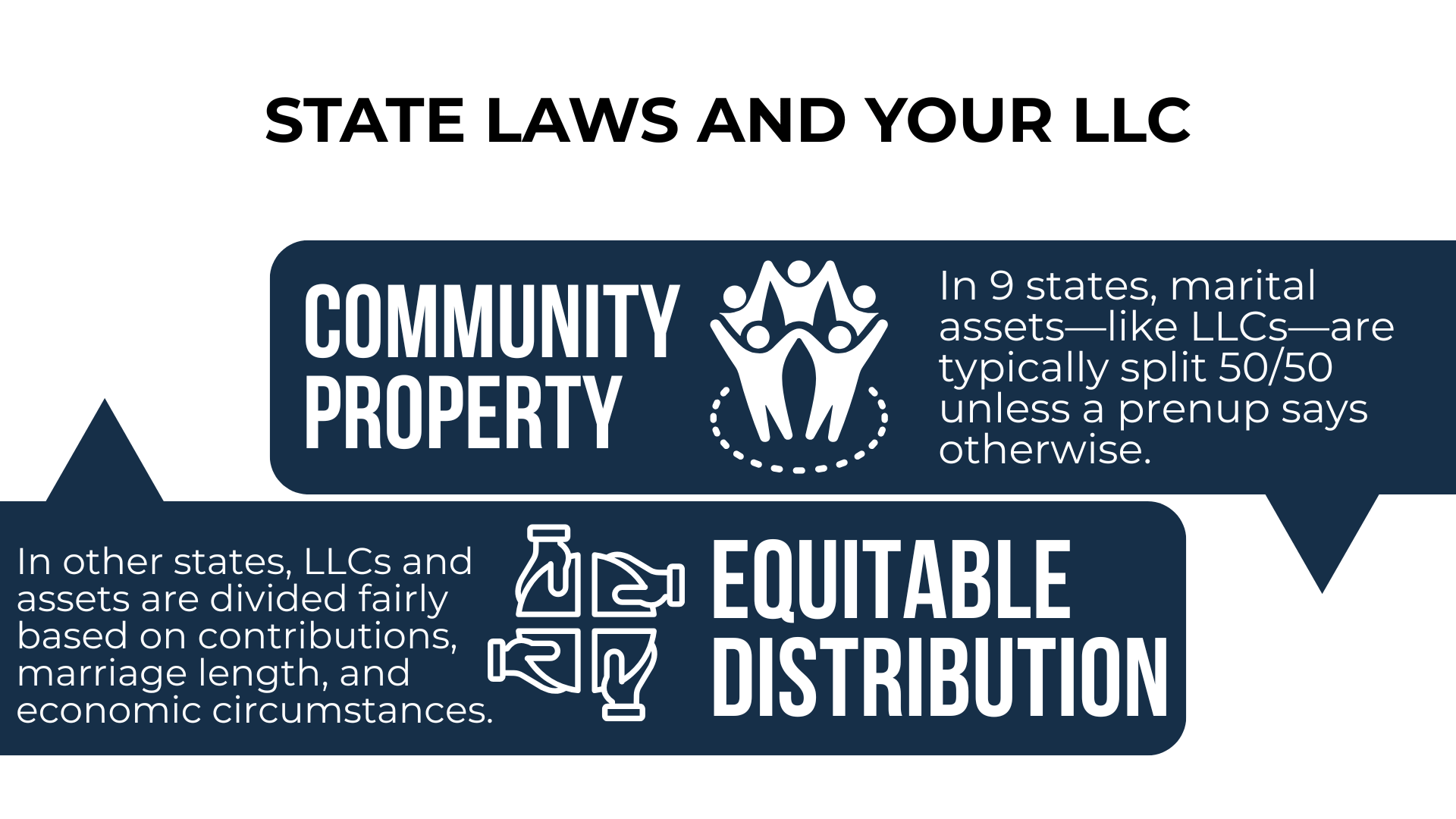
Community Property States
Nine states follow community property rules: Arizona, California, Idaho, Louisiana, Nevada, New Mexico, Texas, Washington, and Wisconsin.
In these states:
- Marital assets typically split 50/50
- LLCs formed during marriage are generally divided equally
- Prenuptial agreements can override default rules
Equitable Distribution States
All other states use equitable distribution, considering factors like:
- Each spouse’s financial contributions
- Length of the marriage
- Future earning capacity
- Non-financial contributions to the marriage
- Each party’s economic circumstances
This approach may result in unequal but fair division based on specific circumstances.
Practical Considerations and Tax Implications
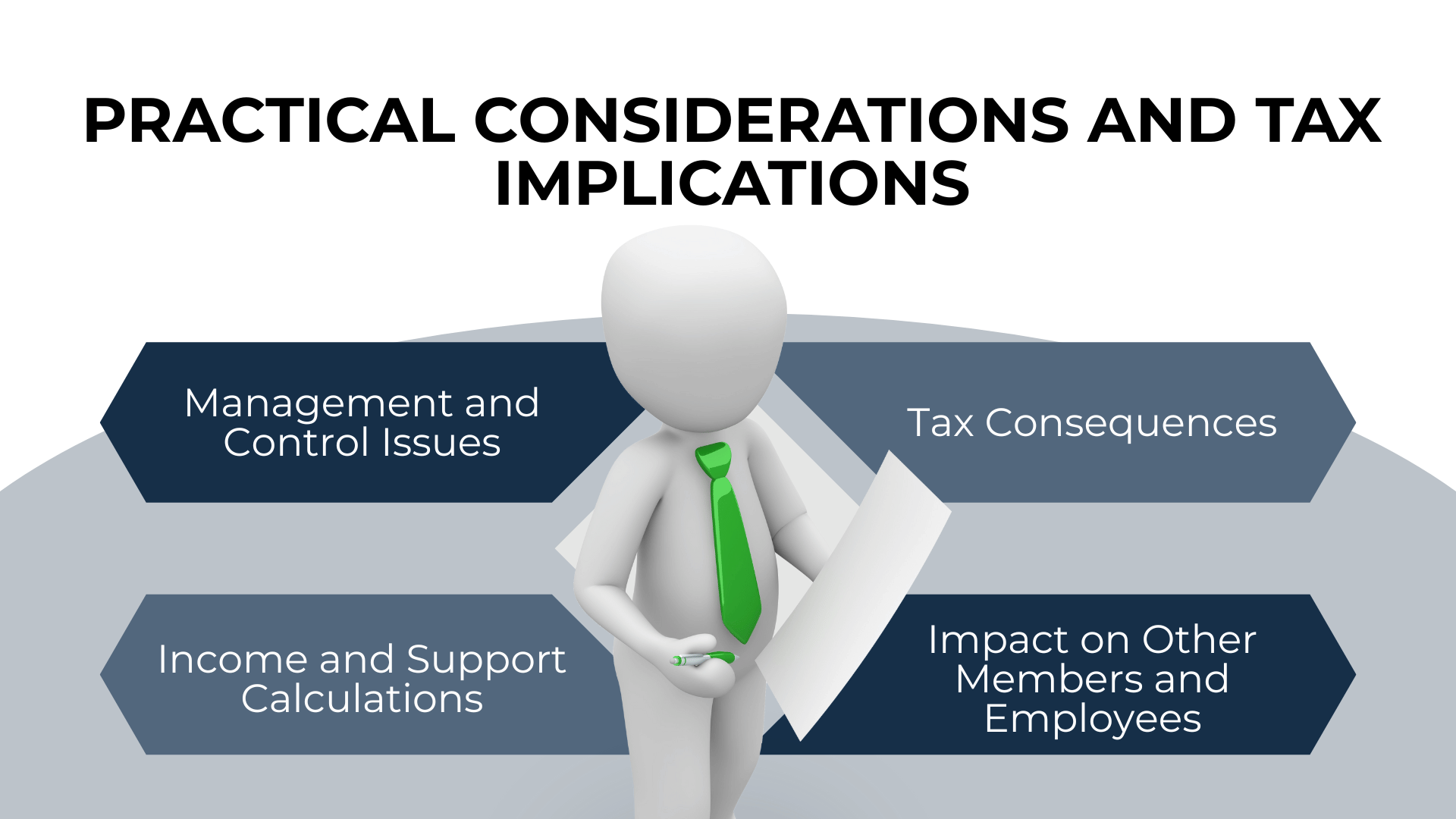
Dividing an LLC involves several practical challenges beyond simple asset division.
Management and Control Issues
- Decision-making authority becomes complex with joint ownership
- Operating agreements can limit non-involved spouse’s control
- Daily operations may suffer without clear leadership structure
Income and Support Calculations
- LLC income affects alimony and child support obligations
- Divided ownership reduces available income for support payments
- Courts consider total earning capacity when setting support amounts
Tax Consequences
As pass-through entities, LLC divisions trigger various tax considerations:
- Capital gains taxes may apply if the LLC is sold
- Changed tax reporting requirements with split ownership
- Different tax brackets for each owner post-division
Impact on Other Members and Employees
Multi-member LLCs face additional complexities:
- Existing buy-sell agreements may govern ownership changes
- Other members may have consent rights regarding new owners
- Employee relationships and morale considerations
When to Seek Professional Help
Given the complexity of LLC division, professional guidance is essential. Consider consulting:
Divorce Attorneys
- Navigate legal requirements in your state
- Draft protective agreements
- Advocate for your interests in negotiations
- Ensure proper documentation of divisions
Financial Advisors
- Assess tax implications of different division strategies
- Plan for post-divorce financial stability
- Evaluate long-term impacts of division options
- Structure buyout arrangements
Business Valuation Experts
- Provide objective, defensible valuations
- Testify in court if needed
- Reduce valuation disputes
- Ensure fair market value determinations

Frequently Asked Questions
Is an LLC always considered marital property?
No, it depends on when it was formed and whether marital funds were used. An LLC formed before marriage with no marital contributions may be separate property, though appreciation during marriage could be divisible.
Can an LLC be divided equally?
In community property states, marital property is typically split 50/50. In equitable distribution states, division is based on fairness, not necessarily equality.
What if I want to keep the LLC?
You may need to buy out your spouse’s share, which could require financing or trading other marital assets. Negotiating a settlement where your spouse receives equivalent assets (e.g., the marital home) is another option.
How does divorce affect my LLC if I’m the only owner?
Even if you are the sole owner, an LLC formed during marriage or using marital funds may be considered marital property and subject to division.
Can I protect my LLC from being divided in divorce?
Yes, through prenuptial or postnuptial agreements and a well-drafted operating agreement. Keeping business and personal finances separate also helps establish the LLC as separate property.

Key Takeaways
Understanding how an LLC is treated in divorce helps you prepare for negotiations and protect your interests:
- Classification matters – Whether your LLC is marital or separate property determines division requirements
- Professional valuation is crucial – Complex assets require expert analysis for fair division
- Multiple division options exist – Choose strategies that balance financial needs with practical considerations
- Protective agreements help – Prenuptial, postnuptial, and operating agreements can safeguard your business
- State laws vary significantly – Understand whether you’re in a community property or equitable distribution state
- Consider all implications – Management, tax, income, and operational factors all affect the best division approach
Navigating LLC division during divorce requires careful planning, professional guidance, and strategic thinking. By understanding these key concepts and working with qualified professionals, you can protect both your business interests and your financial future during this challenging transition.