When planning your estate, understanding how wills and trusts work together is crucial for protecting your assets and ensuring your wishes are carried out. One of the most common questions in estate planning is: does a will override a trust?
The short answer is no—a will generally cannot override a trust. Once assets are transferred into a trust, they become legally owned by the trust itself, not your personal estate, making them exempt from your will’s instructions.
Understanding the Key Difference: Wills vs. Trusts
What Is a Will?
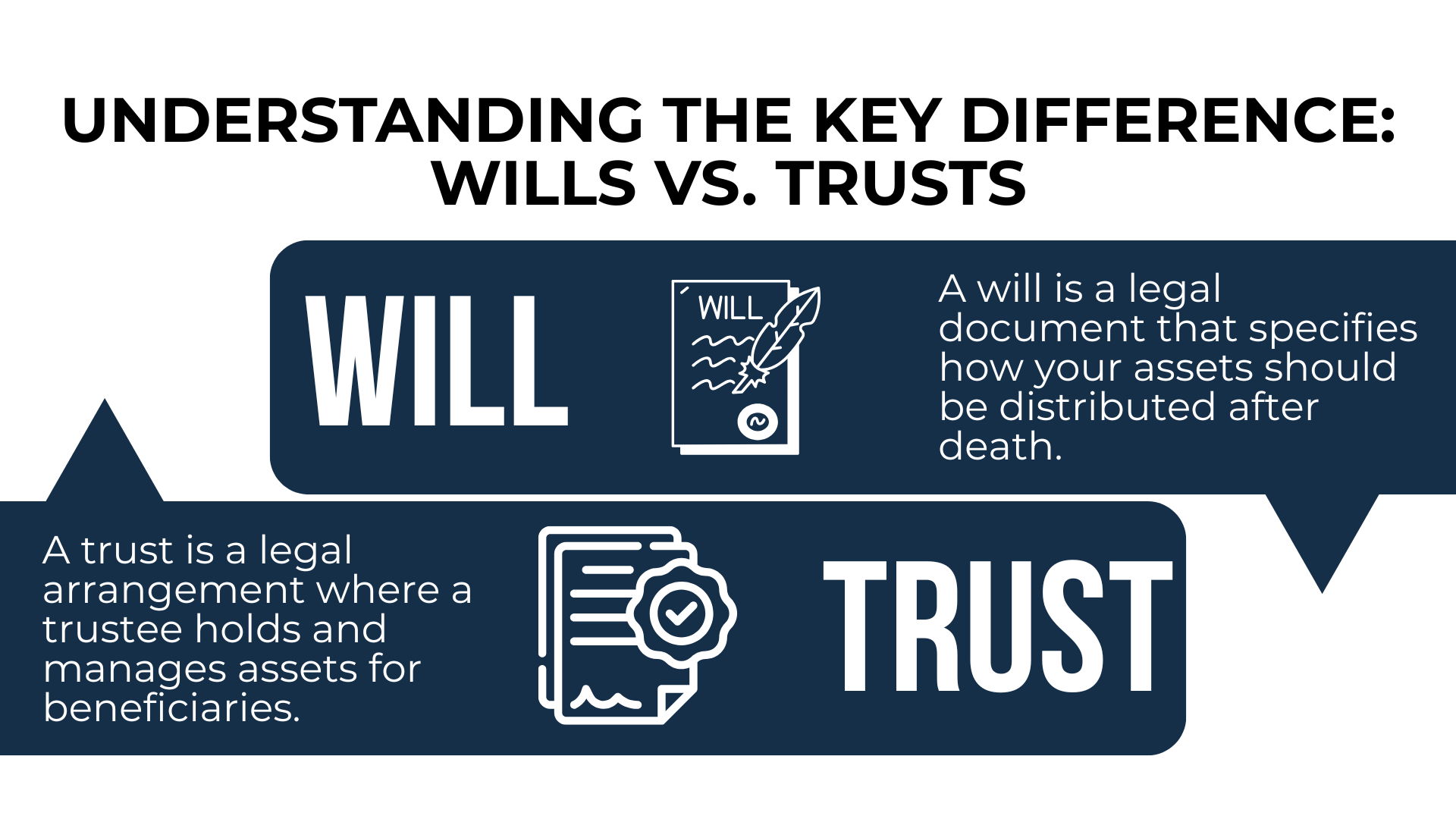
A will is a legal document that specifies how your assets—including real estate, bank accounts, and personal belongings—should be distributed after death. Key features include:
- Names an executor to carry out your wishes
- Can designate guardians for minor children
- Must go through probate (a court-supervised process)
- Becomes public record during probate
- Can be time-consuming and costly depending on estate complexity
What Is a Trust?
A trust is a legal arrangement where a trustee holds and manages assets for beneficiaries. Trusts offer several advantages:
- Revocable trusts: Changeable during your lifetime, often used to manage assets and avoid probate
- Irrevocable trusts: Generally unchangeable once established, offering creditor protection and tax advantages
- Operate during your lifetime and after death
- Provide privacy (not public records)
- Bypass probate for faster asset distribution
Why a Will Cannot Override a Trust
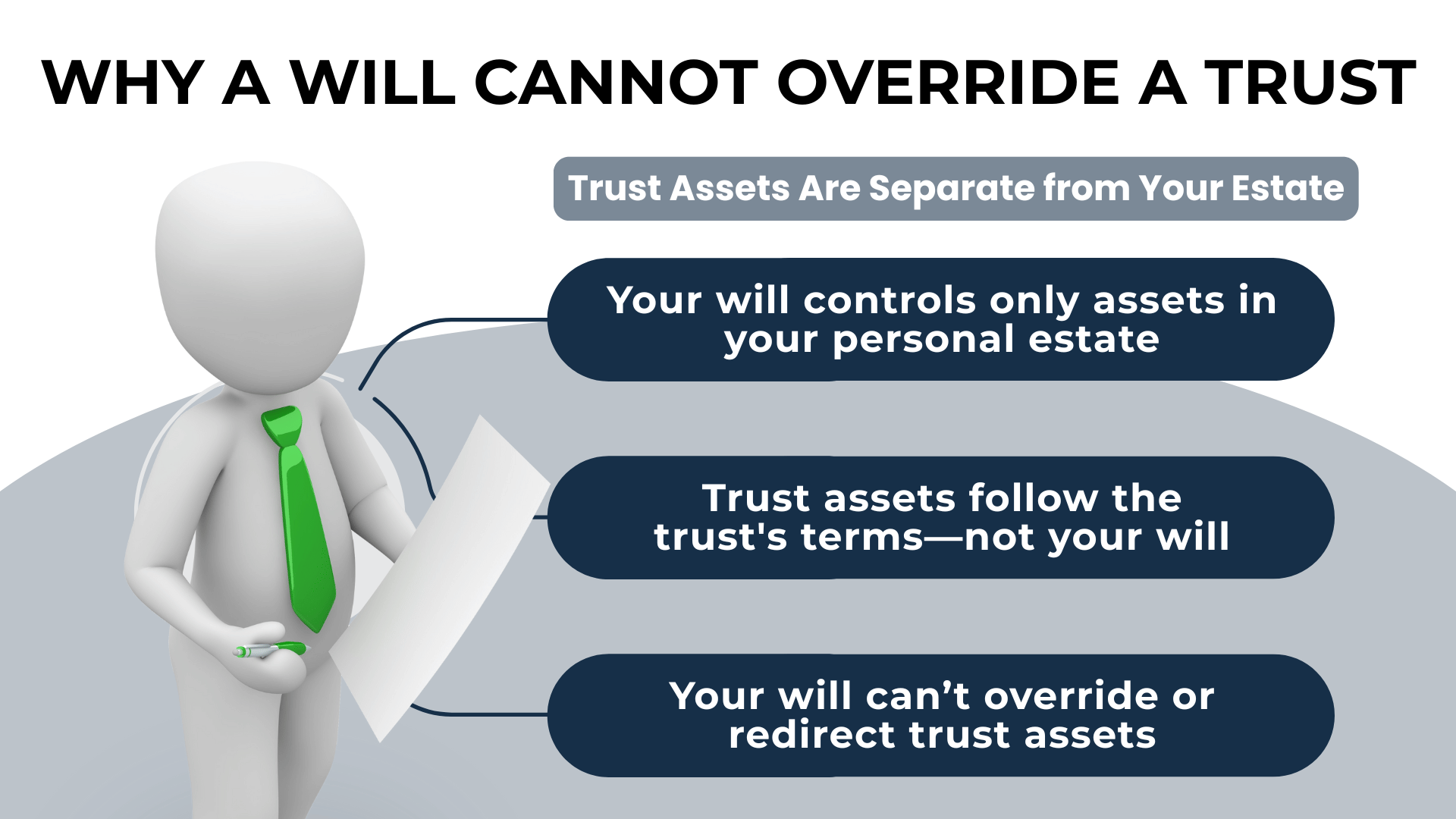
The fundamental principle is straightforward: trust assets are owned by the trust, not your estate. This legal separation means:
- Your will only governs assets in your personal estate
- Trust assets follow the trust’s terms, regardless of what your will says
- If your will attempts to redirect trust assets, those instructions are invalid
For example, if your house is titled in your trust’s name and your will tries to leave it to a different beneficiary, the trust’s terms prevail.
How Wills and Trusts Work Together
Rather than competing, wills and trusts complement each other in comprehensive estate planning:
Pour-Over Wills
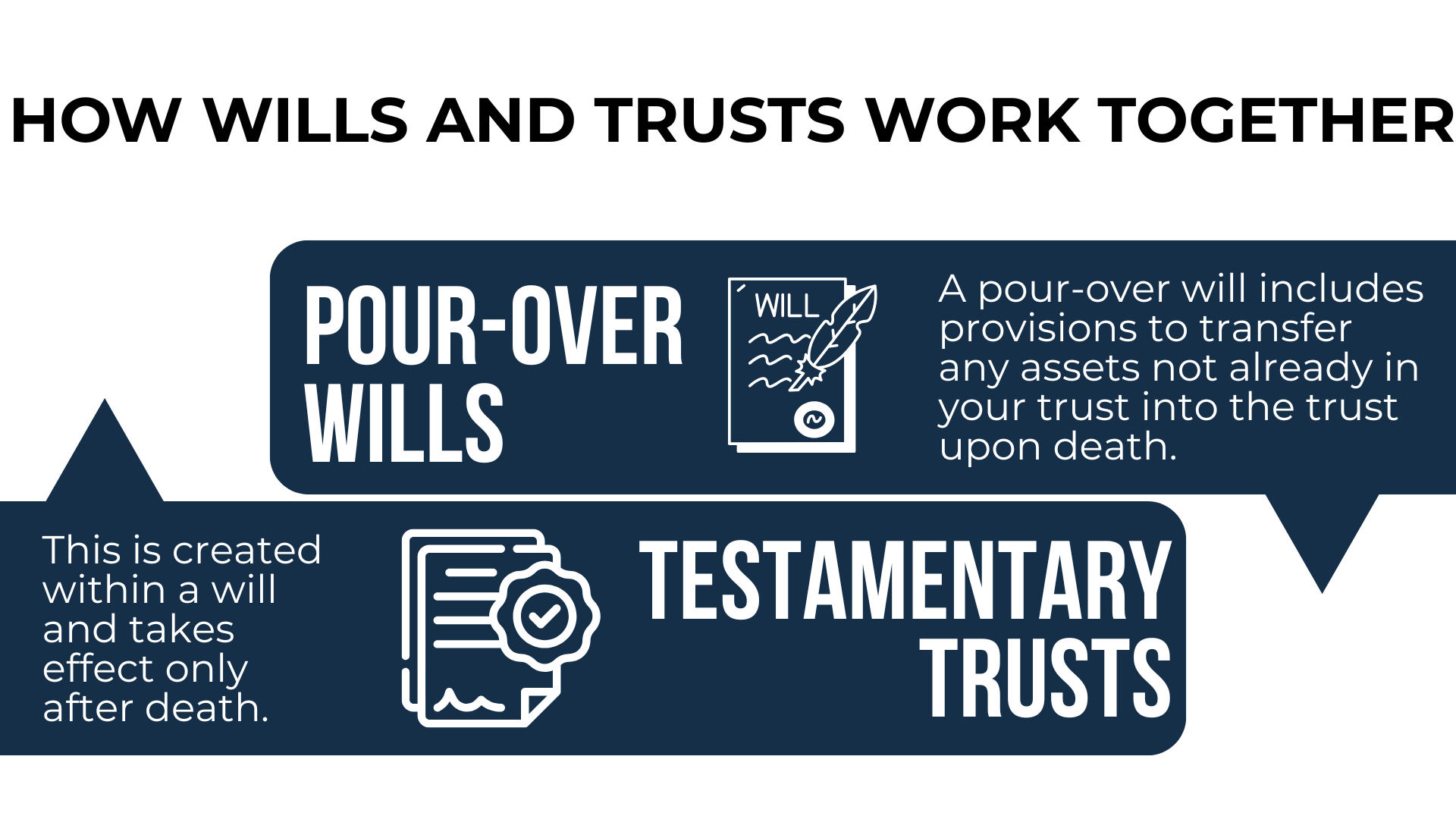
A pour-over will includes provisions to transfer any assets not already in your trust into the trust upon death. This ensures:
- All assets are ultimately managed according to trust terms
- Nothing falls through the cracks
- Assets transferred via pour-over will may still go through probate
Testamentary Trusts
Created within a will and taking effect only after death, testamentary trusts:
- Don’t avoid probate
- Are useful for managing assets for beneficiaries over time
- Often used for minor children or special needs beneficiaries
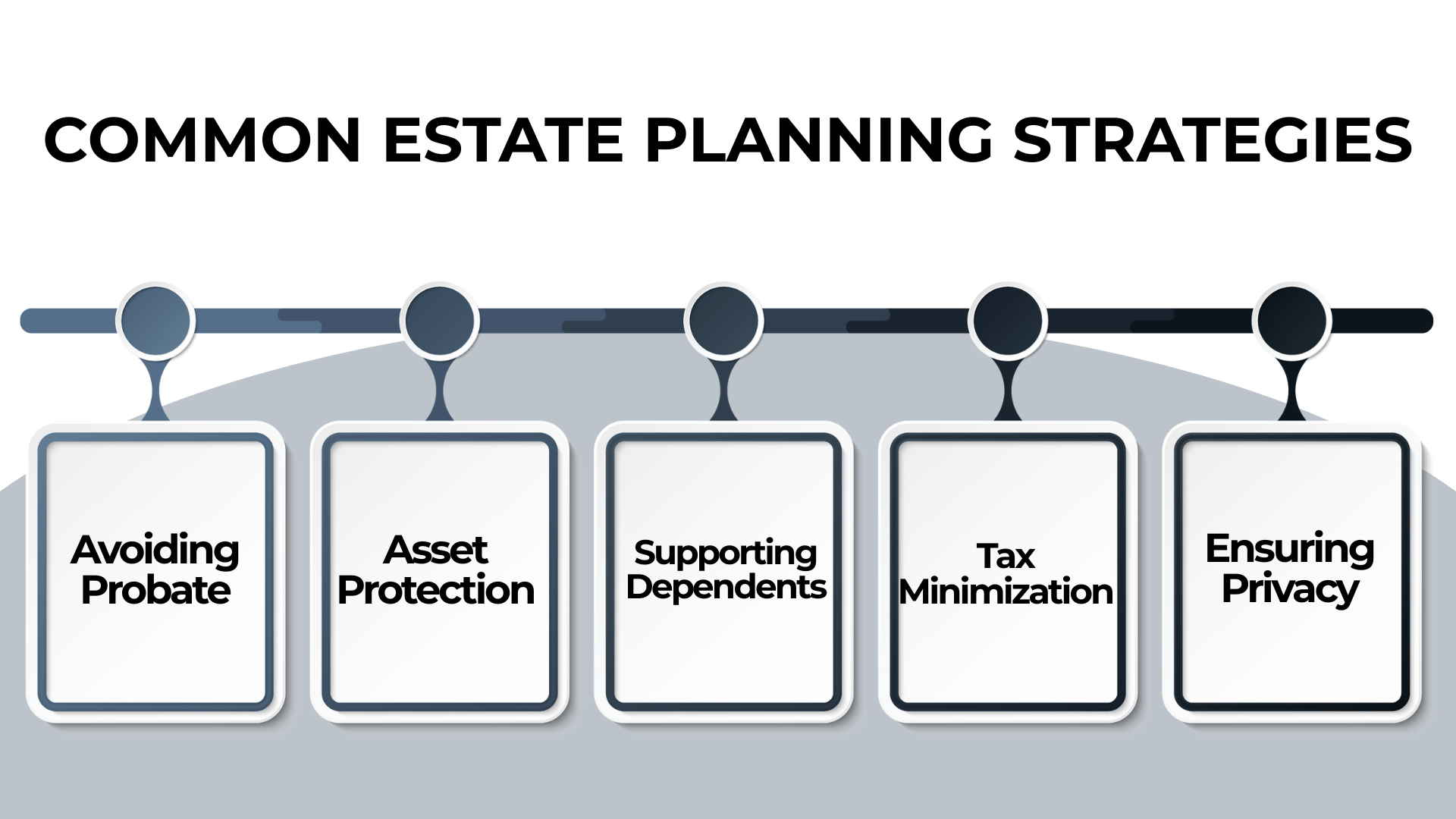
Common Estate Planning Strategies
Avoiding Probate
Living trusts allow assets to bypass probate entirely, offering:
- Time savings
- Reduced costs
- Maintained privacy
Asset Protection
Irrevocable trusts can shield assets from creditors or lawsuits, particularly valuable for:
- High-net-worth individuals
- Those in high-risk professions
Supporting Dependents
Trusts can manage assets for:
- Minor children
- Beneficiaries with special needs
- Distributing funds over time or under specific conditions
Tax Minimization
Trusts can reduce your taxable estate, potentially lowering federal estate taxes (applicable to estates over $13.99 million in 2025).
Ensuring Privacy
Unlike wills that become public during probate, trusts remain private, protecting sensitive financial details.
Important Considerations and Potential Pitfalls
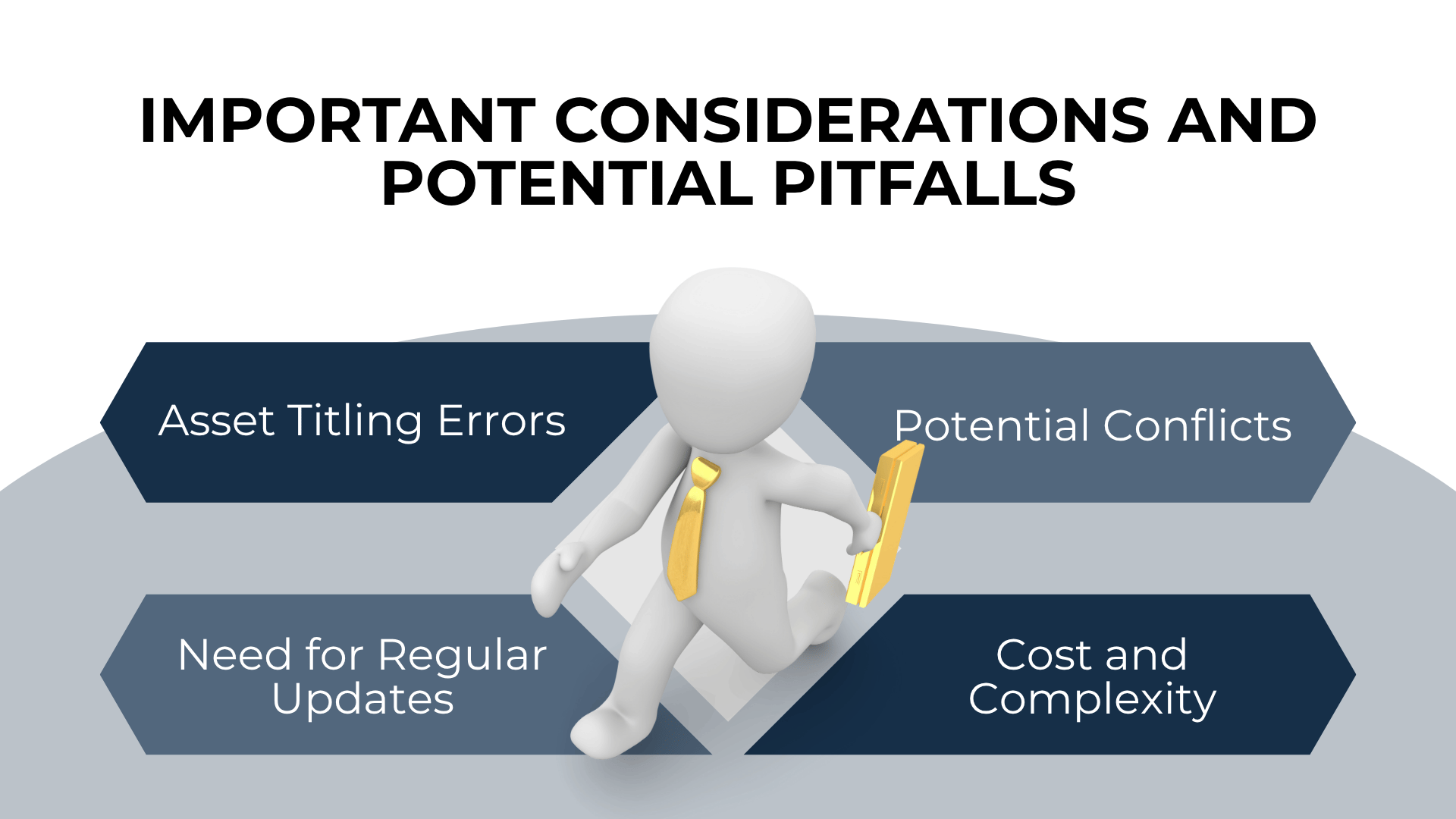
Asset Titling Errors
Failing to retitle assets in the trust’s name means they remain in your estate, subject to:
- Probate proceedings
- Your will’s terms
- Potential undermining of trust purposes
Need for Regular Updates
Life events requiring document updates include:
- Marriage or divorce
- Birth of children
- Acquisition of new assets
- Changes in beneficiary circumstances
Potential Conflicts
Poor coordination between wills and trusts can lead to:
- Beneficiary disputes
- Executor confusion
- Court intervention requirements
Cost and Complexity
While trusts are generally more complex and costly to establish than wills, their benefits often justify the expense for complex estates.
Frequently Asked Questions
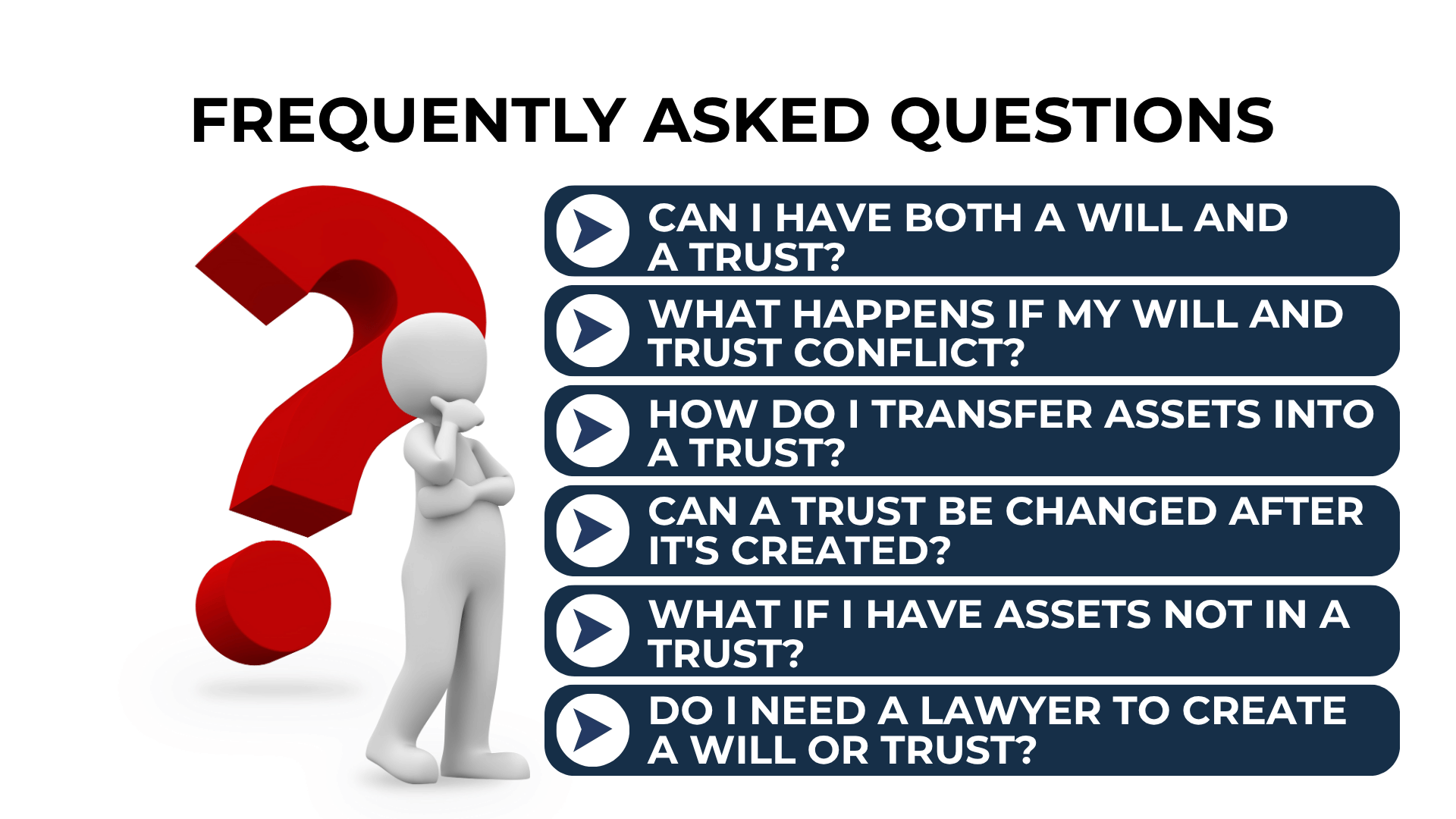
Can I have both a will and a trust? Yes, it’s common and recommended. A will handles assets not in a trust and can include pour-over provisions. It also addresses non-asset matters like naming guardians for minor children.
What happens if my will and trust conflict? The trust’s terms govern assets it holds, while the will governs non-trust assets. If a will directs a trust-owned asset to one person but the trust names another, the trust prevails for that asset.
How do I transfer assets into a trust? Assets must be retitled in the trust’s name (e.g., “John Smith, Trustee of the John Smith Trust”). This process varies by asset type—deeds for real estate, account changes for banks.
Can a trust be changed after it’s created? Revocable trusts can be modified or revoked during the grantor’s lifetime. Irrevocable trusts are generally fixed, though limited changes may be possible under specific conditions.
What if I have assets not in a trust? A will or pour-over will can direct these assets’ distribution. Without a will, intestacy laws determine distribution, which may not align with your wishes.
Do I need a lawyer to create a will or trust? While online tools exist for simple documents, consulting an estate planning attorney is advised to ensure legal validity, proper coordination, and to address complex estates.
Key Takeaways
Understanding that a will does not override a trust is fundamental to effective estate planning. These tools work together to create a comprehensive plan:
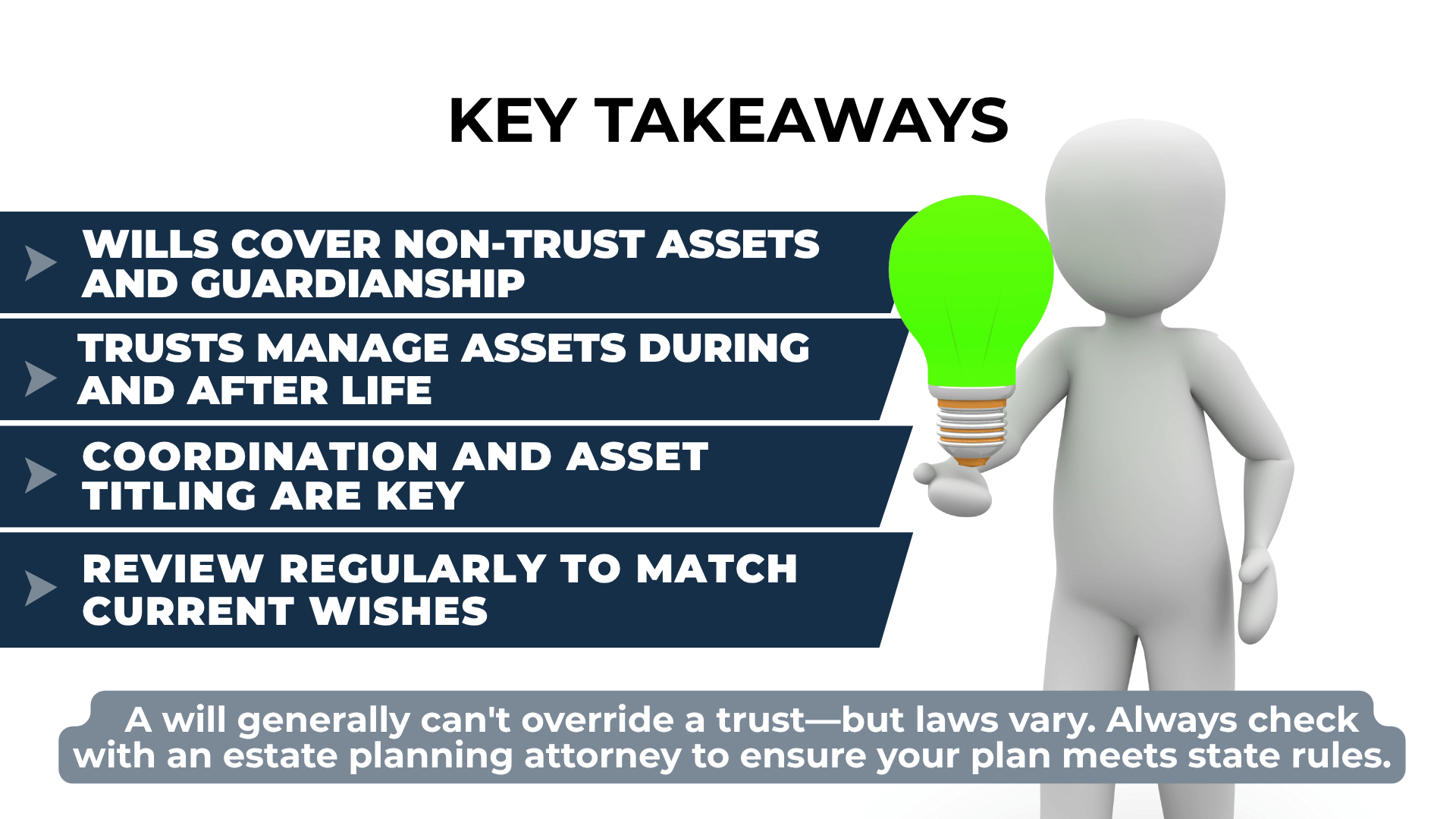
- Wills handle non-trust assets and other matters like guardianship
- Trusts manage assets during and after life, often avoiding probate
- Proper coordination and asset titling are crucial
- Regular reviews ensure your plan reflects current wishes
Next Steps
For those considering estate planning:
- Inventory your assets and beneficiary wishes
- Determine which assets should be in a trust
- Ensure proper asset titling for trust property
- Create both will and trust documents as needed
- Review and update regularly with life changes
Remember, while the principle that a will cannot override a trust is broadly applicable across most U.S. states, specific rules vary. Always consult an estate planning attorney to ensure your plan meets state requirements and achieves your goals.
Proper estate planning provides peace of mind, knowing your assets will be distributed according to your wishes while minimizing complications for your loved ones. Taking the time to understand how wills and trusts work together—and ensuring they’re properly coordinated—is an investment in your family’s future security.