
When planning your estate, understanding how your Limited Liability Company (LLC) ownership transfers after death is crucial. Many business owners and investors wonder: does an LLC go through probate? The answer isn’t as straightforward as you might think, and getting it wrong could delay asset transfers to your heirs and create unnecessary complications.
The Short Answer: It Depends on Your Planning
An LLC itself does not go through probate because it’s a separate legal entity with perpetual existence. However, your membership interest (ownership share) in the LLC may be subject to probate if you haven’t properly planned for its transfer.
This distinction is critical for anyone using LLCs for business operations, real estate investments, or asset protection strategies.

Understanding the LLC-Probate Relationship
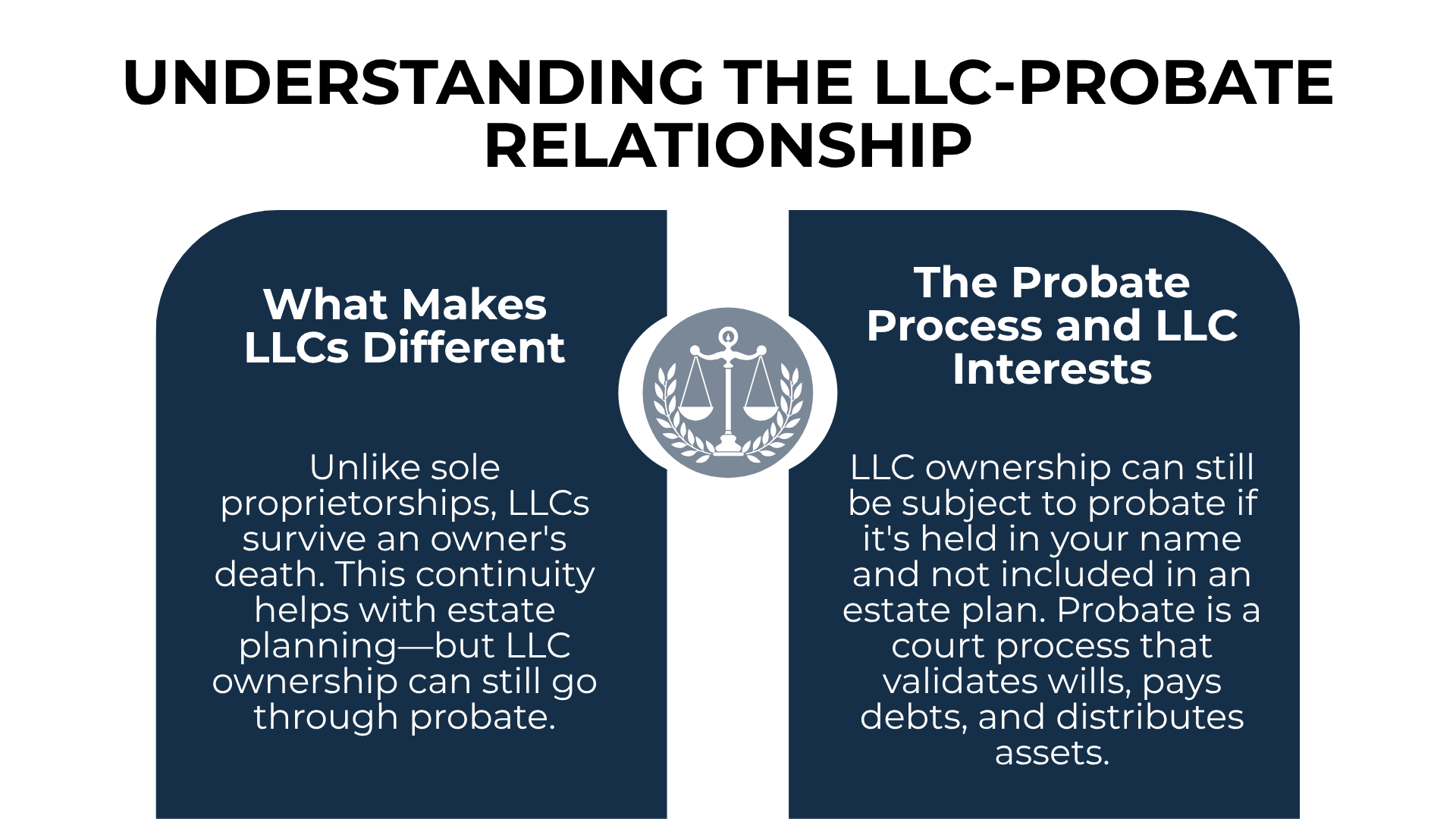
What Makes LLCs Different
Unlike sole proprietorships that may dissolve upon an owner’s death, LLCs continue to exist as separate legal entities. This perpetual existence offers unique advantages for estate planning, but it doesn’t automatically protect your ownership interest from probate.
The Probate Process and LLC Interests
Probate is the court-supervised process of:
- Validating a will
- Paying debts
- Distributing a deceased person’s assets
For LLC owners, probate may apply to membership interests if they’re:
- Held individually in your name
- Not transferred through other estate planning mechanisms
- Subject to state intestacy laws (when no will exists)
Key Factors That Determine If Your LLC Interest Goes Through Probate
1. Presence of an Operating Agreement
A comprehensive operating agreement can be your first line of defense against probate. This critical document should outline:
- Management structure
- Ownership percentages
- Transfer rules upon death
- Succession provisions
- Member lists and conflict resolution procedures
Without these provisions, state law governs ownership transfers, often requiring probate.
2. Your Estate Planning Tools
Several tools can help your LLC interest bypass probate:
- Revocable Living Trusts: Transfer your membership interest to a trust
- Transfer-on-Death (TOD) Designations: Available in some states for LLC interests
- Buy-Sell Agreements: Outline automatic transfer procedures
- Joint Ownership with Rights of Survivorship: Surviving owners inherit automatically
- Beneficiary Designations: For related assets that complement LLC planning
3. State Laws and Requirements
State regulations vary significantly regarding LLC ownership transfers. Some states:
- Mandate probate for LLC interests without specific planning
- Allow non-probate transfers with proper provisions
- May dissolve single-member LLCs upon death without succession planning

Common Scenarios: How Different LLC Structures Handle Probate
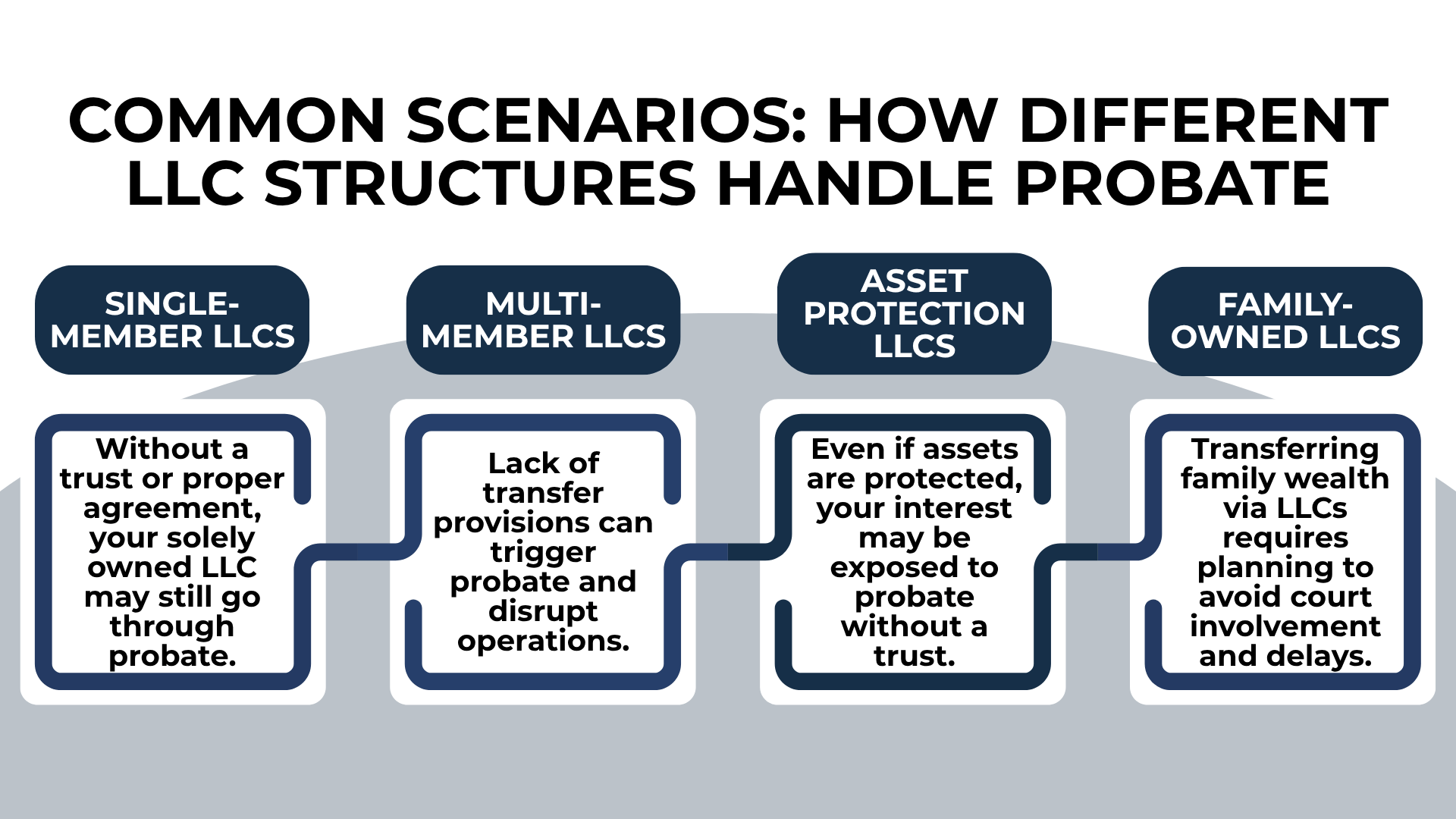
Single-Member LLCs
Situation: You own an LLC outright for your small business or rental properties.
Risk: Without planning, your LLC interest likely goes through probate, even though the LLC’s assets (like real estate) remain with the company.
Solution: Transfer membership interest to a revocable living trust or include succession provisions in your operating agreement.
Multi-Member LLCs
Situation: Your family business or partnership has multiple owners.
Risk: State law may require probate without clear transfer procedures, potentially disrupting business operations.
Solution: Draft comprehensive operating agreements with buy-sell provisions or use trusts to streamline transfers.
Asset Protection LLCs
Situation: You use LLCs to shield real estate, investments, or personal property from creditors.
Risk: While LLC-owned assets avoid probate, your membership interest may not.
Solution: Hold membership interests in a trust to maintain both asset protection and probate avoidance.
Family-Owned LLCs
Situation: You manage family wealth through an LLC structure.
Risk: Without proper planning, wealth transfer to children may require court involvement.
Solution: Combine revocable living trusts with clear operating agreement provisions for seamless generational transfers.
Critical Risks of Inadequate LLC Estate Planning
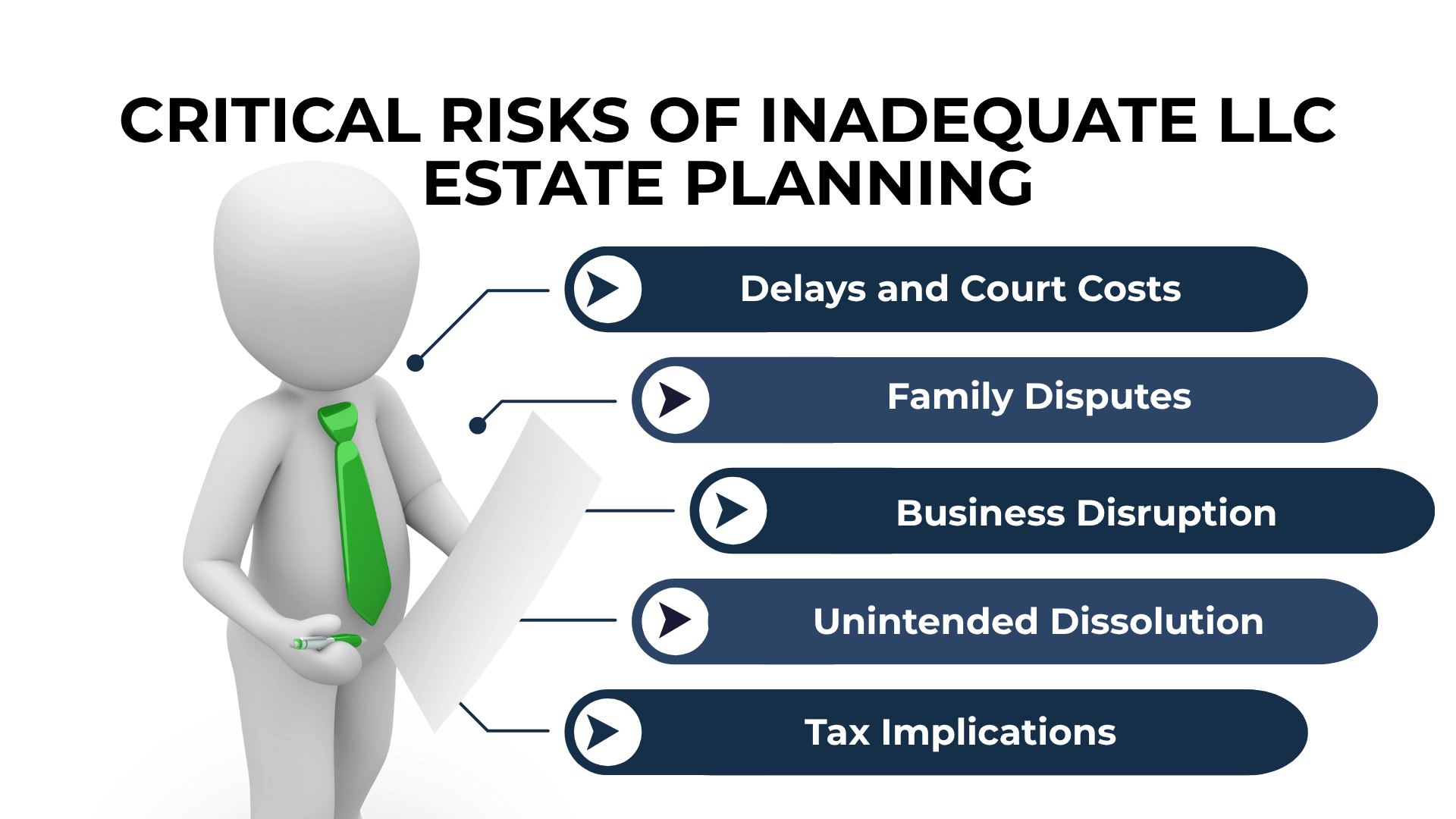
Failing to plan for LLC interest transfers can lead to:
- Delays and Court Costs: Probate proceedings can take months or years
- Family Disputes: Unclear ownership creates conflict among heirs
- Business Disruption: Operations may stall during ownership transitions
- Unintended Dissolution: Some states dissolve LLCs without succession plans
- Tax Implications: Poor planning may increase estate tax liabilities (for estates exceeding $13.99 million per person in 2025)
Proven Strategies to Keep Your LLC Interest Out of Probate
1. Establish a Revocable Living Trust
The most comprehensive solution involves:
- Transferring LLC membership to your trust
- Naming beneficiaries within the trust
- Providing management instructions for successor trustees
- Avoiding court involvement entirely
2. Create Transfer-on-Death Designations
Where available, TOD designations allow:
- Direct beneficiary designation for LLC interests
- Automatic transfer upon death
- Avoidance of probate proceedings
Note: Check your state’s laws for availability
3. Draft Buy-Sell Agreements
These agreements ensure:
- Smooth transitions to remaining members or heirs
- Pre-determined transfer procedures
- Clear valuation methods
- Reduced conflict potential
4. Consider Joint Ownership
With rights of survivorship:
- Surviving owners automatically inherit
- No probate required
- Immediate transfer of control
5. Implement a Comprehensive Estate Plan
Coordinate all elements:
- Will provisions
- Trust documents
- Operating agreements
- Beneficiary designations

Best Practices for LLC Estate Planning Success
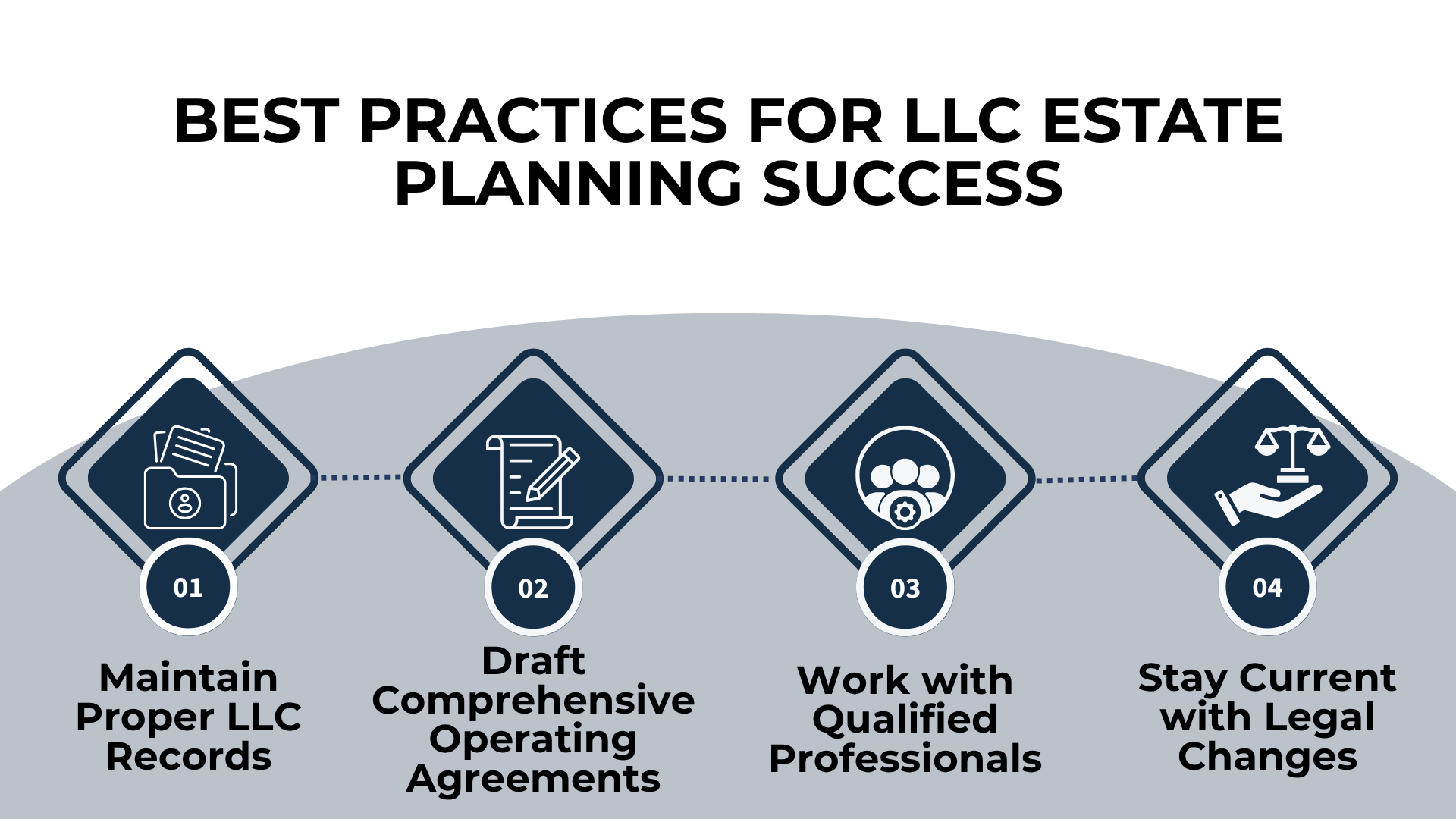
Maintain Proper LLC Records
- File annual reports consistently
- Keep personal and LLC finances separate
- Document all major decisions
- Preserve the LLC’s legal status
Draft Comprehensive Operating Agreements
Include essential provisions for:
- Succession planning
- Member lists and ownership percentages
- Conflict resolution procedures
- Transfer restrictions
- Death and disability provisions
Work with Qualified Professionals
- Consult estate planning attorneys
- Engage business law specialists
- Ensure state law compliance
- Review plans regularly
Stay Current with Legal Changes
Be aware of updates like:
- Beneficial Ownership Information Report requirements (effective January 1, 2024)
- State law modifications
- Federal tax law changes
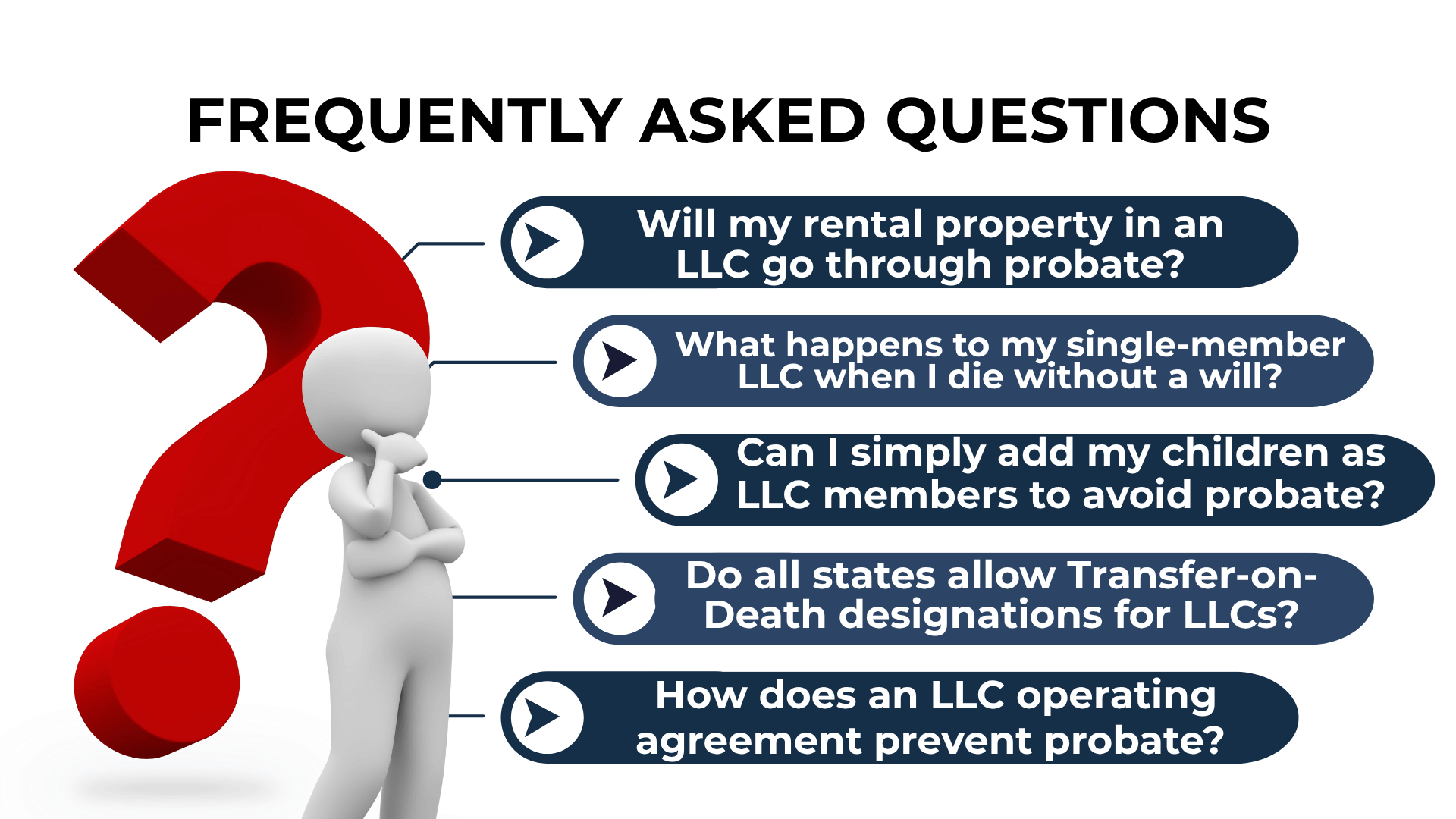
Frequently Asked Questions
Q: Will my rental property in an LLC go through probate?
A: The property itself won’t go through probate because the LLC owns it. However, your ownership interest in the LLC may require probate unless held by a trust or transferred through other non-probate methods.
Q: What happens to my single-member LLC when I die without a will?
A: State intestacy laws will govern the transfer of your LLC interest, likely requiring probate. Some states may even dissolve the LLC without succession provisions.
Q: Can I simply add my children as LLC members to avoid probate?
A: While adding members can help, it may have tax implications and reduce your control. A revocable living trust often provides better flexibility while avoiding probate.
Q: Do all states allow Transfer-on-Death designations for LLCs?
A: No, TOD availability varies by state. Check your state’s specific laws or consult with a local attorney.
Q: How does an LLC operating agreement prevent probate?
A: A well-drafted operating agreement can include provisions for automatic transfer of membership interests upon death, potentially bypassing probate entirely.
Take Action to Protect Your LLC Interests
An LLC itself doesn’t go through probate, but your membership interest might—unless you plan ahead. The strategies outlined above can ensure smooth transfers to your heirs while avoiding delays, disputes, and dissolution risks.
Remember: LLCs are powerful estate planning tools offering asset protection, probate avoidance, and transfer flexibility. However, they require careful management and professional guidance to achieve these benefits.
Don’t leave your LLC ownership to chance. Consult with estate planning and business law attorneys to create a comprehensive plan that protects your interests and provides for your heirs.