When planning your estate, understanding how your revocable trust functions after death is crucial for protecting your legacy and ensuring your wishes are carried out. This comprehensive guide explains the transition process and what it means for your beneficiaries.
The Short Answer: Yes, It Becomes Irrevocable
Upon the grantor’s death, a revocable trust generally becomes irrevocable, meaning its terms cannot be changed, amended, or revoked. This transition is automatic and occurs because the grantor, who had the authority to modify the trust, is no longer alive. The trust then operates as a fixed entity, and its instructions must be followed precisely.
Understanding Revocable Trusts: The Basics
A revocable trust (also called a living trust) is a legal arrangement where you transfer assets into a trust that you can modify, amend, or revoke during your lifetime. As the grantor, you typically serve as the initial trustee and beneficiary, maintaining full control over your assets.
Key Benefits of Revocable Trusts:
- Asset Management – Allows you to manage assets during your lifetime
- Incapacity Planning – Provides for your care if you become incapacitated
- Probate Avoidance – Helps assets bypass the costly and time-consuming probate process
- Privacy – Unlike wills, trust documents remain private
The flexibility to adjust terms as life circumstances change (marriage, divorce, birth of children) makes revocable trusts a popular estate planning tool.

What Happens When the Grantor Dies?
The Automatic Transition
When you pass away, your revocable trust automatically becomes irrevocable. This means:
- The trust terms are permanently locked in place
- No one can modify the distribution instructions
- The successor trustee must follow your original wishes exactly
The Successor Trustee Takes Over
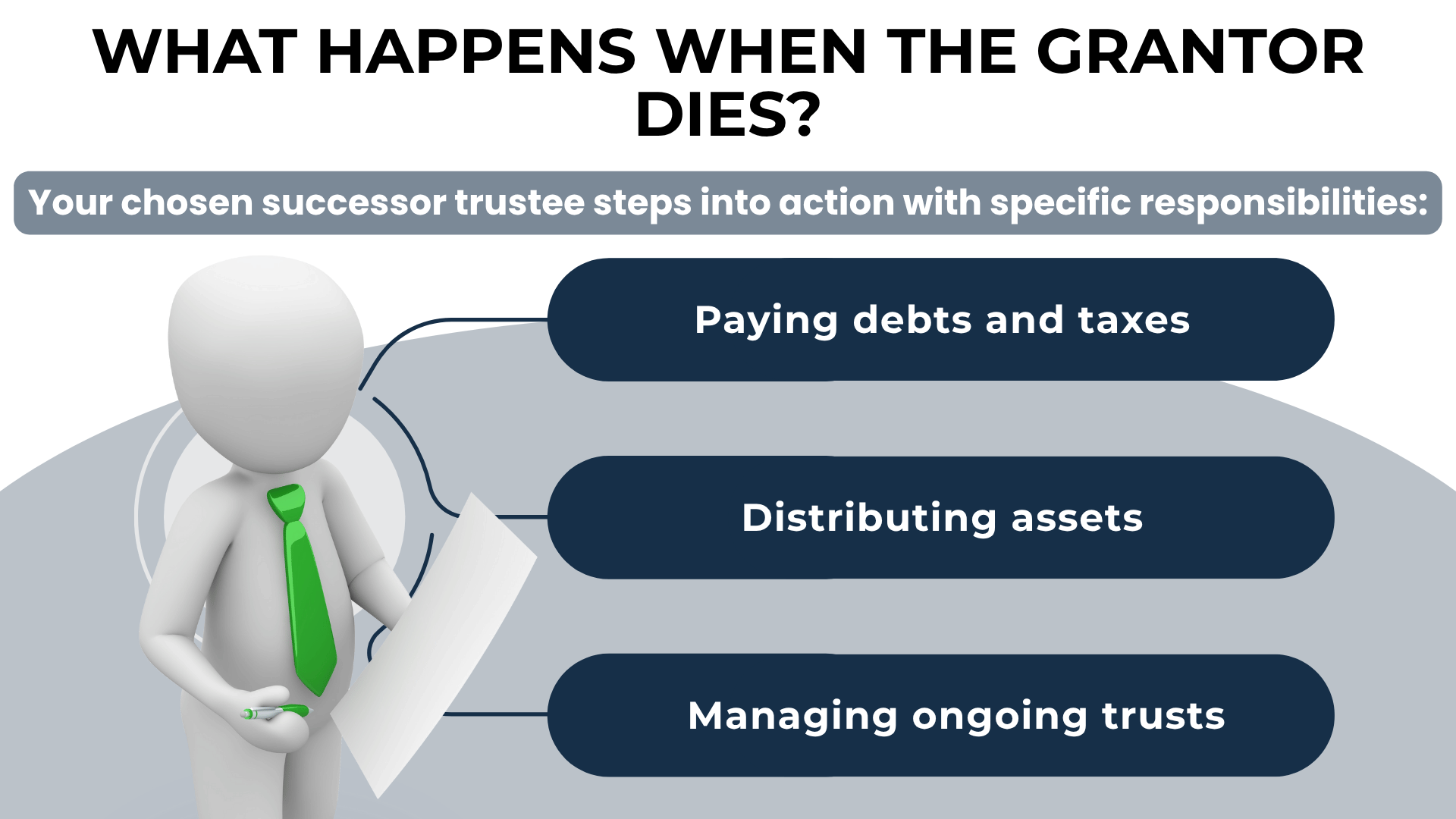
Your chosen successor trustee steps into action with specific responsibilities:
- Paying debts and taxes – Settling outstanding obligations
- Distributing assets – Transferring trust assets to beneficiaries per your instructions
- Managing ongoing trusts – Overseeing assets if the trust continues (e.g., for minor children)
The trustee must act in the best interests of beneficiaries and follow the trust instructions precisely.
Tax Implications You Need to Know
Estate Taxes
- Assets in your revocable trust are included in your taxable estate
- The trust does not inherently provide estate tax savings
- In 2025, the federal estate tax exemption is $13.61 million per individual
- State estate taxes may apply in some jurisdictions
Income Taxes After Death
After death, the trust becomes a separate tax entity:
- Must file its own income tax return (IRS Form 1041)
- Taxable income – Trust income not distributed to beneficiaries is taxed to the trust
- Distributed income – Income passed to beneficiaries is typically taxed on their personal returns
- The trustee must obtain an Employer Identification Number (EIN)
Note: A Section 645 election can sometimes treat the trust as part of the grantor’s estate for tax purposes, potentially simplifying filings.

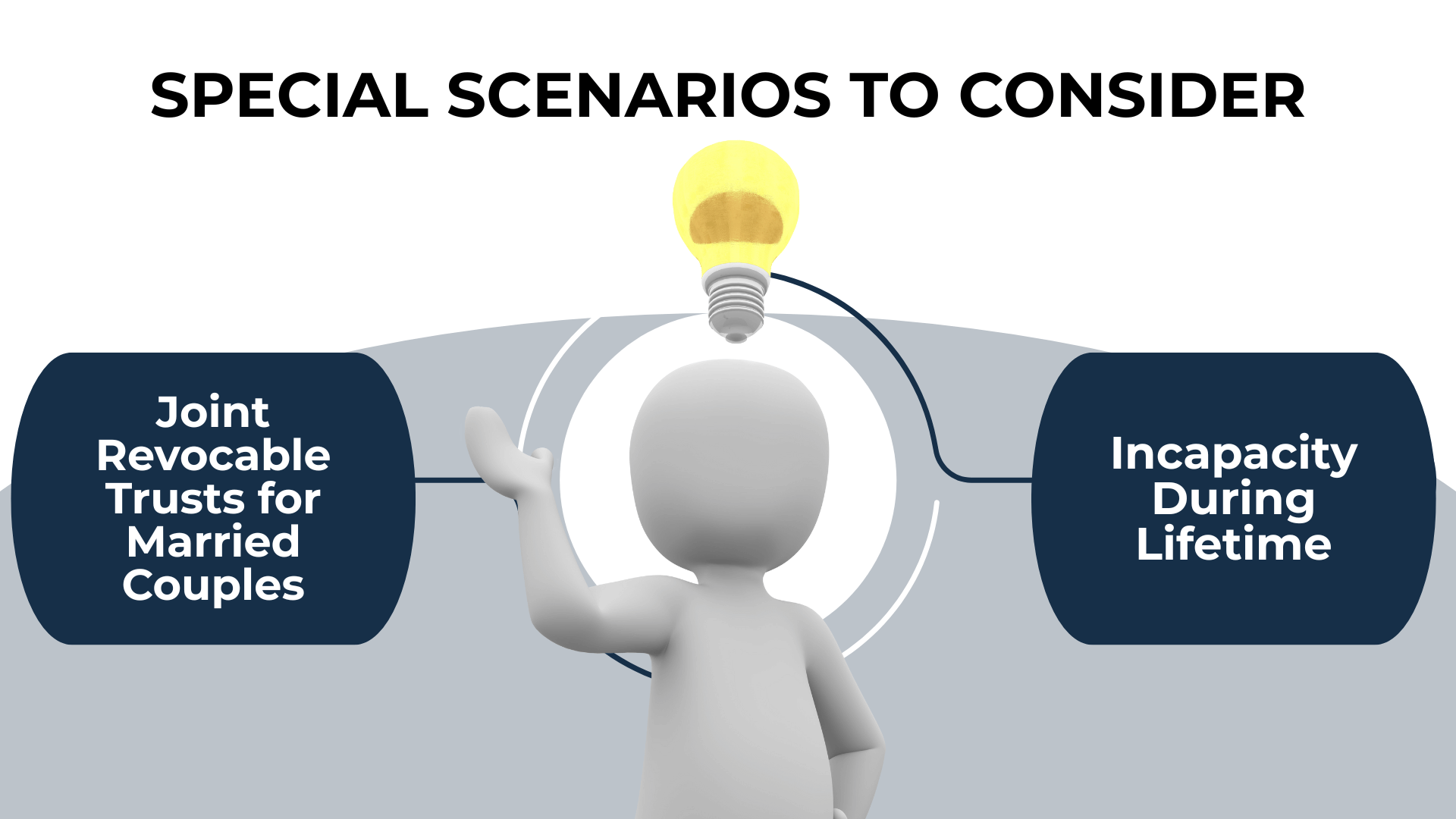
Special Scenarios to Consider
Joint Revocable Trusts for Married Couples
If you and your spouse created a joint trust:
- The trust typically remains revocable while both spouses are alive
- Upon the first spouse’s death, the surviving spouse usually becomes sole trustee
- The trust becomes fully irrevocable only after the second spouse dies
- This structure simplifies asset management for the surviving spouse
Incapacity During Lifetime
If you become incapacitated before death:
- The trust may become temporarily irrevocable
- Your successor trustee manages assets on your behalf
- This feature complements powers of attorney for comprehensive protection
Common Questions and Concerns
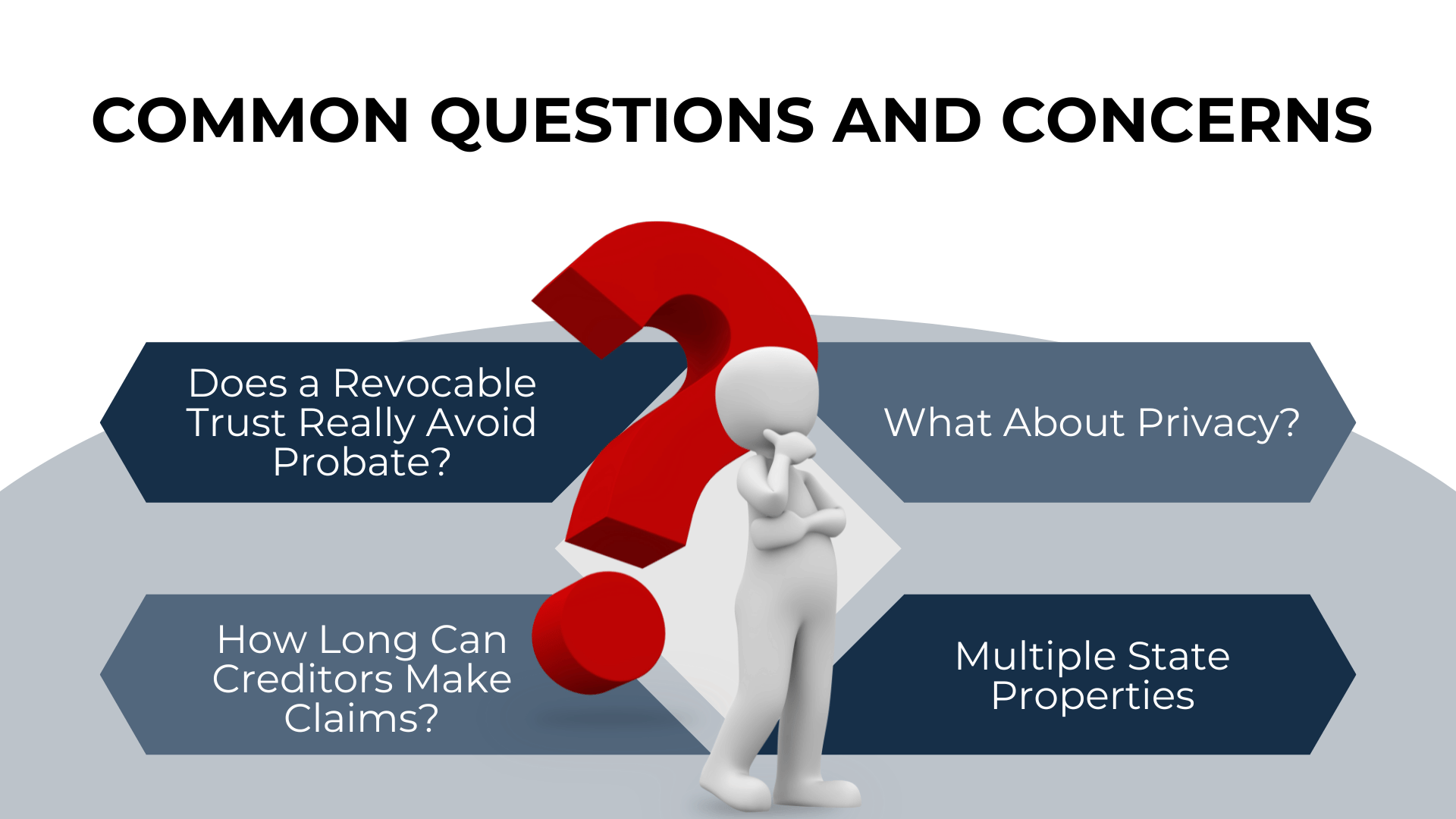
Does a Revocable Trust Really Avoid Probate?
Yes, but only if properly funded. This means:
- All assets must be legally titled in the trust’s name
- Unfunded assets will still go through probate
- A “pour-over will” can catch unfunded assets, but they’ll still require probate
How Long Can Creditors Make Claims?
After death, creditors typically have a limited period to file claims:
- Up to 2 years in some states
- The trustee may need to delay distributions
- Opening a probate proceeding can sometimes shorten the claim period to 3 months
What About Privacy?
Trust documents remain private, unlike wills that become public during probate. This protects your family’s financial details from public scrutiny.
Multiple State Properties
If you own real estate in multiple states, a revocable trust avoids ancillary probate (separate probate proceedings in each state where property is located).
Practical Steps for Trust Management
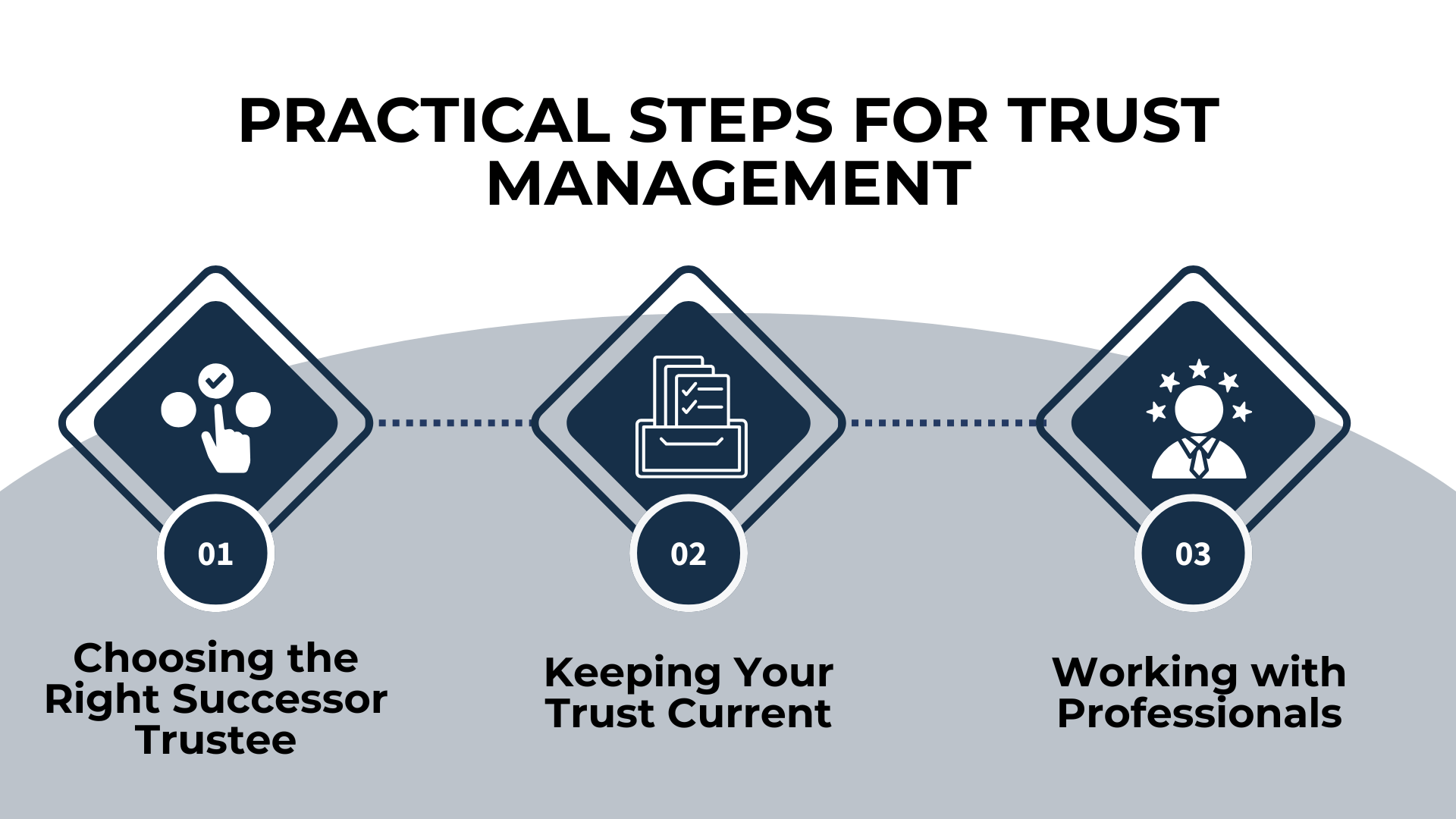
Choosing the Right Successor Trustee
Select someone who is:
- Trustworthy – Will act in beneficiaries’ best interests
- Capable – Understands financial management and tax obligations
- Consider family members, friends, or professional trustees (banks, trust companies)
Keeping Your Trust Current
Regular reviews ensure your trust reflects current wishes:
- Review every few years
- Update after major life events
- Coordinate with other estate planning documents
Working with Professionals
An estate planning attorney can:
- Draft the trust to align with your goals
- Ensure proper funding
- Advise on tax implications and trustee selection
- Coordinate with wills and powers of attorney
Frequently Asked Questions
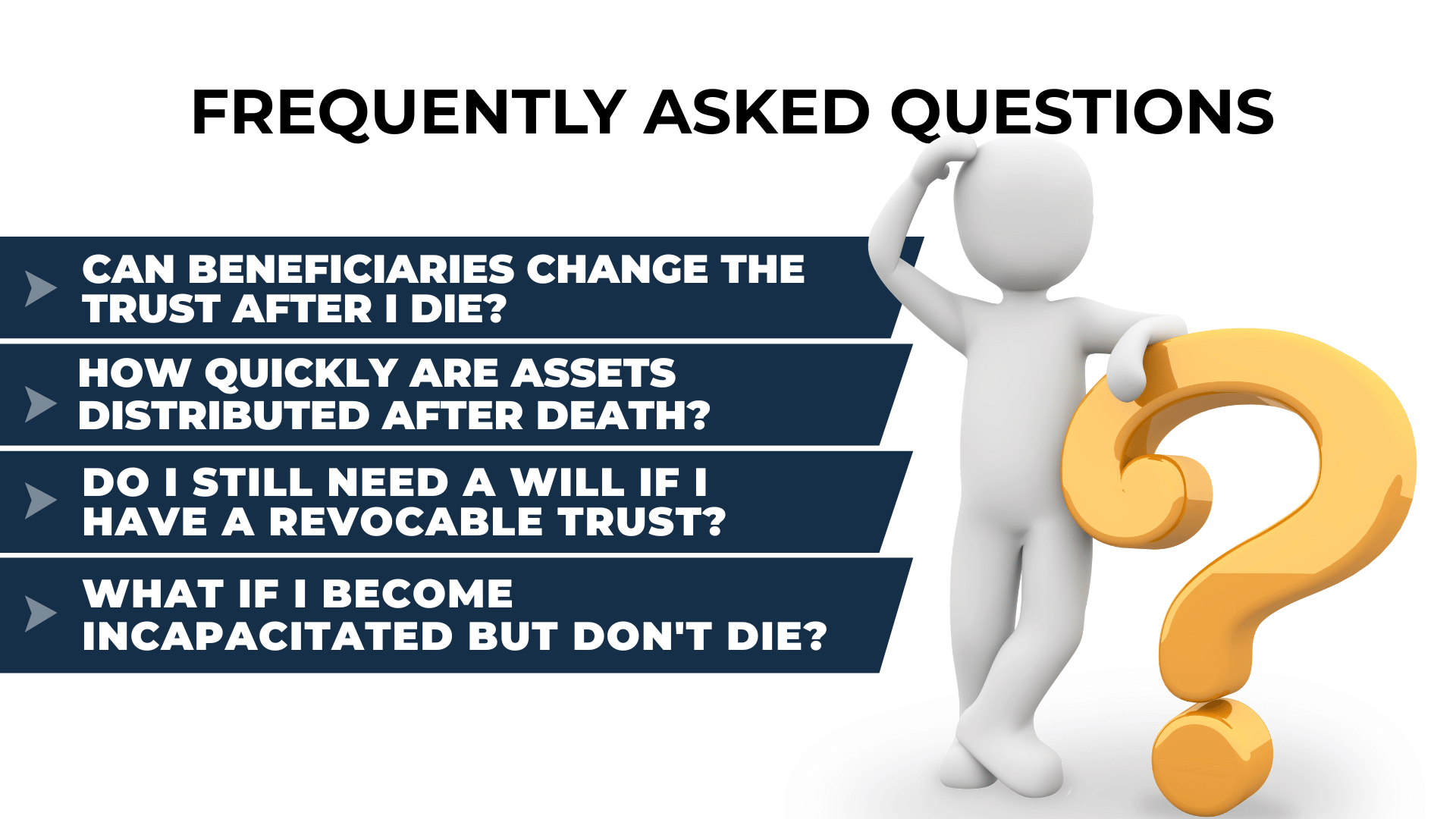
Q: Can beneficiaries change the trust after I die? A: No. Once you pass away, the trust becomes irrevocable and cannot be modified by anyone, including beneficiaries.
Q: How quickly are assets distributed after death? A: Distribution timing depends on your trust instructions. Some assets may be distributed immediately after debts and taxes are paid, while others may be held for specific purposes or until beneficiaries reach certain ages.
Q: Do I still need a will if I have a revocable trust? A: Yes. A “pour-over will” catches any assets not transferred to the trust and directs them into the trust after death, though these assets will still go through probate.
Q: What if I become incapacitated but don’t die? A: Your trust can become temporarily irrevocable during incapacity, with your successor trustee managing assets until you recover or pass away.
Key Takeaways
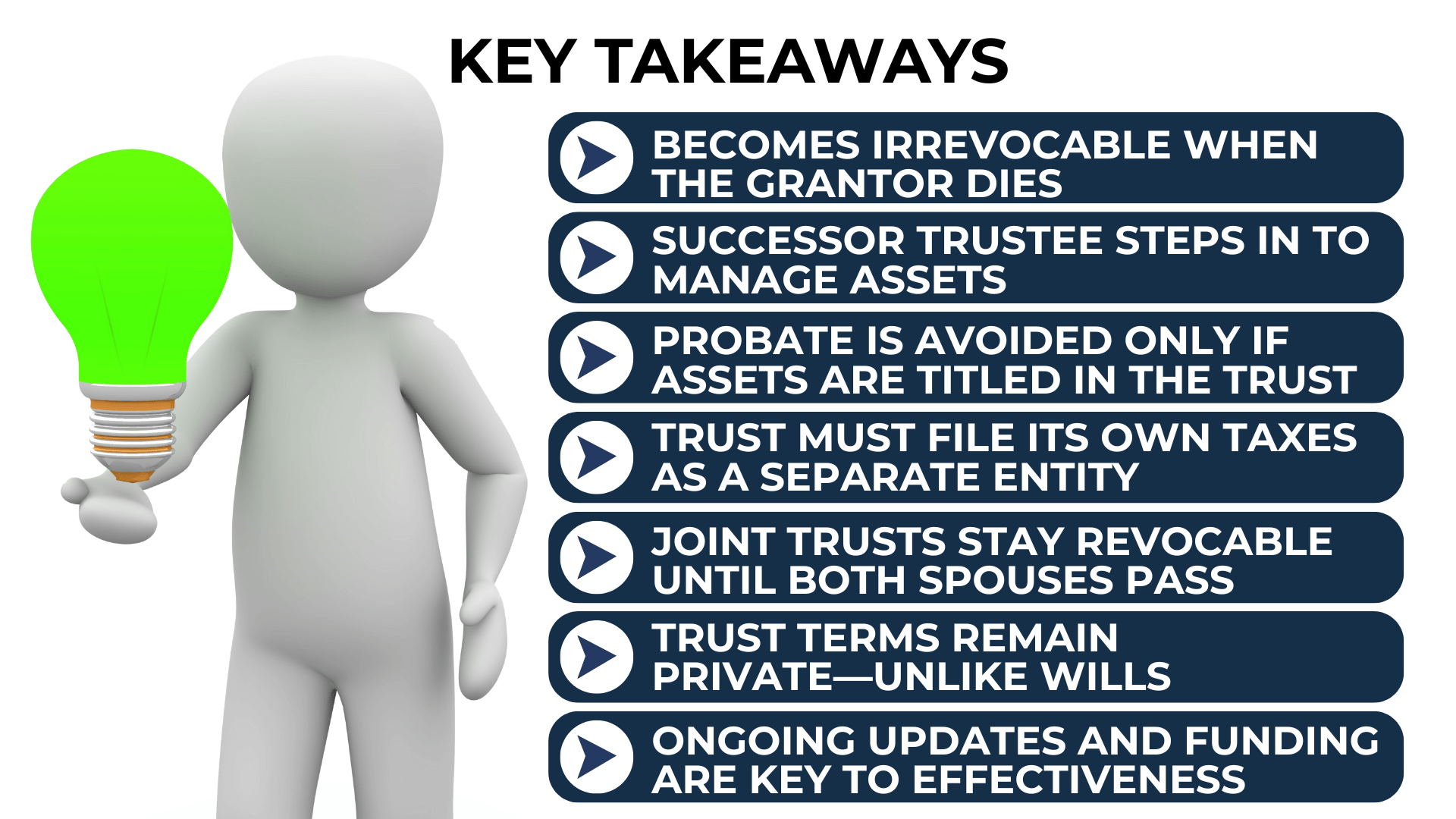
- A revocable trust automatically becomes irrevocable upon the grantor’s death
- The successor trustee takes over to manage and distribute assets
- Assets avoid probate only if properly funded into the trust
- The trust becomes a separate tax entity requiring its own tax filings
- Joint trusts for married couples remain revocable until both spouses pass
- Trust documents stay private, unlike wills in probate
- Regular updates and proper funding are essential for effectiveness
Moving Forward with Confidence
A revocable trust offers powerful benefits during life and efficient asset distribution after death. The automatic transition to irrevocable status ensures your wishes are carried out exactly as planned, providing peace of mind for you and protection for your beneficiaries.
Remember that estate planning is complex, involving legal and tax considerations unique to your situation. Working with an experienced estate planning attorney ensures your revocable trust is properly structured, funded, and coordinated with your overall estate plan to achieve your goals for asset management, privacy, and legacy planning.