When facing divorce, financial concerns often take center stage. One pressing question many spouses ask is whether they can empty their bank account before divorce proceedings begin. This comprehensive guide explores the legal implications, risks, and alternatives to help you make informed decisions during this challenging time.
Understanding Your Rights: Marital vs. Separate Property
Before making any financial moves, it’s crucial to understand how the law views your assets.
Marital Property
In most U.S. states, marital property includes:
- Assets acquired during marriage
- Funds in joint bank accounts
- Personal accounts containing marital income (like wages earned during marriage)
These assets are subject to division during divorce, regardless of whose name is on the account.
Separate Property
Separate property typically remains yours alone and includes:
- Assets owned before marriage
- Inheritances received during marriage
- Gifts given specifically to one spouse
Important Warning: If marital funds are deposited into a separate account, it may lose its separate status and become subject to division.

Legal Restrictions: What Happens After Filing for Divorce
Once divorce proceedings begin, the rules change significantly.
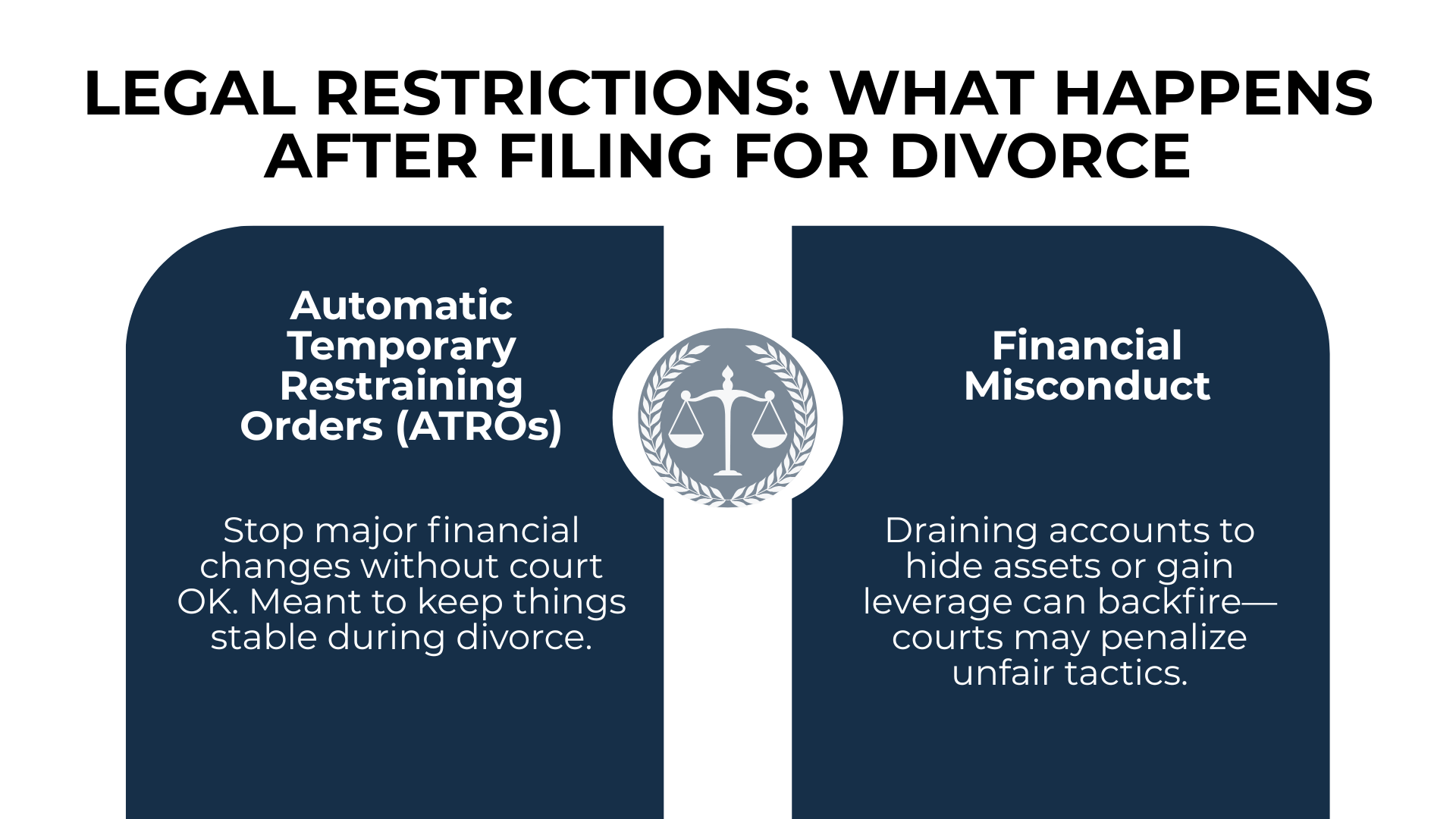
Automatic Temporary Restraining Orders (ATROs)
Many courts issue automatic orders that:
- Prohibit either spouse from making significant financial changes
- Require court approval for major transactions
- Aim to maintain the financial status quo during proceedings
Violating these orders can result in:
- Court-ordered return of funds
- Sanctions and fines
- Contempt of court charges
- Unfavorable property division
Financial Misconduct
Courts may view emptying marital accounts as financial misconduct, especially if done to:
- Hide assets from your spouse
- Deprive them of their rightful share
- Gain an unfair advantage in negotiations
Common Scenarios: Why Spouses Consider Emptying Accounts
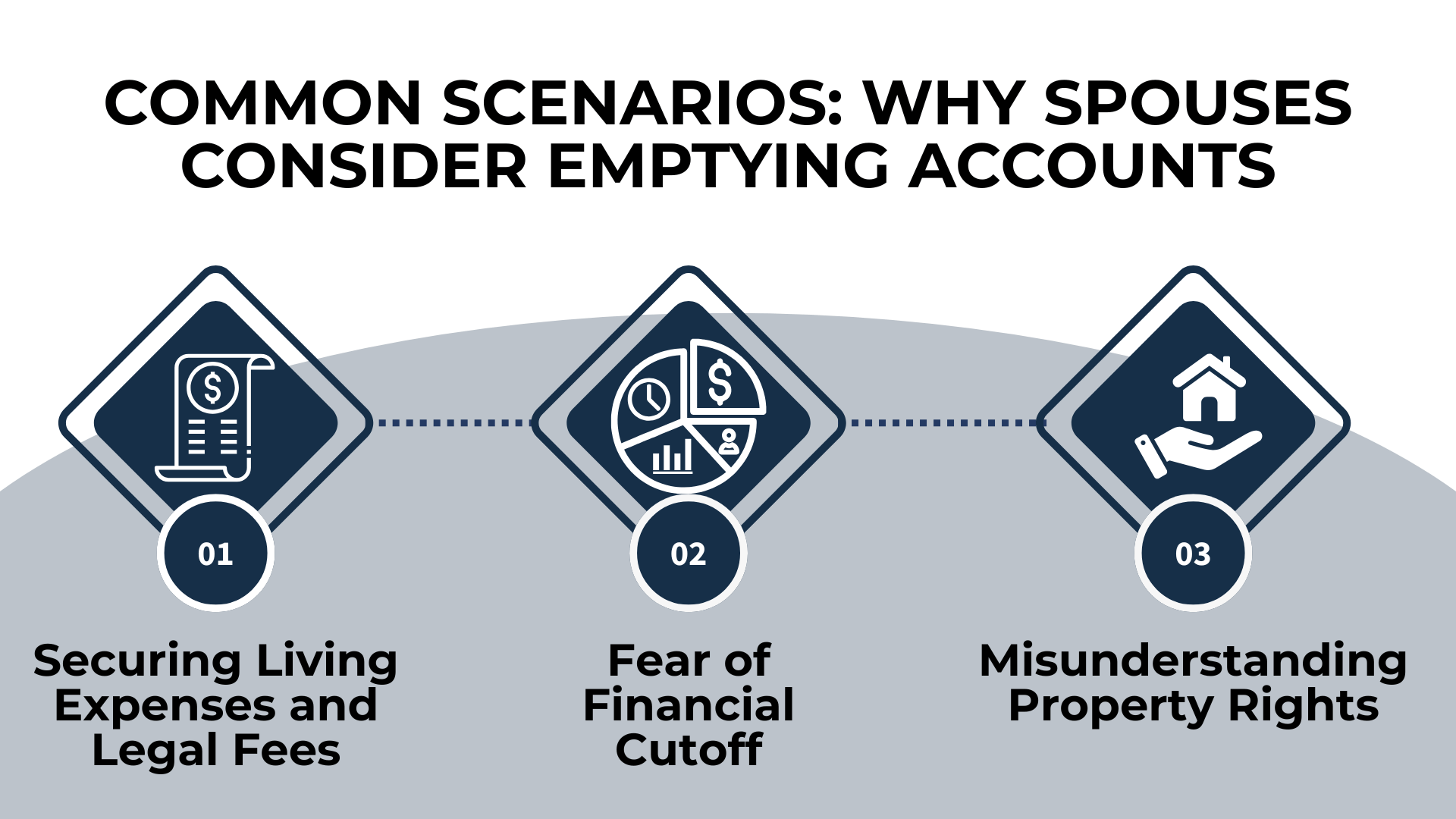
Understanding typical situations helps clarify the risks and alternatives:
1. Securing Living Expenses and Legal Fees
The Concern: Needing funds for housing, food, child-related expenses, or attorney fees
The Risk: Excessive withdrawals beyond legitimate needs may be seen as asset dissipation
2. Fear of Financial Cutoff
The Concern: History of financial control or abuse; fear of being left without access to funds
The Risk: Acting without legal guidance could backfire legally
3. Misunderstanding Property Rights
The Concern: Believing an account in your name alone gives you full control
The Risk: Marital funds remain subject to division regardless of account ownership
Frequently Asked Questions
Can I withdraw money from a joint account before filing for divorce?
You can legally withdraw money from a joint account before filing, but if the funds are marital property, they may still be subject to division. Withdrawing large sums could be seen as an attempt to hide assets, leading to complications in the divorce settlement.
What if my spouse empties our joint account?
Document the transaction (e.g., obtain bank statements) and inform your attorney. Courts can review financial records, order the return of funds, or adjust the property division to account for the loss, ensuring you’re not unfairly disadvantaged.
How can I protect my separate property?
Keep separate property in accounts solely in your name, funded only with non-marital money (e.g., pre-marriage savings or inheritances). Maintain clear documentation of the funds’ source to prove their separate status.
What are the risks of moving money before divorce?
Risks include accusations of hiding assets, legal sanctions, court orders to return funds, or an unfavorable property division. If automatic orders are in place, unauthorized withdrawals could lead to contempt of court charges.
Should I consult an attorney before making financial moves?
Yes, consulting an experienced family law attorney is highly advisable to understand your rights, the classification of your assets, and the potential consequences of financial actions.
Consequences of Emptying a Bank Account
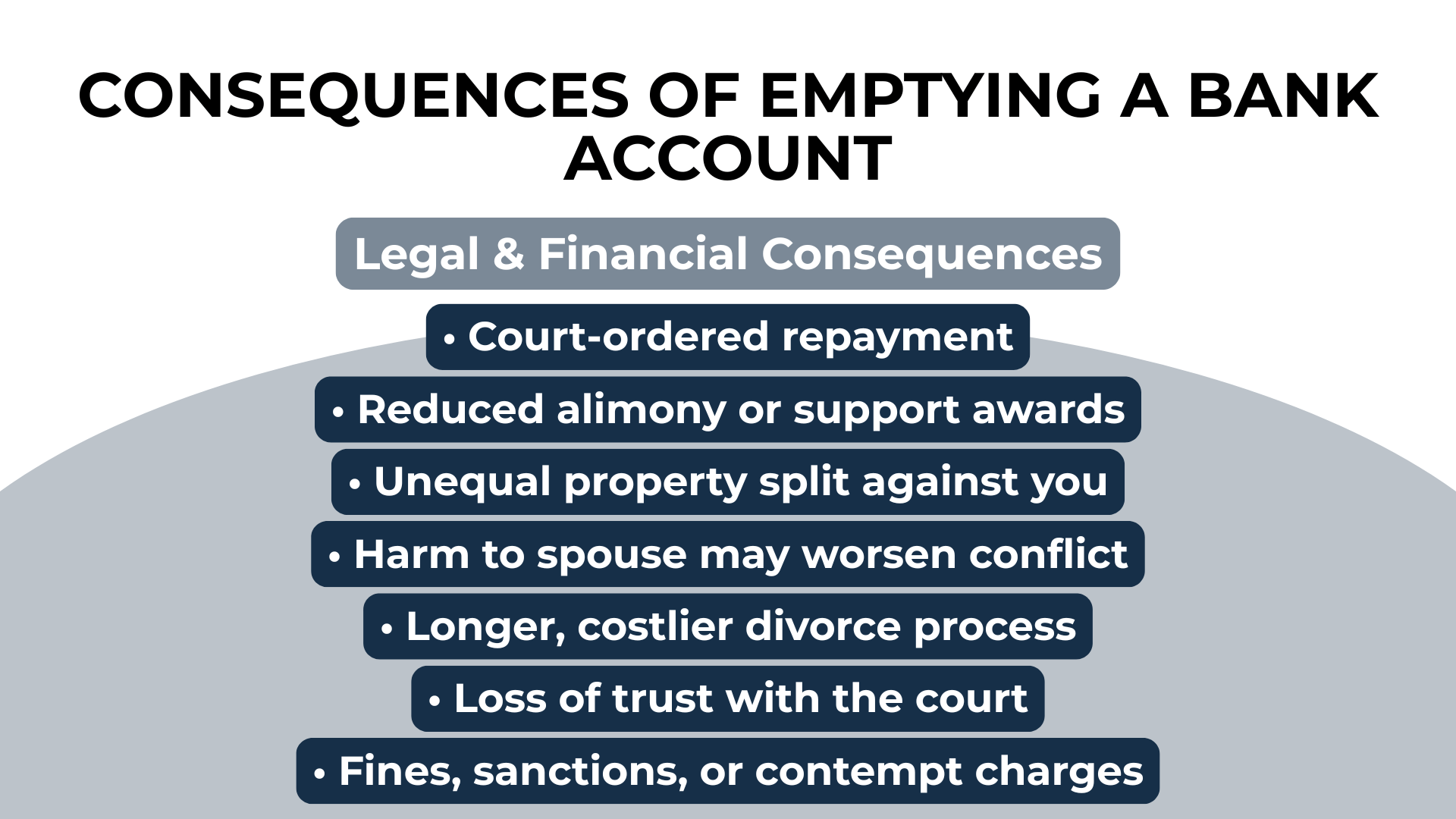
Legal Consequences
- Court orders requiring return of funds
- Fines and sanctions for violating automatic orders
- Contempt of court charges
- Negative impact on alimony or child support determinations
Financial Consequences
- Unequal property division favoring your spouse
- Financial hardship for your spouse, escalating disputes
- Complicated negotiations and prolonged proceedings
- Loss of credibility with the court
Safer Alternatives to Protect Your Financial Interests
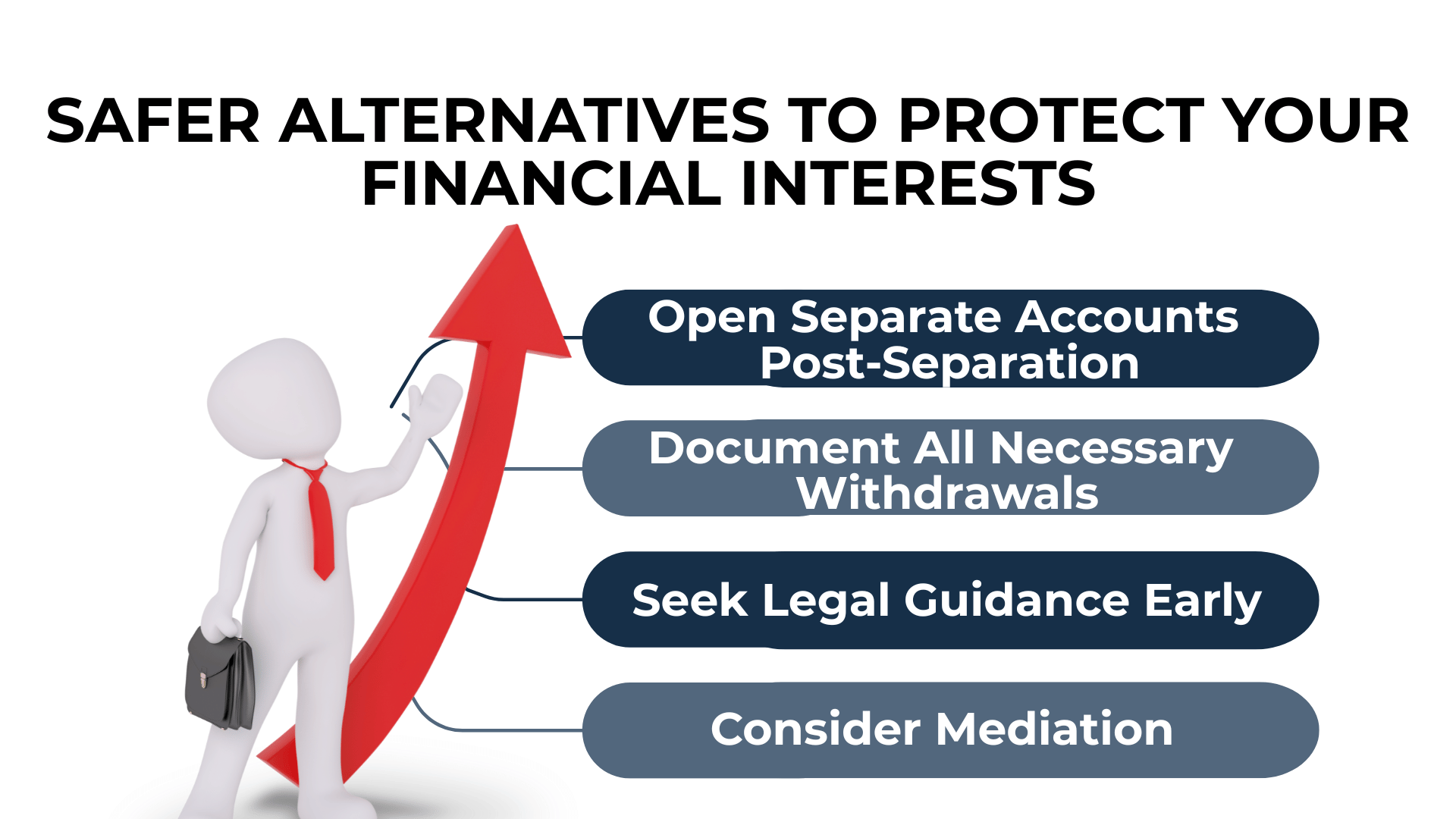
Instead of emptying accounts, consider these court-approved strategies:
1. Open Separate Accounts Post-Separation
- Deposit income earned after separation
- In many jurisdictions, post-separation income is separate property
- Maintain clear records of deposits and sources
2. Document All Necessary Withdrawals
- Keep receipts for legitimate expenses (housing, food, childcare, attorney fees)
- Maintain detailed bank statements
- Demonstrate withdrawals were necessary, not attempts to hide assets
3. Seek Legal Guidance Early
- Understand your rights and obligations
- Learn how to protect interests legally
- Avoid actions viewed as financial misconduct
4. Consider Mediation
- Resolve financial disputes outside court
- Reach fair agreements on asset division
- Save time and reduce conflict
Key Takeaways for Your Financial Protection
Remember these critical points:
- Emptying a bank account before divorce can lead to serious legal and financial consequences, particularly if the funds are marital property, as courts may view this as an attempt to hide or dissipate assets.
- Understanding the distinction between marital and separate property is essential, as it determines whether funds are subject to division in divorce.
- Automatic orders, common in many jurisdictions, restrict significant financial changes once a divorce is filed, making unauthorized withdrawals risky.
- Protecting your financial interests requires careful planning, including opening separate accounts, documenting transactions, and seeking legal advice to avoid costly mistakes.
- Consulting an experienced family law attorney is critical to navigate the complexities of financial decisions during divorce and ensure your rights are protected.

Final Thoughts
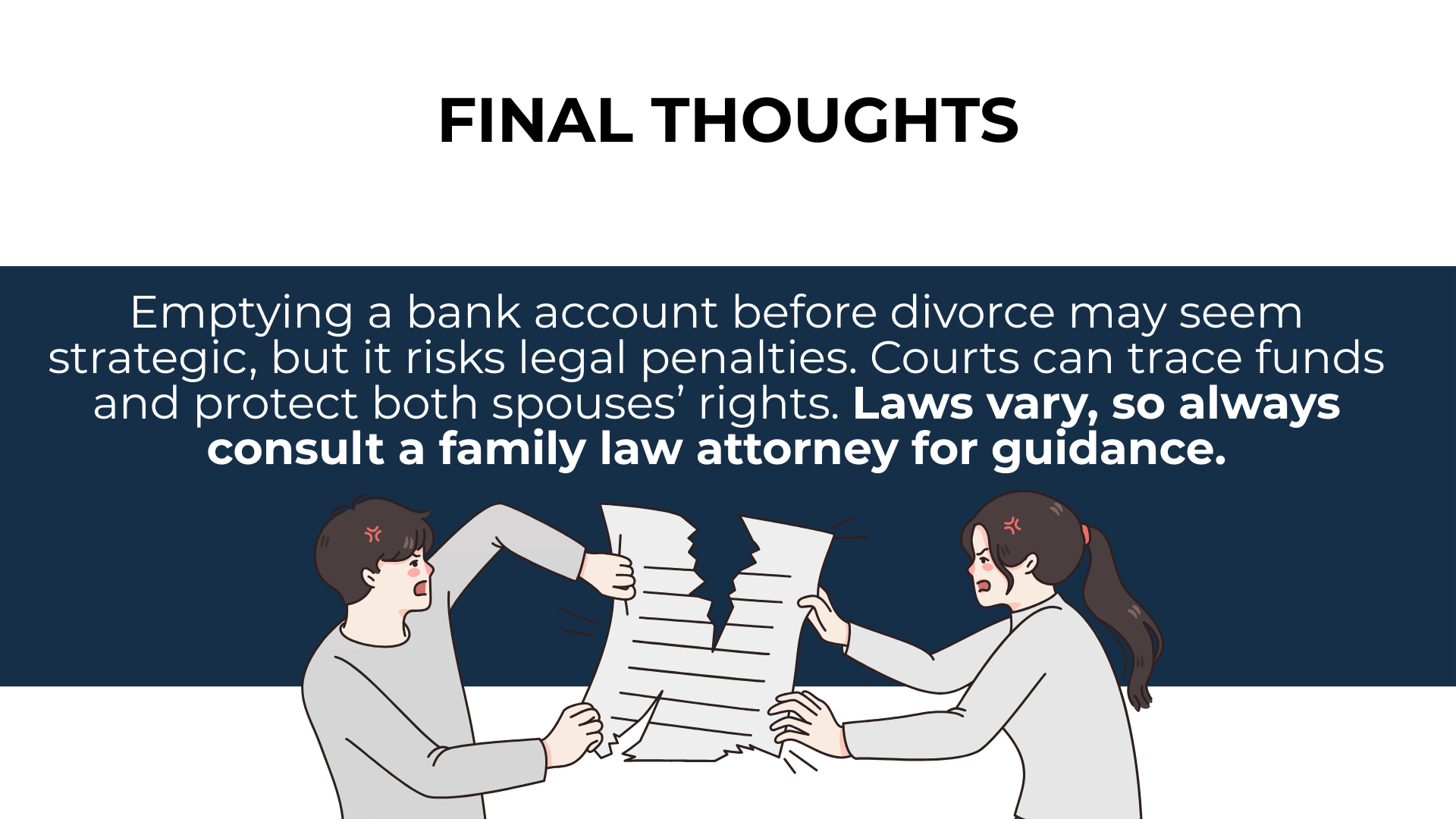
Divorce brings complex financial challenges, and the temptation to secure assets by emptying bank accounts is understandable. However, the legal and financial risks often outweigh any perceived benefits. Courts have sophisticated methods for tracking financial misconduct and will protect both spouses’ rights to marital property.
This overview provides a general understanding of the issues surrounding emptying a bank account before divorce. However, divorce laws vary by state, and specific circumstances can significantly impact outcomes. Always consult a qualified family law attorney for personalized advice tailored to your situation.