When life circumstances lead to spouses living in different states, or when you’ve recently relocated, you might wonder: can I file for divorce in another state? The short answer is yes—but there are important residency requirements and jurisdictional considerations you need to understand first.
This guide will walk you through everything you need to know about filing for divorce across state lines, helping you navigate this complex process with confidence.
Understanding State Residency Requirements for Divorce
Every state has specific residency requirements that must be met before you can file for divorce. These requirements exist to prevent “forum shopping”—where someone files in a state simply because they prefer its divorce laws, without having a genuine connection to that state.
Key Residency Principles
At least one spouse must meet the state’s residency requirement before filing. This typically means:
- Living in the state for a specified period
- Having the intent to make it your permanent home (domicile)
- Maintaining physical presence for the required duration
State-by-State Residency Requirements
Residency periods vary dramatically across the United States:
Shortest Requirements:
- Alaska, South Dakota, Washington: No minimum residency period—you can file immediately upon establishing residency
- Nevada: Only 6 weeks of residency required
Moderate Requirements:
- California: 6 months in the state, 3 months in the county
- Texas: 6 months domiciled in state, 90 days in county
- Alabama: 6 months residency for filer
Longest Requirements:
- New York: 2 years continuous residency (or 1 year if married in NY or lived there as a married couple)

Where Can You File for Divorce?
The Basic Rule
You can file for divorce in any state where either you or your spouse meets the residency requirements—regardless of where you were married.
Practical Examples
- If one spouse lives in Texas and the other in California, either can file in their respective state after meeting the 6-month residency requirement
- The choice often depends on convenience, legal advantages, or proximity to the court
Strategic Considerations
Some couples strategically choose where to file based on:
- Property division laws (community property vs. equitable distribution states)
- Alimony regulations
- Child custody preferences
- Processing times and court efficiency
Important limitation: You must genuinely meet residency requirements—you cannot simply claim residency for legal advantage.

Jurisdiction Over Children and Assets
Filing for divorce in another state becomes more complex when children or significant assets are involved.
Child Custody Jurisdiction
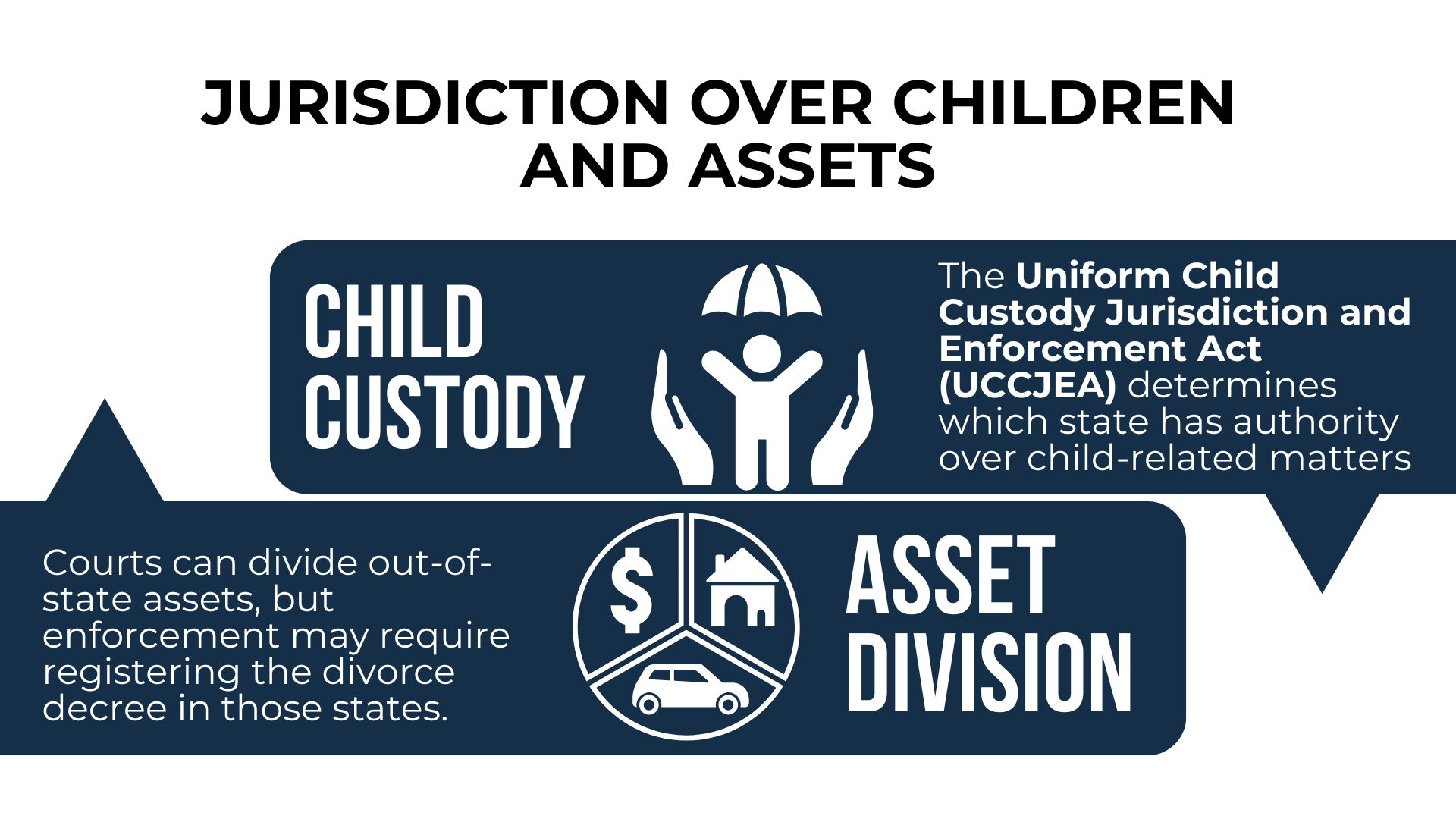
The Uniform Child Custody Jurisdiction and Enforcement Act (UCCJEA) determines which state has authority over child-related matters:
- The state where children have lived for at least 6 months typically has jurisdiction
- If children live in a different state than where you file for divorce, you may need separate proceedings
- Child custody and support issues might need resolution in the children’s home state
Asset Division Across State Lines
- The divorce court can divide marital property even if assets are located in other states
- However: Enforcing property division may require additional legal steps
- You might need to register the divorce decree in states where assets are located
Will Other States Recognize Your Divorce?
The Full Faith and Credit Clause
Good news: All states must recognize divorces properly obtained in other states, thanks to the Full Faith and Credit Clause of the U.S. Constitution.
This means:
- A Texas divorce is valid in California
- Your divorce decree is enforceable nationwide
- You don’t need to re-divorce if you move states

Common Scenarios for Out-of-State Divorce
Scenario 1: Post-Separation Relocation
One spouse moves to another state after separation and wants to file there.
Scenario 2: Long-Distance Marriage
Spouses have been living in different states for an extended period and decide to divorce.
Scenario 3: Recent Relocation
Couples who married in one state but have since moved to different states.

Key Concerns and Challenges
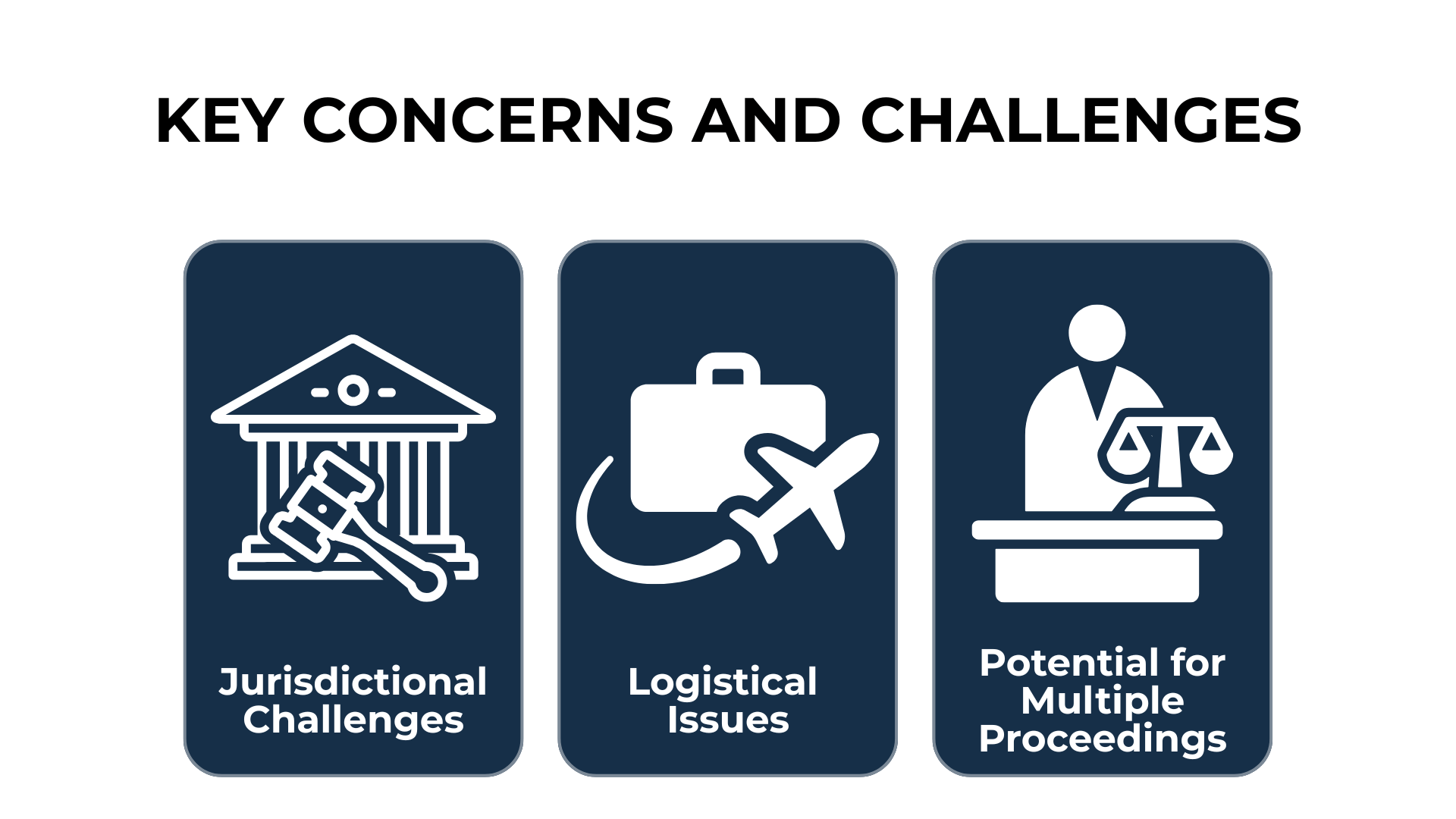
Jurisdictional Challenges
- Ensuring your chosen state has authority over all divorce aspects
- Managing child custody when children live elsewhere
- Dividing assets located in multiple states
Logistical Issues
- Serving divorce papers across state lines can be complex
- Attending court hearings may require travel
- Communication with attorneys may be more challenging
Potential for Multiple Proceedings
If custody or property issues span multiple states, you might need separate court proceedings, increasing:
- Complexity
- Time investment
- Legal costs
The Importance of Legal Representation
Consulting a divorce attorney is highly recommended for out-of-state divorces. Here’s why:
- Attorneys ensure compliance with state-specific requirements
- They navigate complex jurisdictional challenges
- They protect your rights throughout the process
- They handle interstate service of process rules
- They can coordinate with attorneys in other states if needed

Frequently Asked Questions
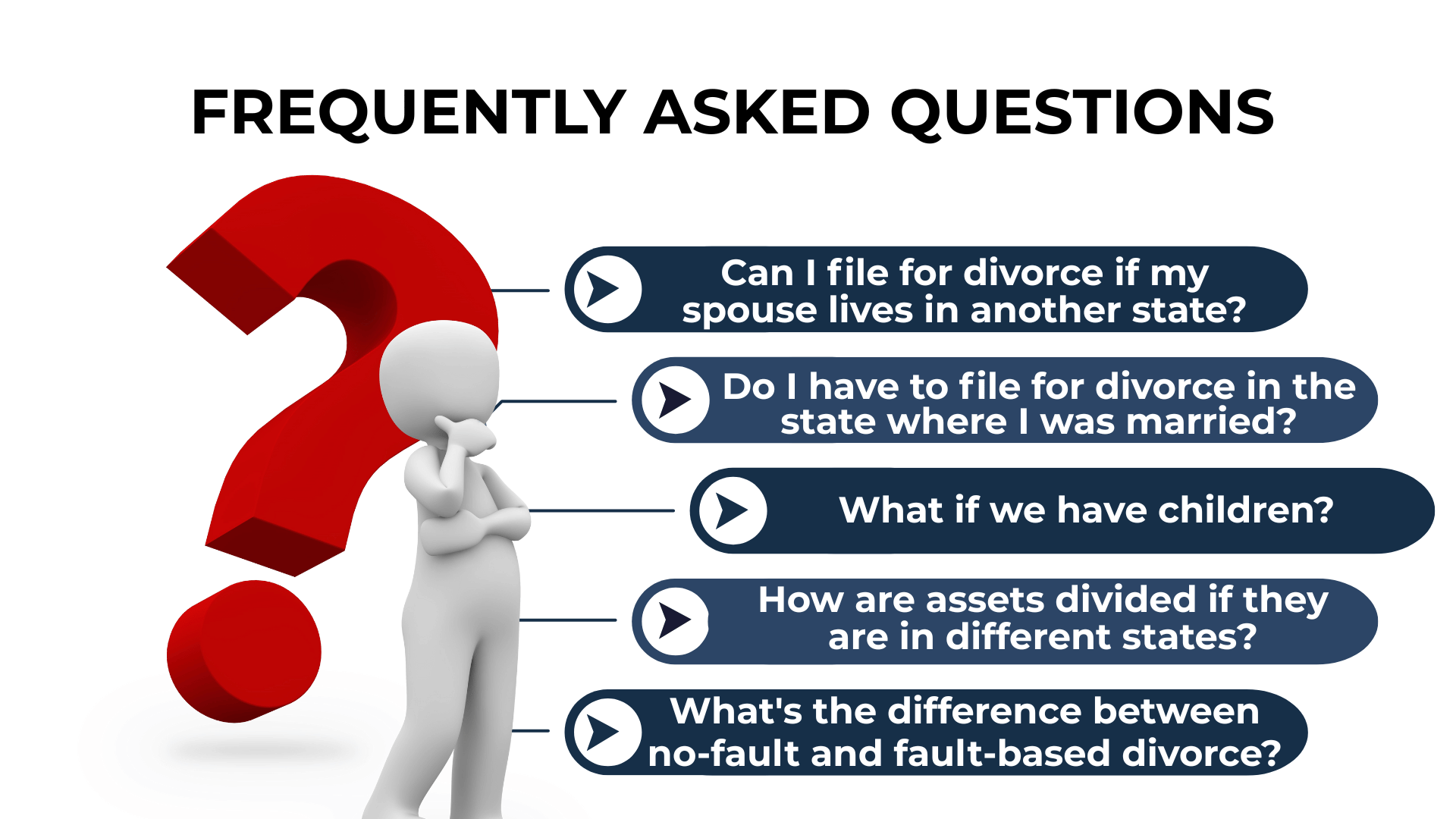
Can I file for divorce if my spouse lives in another state?
Yes, as long as you meet the residency requirements of the state where you are filing.
Do I have to file for divorce in the state where I was married?
No, you can file in any state where you or your spouse meets the residency requirements.
What if we have children?
Child custody and support issues may need to be resolved in the state where the children reside, which could require separate legal proceedings if different from the divorce filing state.
How are assets divided if they are in different states?
The state where the divorce is filed can divide marital property, but enforcing division of out-of-state assets may involve additional legal steps.
What’s the difference between no-fault and fault-based divorce?
Most states allow no-fault divorces, where neither spouse needs to prove wrongdoing, simplifying the process. However, residency requirements still apply regardless of the type of divorce.
Making Your Decision: Key Takeaways
Filing for divorce in another state is feasible but requires careful planning:
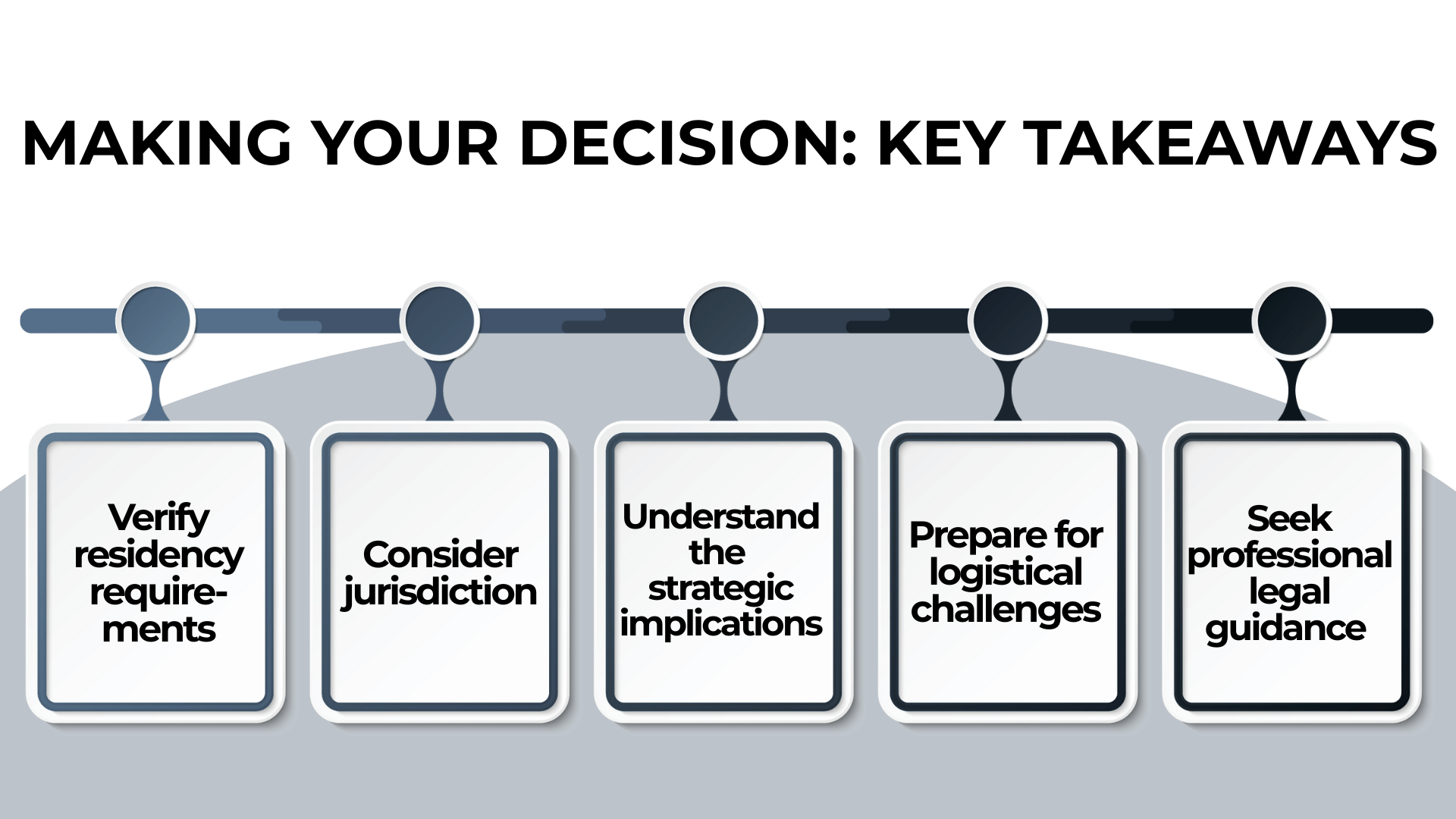
- Verify residency requirements in your desired state
- Consider jurisdiction over children and assets
- Understand the strategic implications of your choice
- Prepare for logistical challenges of interstate proceedings
- Seek professional legal guidance to navigate complexities
Remember, while you have options for where to file, the most important factors are meeting legal requirements and choosing the path that best serves your family’s needs during this challenging time.