Executive Summary: The NCAA NIL policy changes of 2024-2025 have fundamentally transformed college athletics, introducing direct athlete payments, revenue-sharing models, and complex compliance requirements. With the landmark House v. NCAA settlement approved in June 2025, athletes, schools, and families must understand these sweeping changes to maximize opportunities while avoiding costly compliance violations.
Introduction: A New Playing Field for College Athletes
The landscape of college athletics has undergone a seismic shift. If you’re an athlete, parent, coach, or administrator, you’re likely feeling overwhelmed by the rapid changes in Name, Image, and Likeness (NIL) policies. The confusion is understandable – what was once prohibited is now permitted, and the rules seem to change faster than a championship game’s momentum.
The recent NCAA NIL policy changes represent more than just regulatory updates; they’re a complete reimagining of how college athletes can benefit from their talents. From the April 2024 rule changes allowing schools to facilitate deals to the groundbreaking June 2025 House settlement enabling direct payments, the opportunities – and complexities – have multiplied exponentially.
This comprehensive guide will help you navigate these changes with confidence, providing practical insights and actionable advice to help you make informed decisions in this new era of college athletics.
Understanding the New NCAA NIL Landscape
The transformation of NIL policies began gaining momentum in 2024 and accelerated dramatically through 2025. The NCAA Division I Board of Directors set the stage in April 2024 by ratifying changes that fundamentally altered how schools can participate in NIL activities. For the first time, institutions could actively identify opportunities and facilitate deals with third parties, though athletes retained ultimate authority over agreement terms.
This shift represented a philosophical transformation for the NCAA. Schools moved from passive observers to active participants in the NIL ecosystem. The change took effect immediately, catching many institutions scrambling to develop infrastructure and policies to support their athletes effectively.
August 2024 brought another significant development with the launch of the NIL Assist platform. This comprehensive system serves multiple purposes: connecting athletes with service providers, facilitating mandatory disclosures for deals worth $600 or more, and providing educational resources. The platform represents the NCAA’s attempt to bring structure and transparency to what had been a largely unregulated marketplace.
The reporting requirements introduced alongside NIL Assist marked a new era of accountability. Schools must now report anonymized NIL data to the NCAA at least twice annually, creating a data-driven approach to understanding and managing the NIL landscape.

The House v. NCAA Settlement: What It Means for Athletes and Schools
The June 6, 2025, approval of the House v. NCAA settlement stands as perhaps the most transformative moment in college athletics history. This landmark agreement, which resolves three federal antitrust lawsuits, fundamentally changes how athletes can be compensated.
Starting July 1, 2025, schools can directly pay athletes for their NIL rights – a practice previously forbidden. The settlement establishes a revenue-sharing model with specific parameters: institutions can allocate up to approximately $20.5 million for the 2025-26 season, based on 22% of average Power 5 conference revenue, with a 4% annual increase built into the structure.
Beyond the forward-looking changes, the settlement addresses past grievances. A $2.8 billion fund will compensate athletes for lost NIL opportunities dating back to 2016, distributed over 10 years. This retroactive compensation acknowledges the earning potential athletes missed during years of restrictive policies.
The settlement also eliminated traditional scholarship caps, replacing them with roster limits for affected conferences (ACC, Big Ten, Big 12, Pac-12, SEC, and Notre Dame) and opt-in institutions. This change provides schools with greater flexibility in building their programs while potentially creating more opportunities for athletes.

Compliance Requirements and Reporting Obligations
The new NIL landscape brings substantial compliance obligations that athletes and institutions must navigate carefully. The $600 threshold has become a critical number in NIL compliance. All Division I athletes must report third-party NIL deals exceeding this amount, with the NCAA implementing increased scrutiny for fair-market-value assessments.
For athletes, compliance starts with understanding disclosure requirements. Every deal worth $600 or more must be reported through proper channels, typically via the NIL Assist platform or institutional compliance offices. This isn’t merely bureaucratic red tape – failure to disclose can result in eligibility issues and other sanctions.
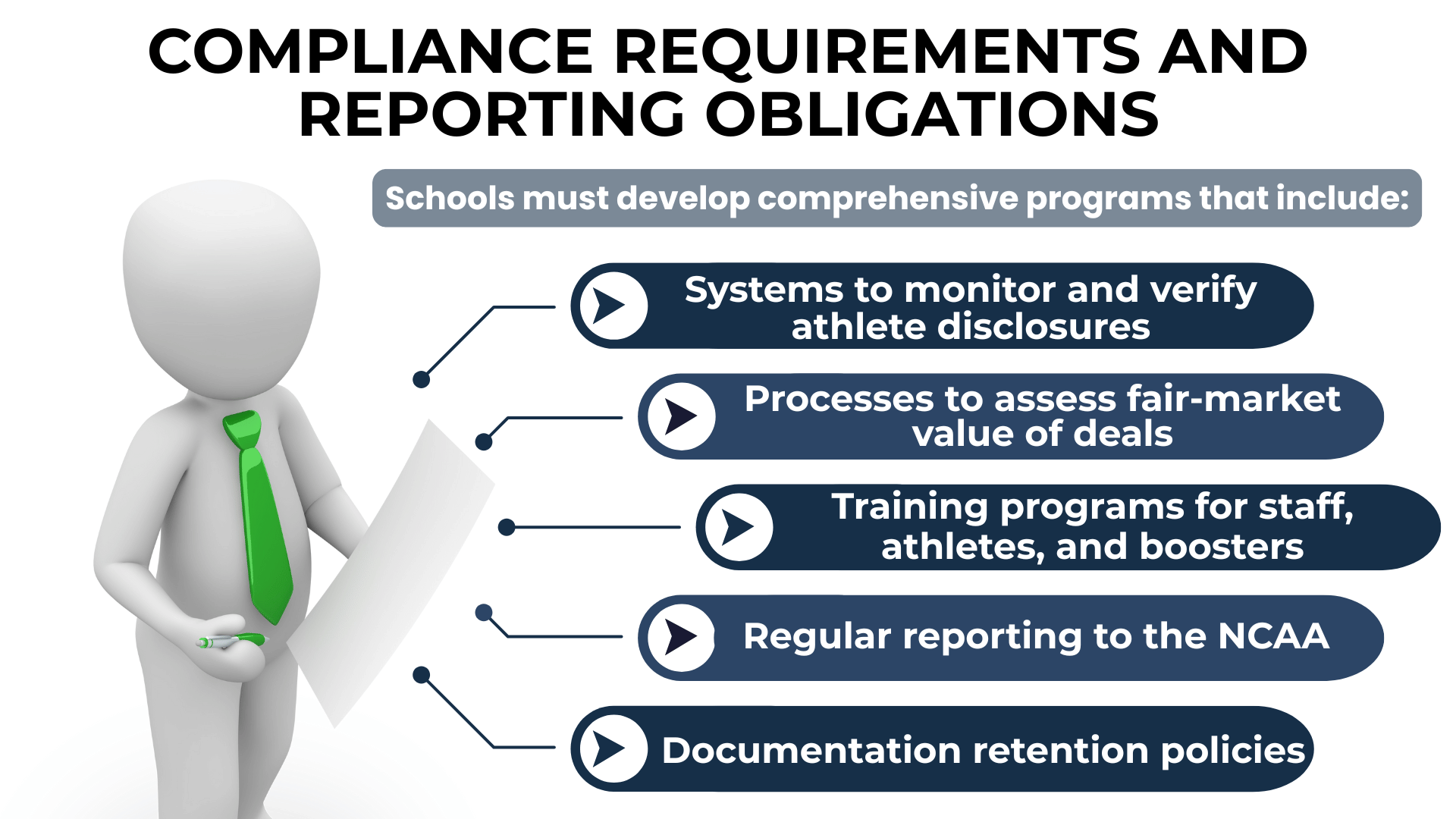
Schools face even more complex compliance challenges. They must develop comprehensive programs that include:
- Systems to monitor and verify athlete disclosures
- Processes to assess fair-market value of deals
- Training programs for staff, athletes, and boosters
- Regular reporting to the NCAA
- Documentation retention policies
The twice-annual reporting requirement to the NCAA demands robust data collection and management systems. Schools must track not just the number and value of deals, but also ensure they’re prepared to demonstrate compliance with all applicable policies.
Revenue Sharing and Financial Implications
The financial landscape of college athletics has been revolutionized by these NCAA NIL policy changes. The revenue-sharing cap of approximately $20.5 million per institution for 2025-26 represents a massive shift in how athletic departments must approach budgeting and resource allocation.
Real-world examples illustrate the earning potential for top athletes. According to the research, athletes have secured NIL deals valued at $6.8 million, $4.3 million, and $4.2 million, demonstrating the life-changing financial opportunities now available. These figures aren’t limited to individual endorsements – collectives have emerged as major players, raising an average of $3.9 million per school, with even greater amounts in Power 5 conferences.
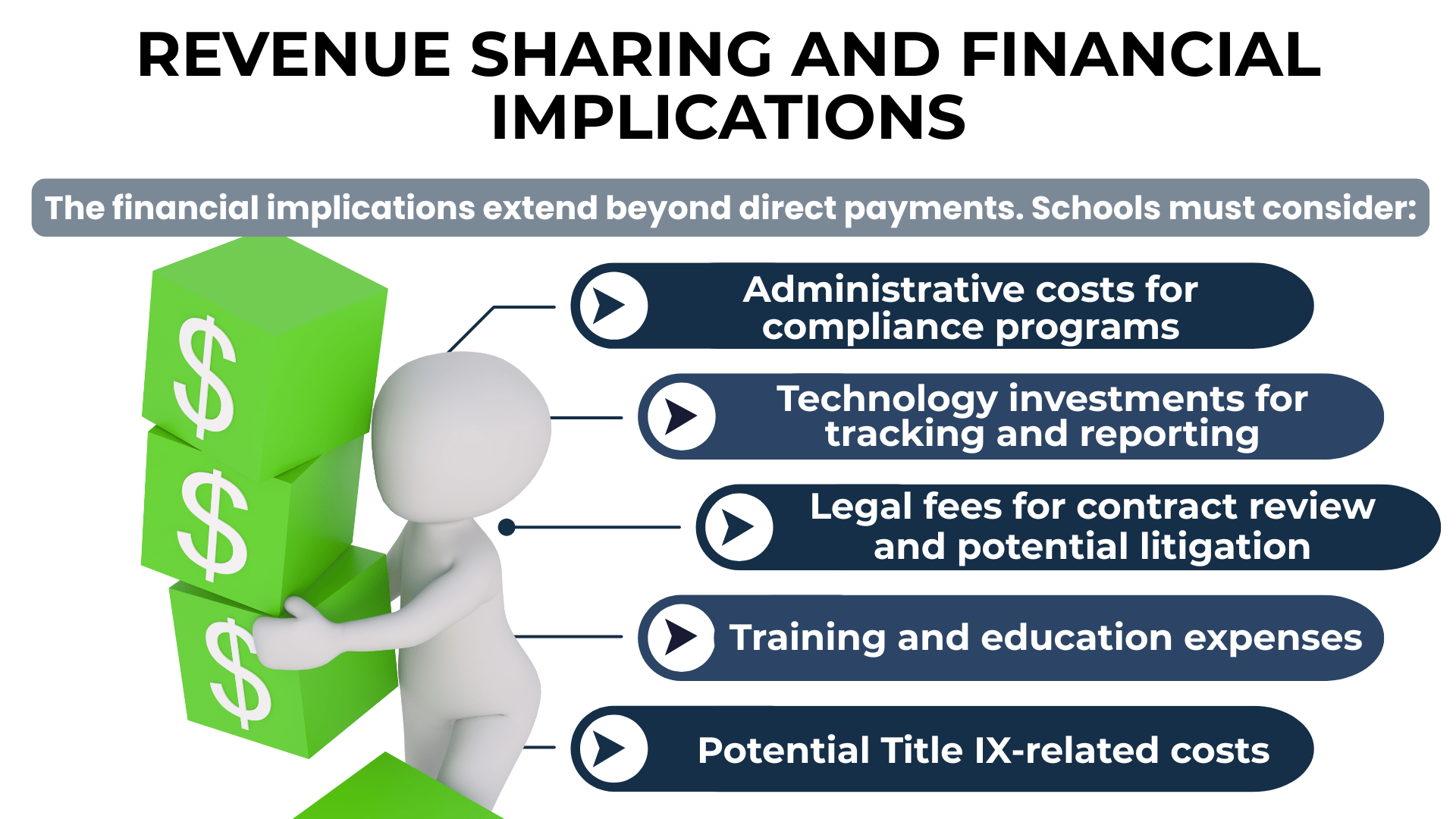
The financial implications extend beyond direct payments. Schools must consider:
- Administrative costs for compliance programs
- Technology investments for tracking and reporting
- Legal fees for contract review and potential litigation
- Training and education expenses
- Potential Title IX-related costs
For athletes, the financial opportunities come with responsibilities. Professional guidance becomes essential for negotiating contracts, understanding tax implications, and managing newfound wealth responsibly.
Title IX and Other Legal Considerations
The intersection of NIL payments and Title IX represents one of the most complex and potentially contentious aspects of the new landscape. The January 2025 guidance from the U.S. Department of Education’s Office for Civil Rights initially stated that NIL payments must be proportionate between male and female athletes. Though this guidance was later rescinded, the underlying question remains unresolved.
Eight female athletes have already appealed the House settlement, arguing it violates Title IX by potentially favoring men’s sports. This legal challenge highlights the delicate balance schools must strike in distributing revenue-sharing funds. The lack of clear federal guidance creates a precarious situation where well-intentioned distributions could still face legal challenges.
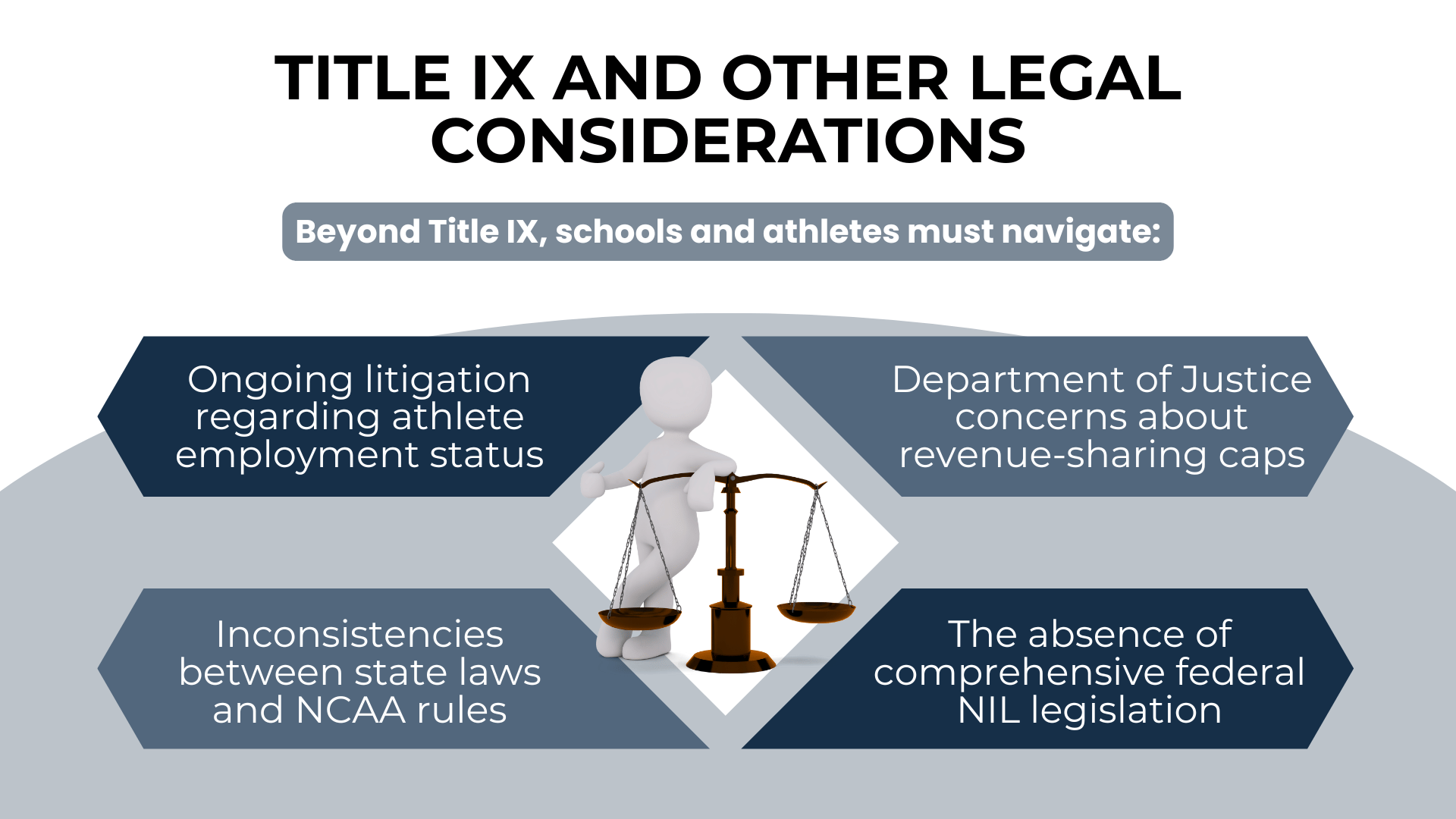
Beyond Title IX, schools and athletes must navigate:
- Ongoing litigation regarding athlete employment status
- Inconsistencies between state laws and NCAA rules
- Department of Justice concerns about revenue-sharing caps
- The absence of comprehensive federal NIL legislation
These legal uncertainties underscore the importance of staying informed and seeking appropriate legal counsel when making significant NIL decisions.
Best Practices for Athletes and Institutions
Success in the new NIL era requires proactive planning and careful execution. Based on the comprehensive research, several best practices have emerged for both athletes and institutions.
For Athletes:
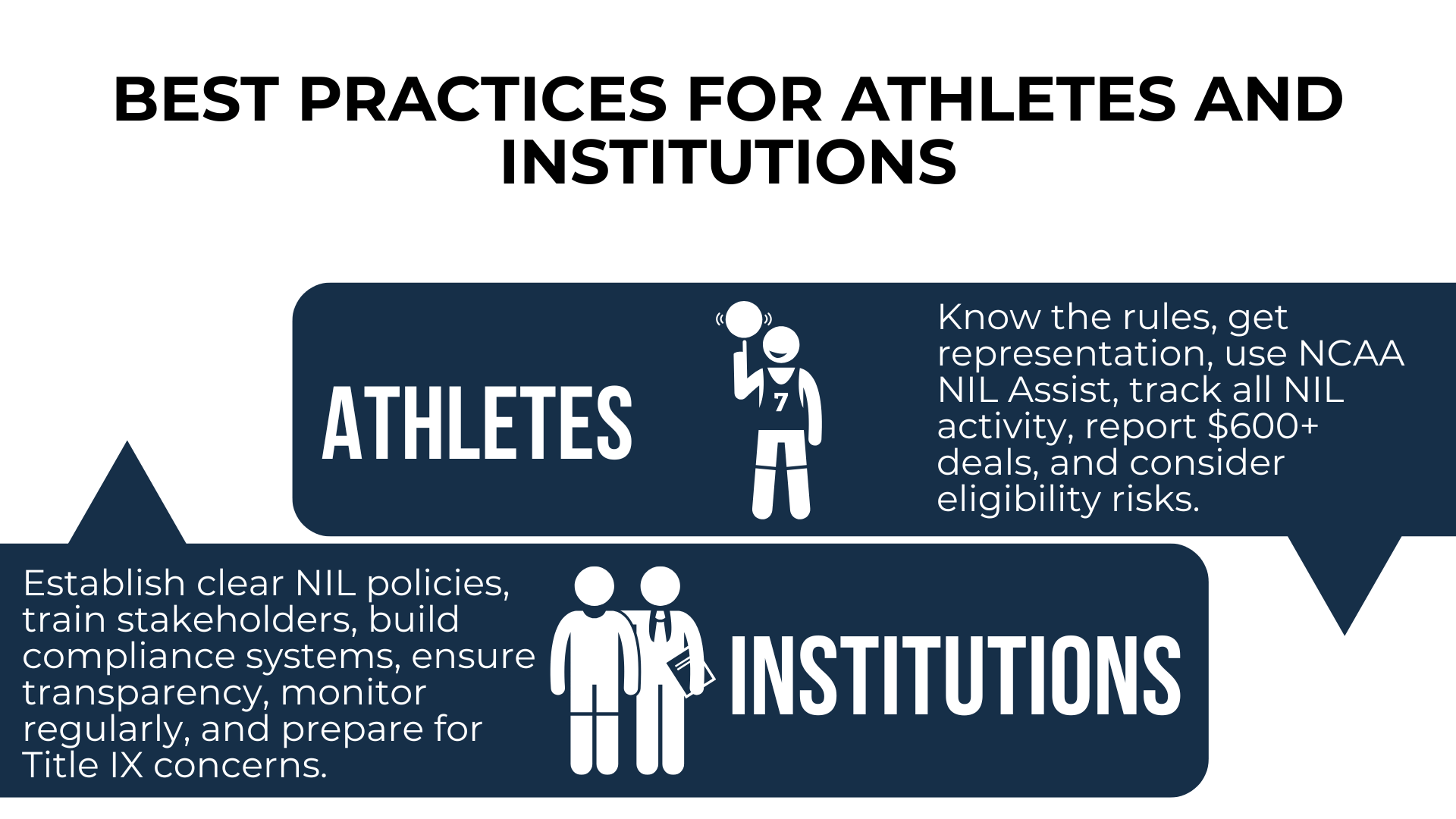
- Understand all applicable rules before entering any agreement
- Seek professional representation for contract negotiations
- Utilize the NCAA NIL Assist platform for resources and connections
- Maintain meticulous records of all NIL activities
- Report all deals over $600 promptly and accurately
- Consider the long-term implications of NIL decisions on eligibility
For Institutions:
- Develop clear, comprehensive NIL policies
- Invest in robust compliance infrastructure
- Provide regular training for all stakeholders
- Create transparent communication channels
- Implement systematic monitoring processes
- Prepare for potential Title IX challenges
Real-world implementation has shown the importance of these practices. For instance, when the Crimson Collective provided Dodge trucks to Utah Utes scholarship football players in October 2023, it demonstrated how collectives can facilitate significant opportunities while highlighting the need for proper compliance procedures.
Common Pitfalls to Avoid
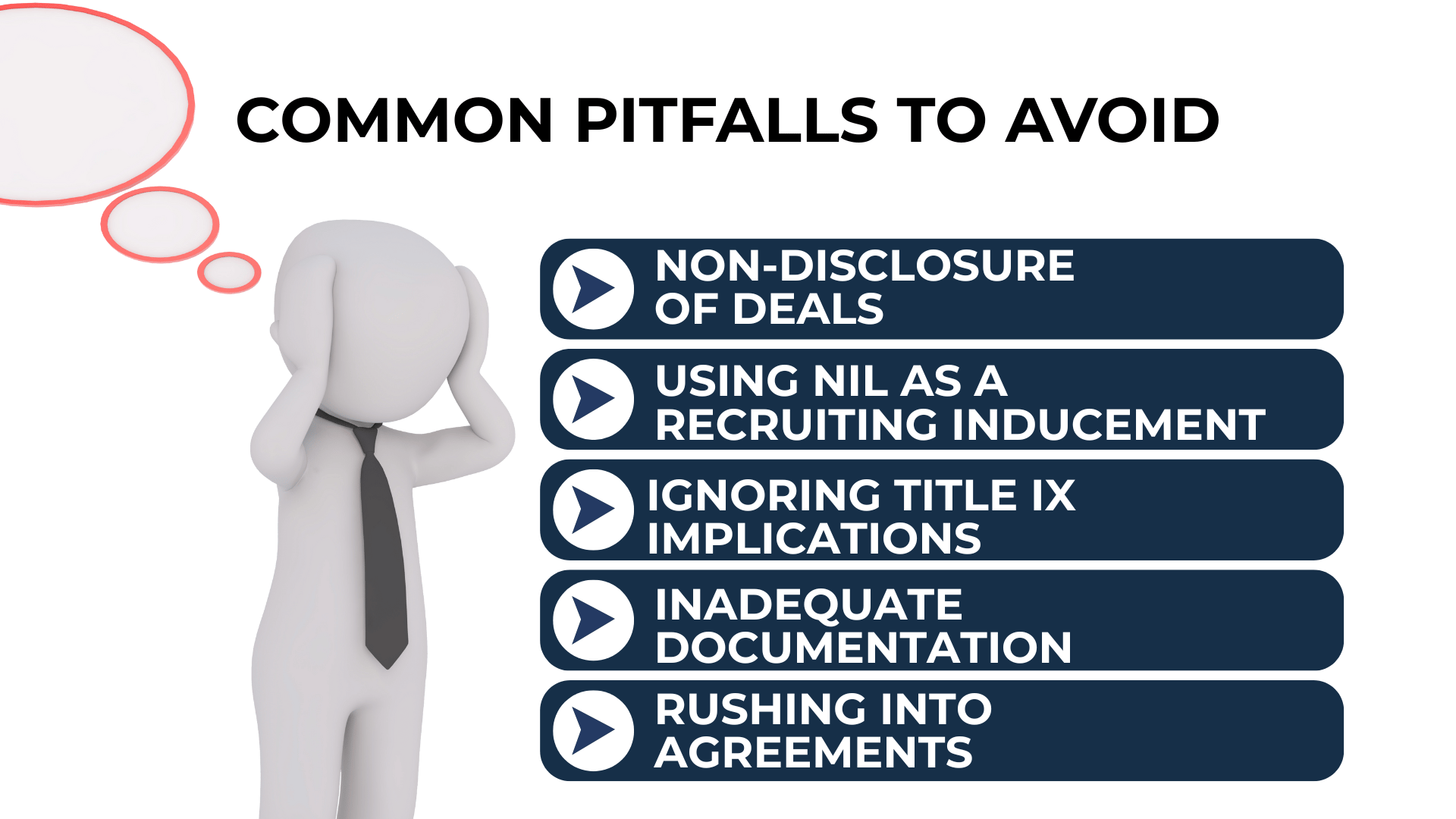
Understanding what not to do is often as important as knowing best practices. The research identifies several critical mistakes that can derail NIL success:
Non-disclosure of deals remains a prevalent issue. Athletes sometimes assume small deals don’t require reporting or forget to disclose in the excitement of securing an opportunity. Every deal over $600 must be reported – no exceptions.
Using NIL as a recruiting inducement is explicitly prohibited, yet the temptation remains strong. Schools and collectives must maintain clear boundaries between legitimate NIL opportunities and recruiting violations.
Ignoring Title IX implications when distributing revenue-sharing funds could trigger costly litigation. Even without clear guidance, schools must demonstrate good-faith efforts to ensure equitable treatment.
Inadequate documentation can turn compliance reviews into nightmares. Maintaining comprehensive records isn’t just good practice – it’s essential protection against potential violations.
Rushing into agreements without proper review often leads to problems. Athletes should resist pressure to sign quickly and ensure all agreements undergo appropriate scrutiny.
Frequently Asked Questions
Q: What exactly is NIL, and how has it changed? A: NIL refers to a student-athlete’s ability to profit from their name, image, and likeness through endorsements, sponsorships, and other ventures. The major change is that starting July 1, 2025, schools can directly pay athletes for their NIL rights, in addition to athletes securing their own third-party deals.
Q: How much can athletes potentially earn under the new system? A: Earning potential varies widely. Top athletes have secured deals worth several million dollars, while schools can distribute up to approximately $20.5 million total among their athletes in 2025-26. Individual earnings depend on market value, sport, and negotiated agreements.
Q: What are the main compliance requirements athletes must follow? A: Athletes must disclose all NIL deals worth $600 or more, cannot use NIL as a recruiting inducement, and must ensure all agreements comply with NCAA and institutional policies. Using resources like the NCAA NIL Assist platform can help ensure compliance.
Q: How might Title IX affect NIL revenue distribution? A: While specific federal guidance remains unclear, schools must be prepared to demonstrate that NIL distributions don’t discriminate based on gender. This may require careful planning to ensure equitable opportunities across men’s and women’s sports.
Conclusion: Charting Your Path Forward
The NCAA NIL policy changes have created unprecedented opportunities for college athletes while introducing complex compliance and legal challenges. Success in this new landscape requires more than understanding the rules – it demands strategic planning, professional guidance, and meticulous attention to detail.
Whether you’re an athlete looking to maximize your earning potential, a parent trying to protect your child’s interests, or an administrator working to build a compliant program, the stakes have never been higher. The difference between success and costly mistakes often comes down to having the right legal guidance.
Don’t navigate these turbulent waters alone. Our experienced legal team specializes in NIL compliance, contract negotiation, and strategic planning for athletes and institutions. We understand the nuances of the new policies and can help you develop a customized approach that maximizes opportunities while minimizing risks.
Take the first step toward NIL success today. Contact our office for a consultation to discuss your specific situation and learn how we can help you thrive in the new era of college athletics. With the right legal partner, you can focus on what you do best – whether that’s competing at the highest level or building a championship program – while we handle the complex legal landscape of modern NIL policies.