When launching or operating a business, particularly a startup, one of the most critical decisions is structuring worker relationships. Should you hire employees with formal employment agreements or engage independent contractors? This comprehensive guide examines the key differences, implications, and best practices for choosing between employment agreements and independent contractor agreements.
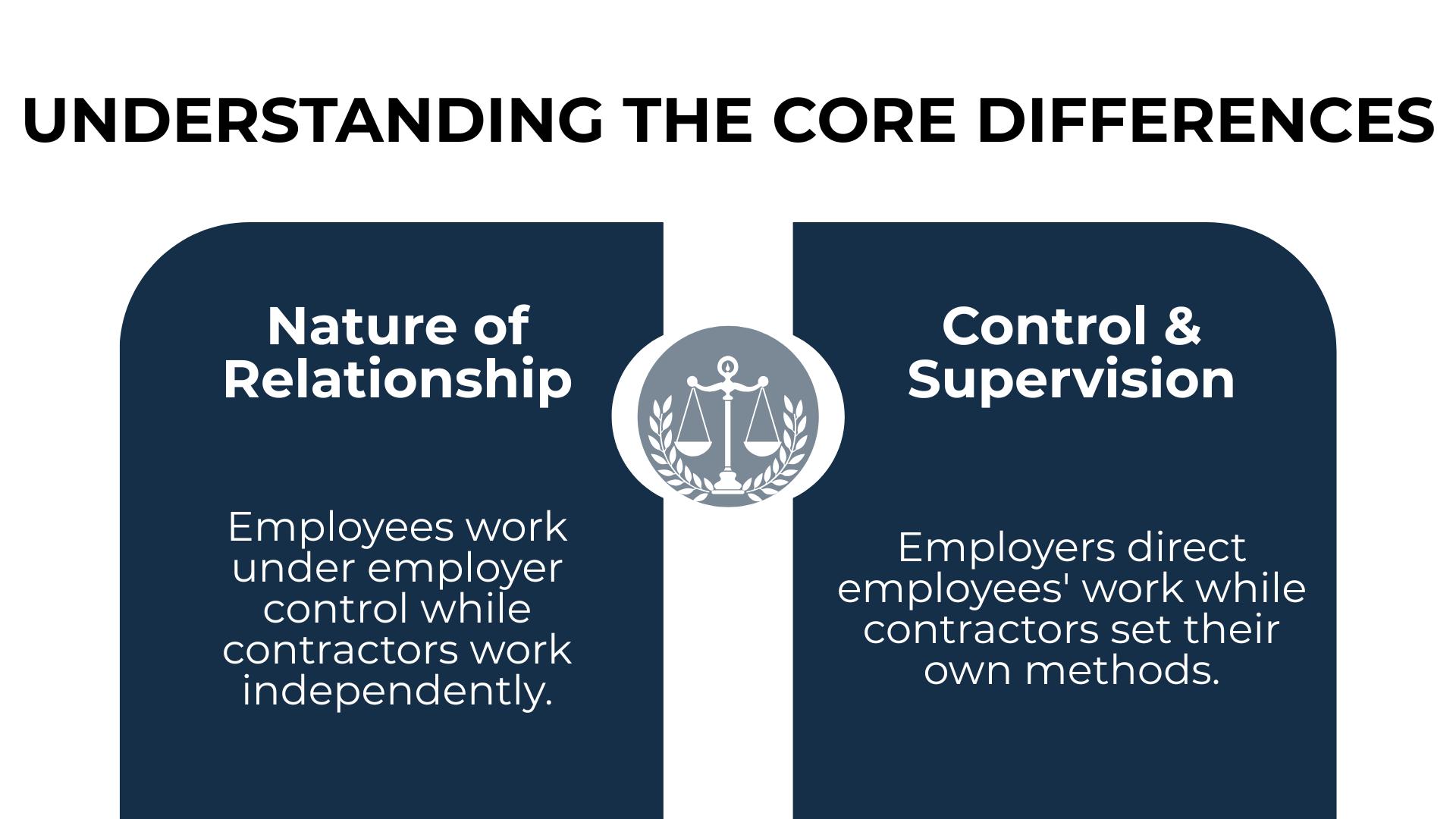
Understanding the Core Differences
Nature of the Working Relationship
Employment Agreement:
- Establishes an employer-employee relationship
- Employer controls the employee’s work, including tasks, schedule, and methods
- Creates a more integrated, long-term partnership
Independent Contractor Agreement:
- Establishes a business-to-business relationship
- Contractor operates independently
- Business controls only the outcome, not the process
Control and Supervision
The level of control is a fundamental distinction:
Employees:
- Employer directs what work is done and how
- Company provides tools and equipment
- Set working hours and location
- Direct supervision of tasks
Independent Contractors:
- Control their own methods and processes
- Use their own tools and equipment
- Set their own schedules
- Work with minimal supervision
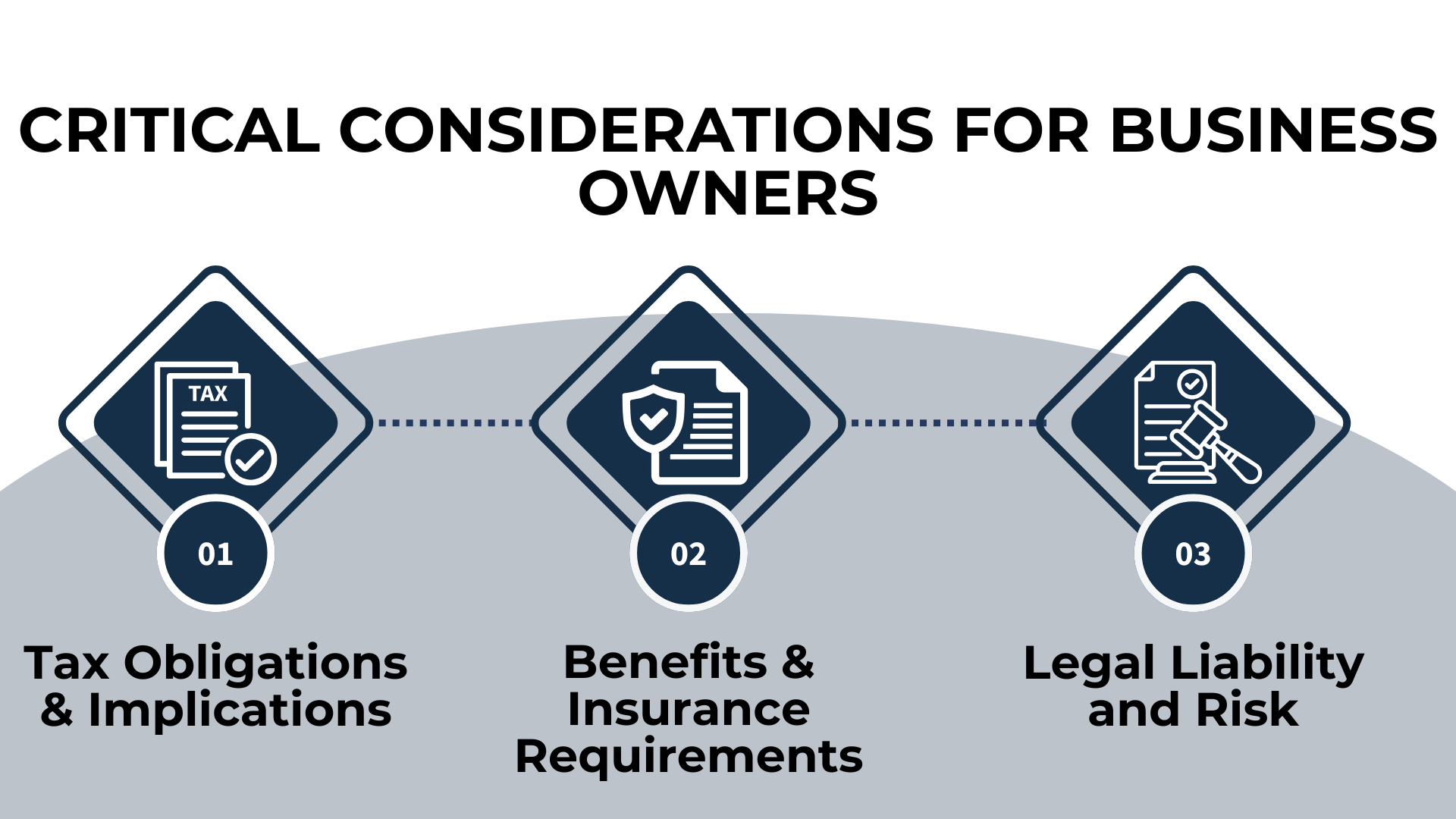
Critical Considerations for Business Owners
1. Tax Obligations and Implications
For Employees:
- Employers must withhold income taxes, Social Security, and Medicare taxes
- Pay employer’s share of Social Security and Medicare taxes
- Handle unemployment taxes
- Issue Form W-2 for tax reporting
For Contractors:
- Contractors handle their own self-employment taxes
- Businesses issue Form 1099 for payments
- No tax withholding requirements
- Reduced administrative burden
2. Benefits and Insurance Requirements
Employee Benefits:
- Health insurance
- Paid leave
- Retirement plans
- Workers’ compensation coverage
- Protected under labor laws (minimum wage, overtime)
Contractor Arrangements:
- No employee benefits required
- Contractors secure their own insurance
- Not covered by most labor laws
- Responsible for their own resources
3. Legal Liability and Risk
Employment Relationships:
- Employers liable for employees’ actions within scope of employment
- Greater regulatory compliance requirements
- Higher risk exposure
Contractor Relationships:
- Generally not liable for contractors’ actions
- Contractors operate as separate entities
- Reduced liability exposure
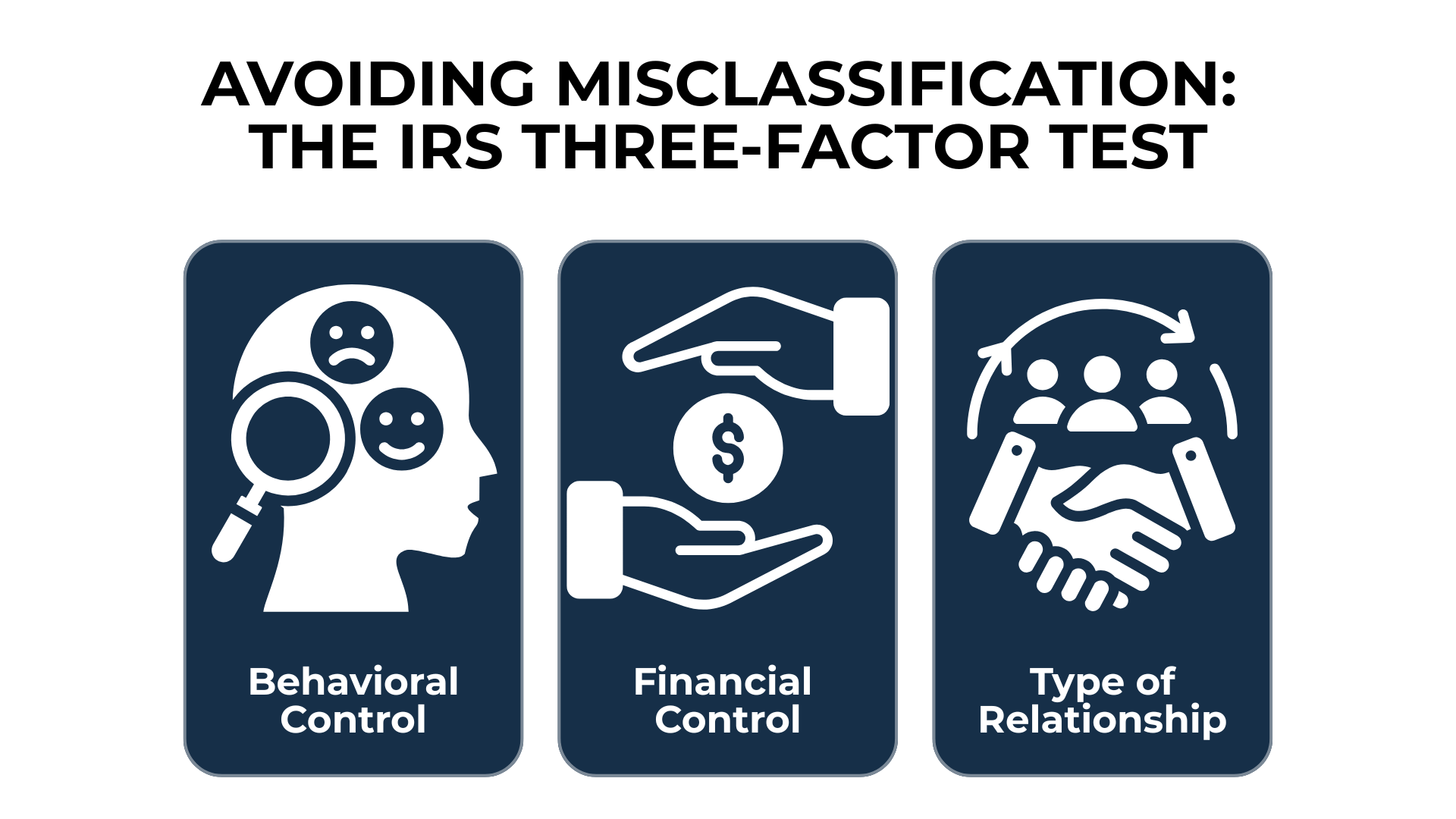
Avoiding Misclassification: The IRS Three-Factor Test
Misclassifying employees as contractors can lead to significant penalties, back taxes, and legal disputes. The IRS uses three main criteria:
1. Behavioral Control
Does the business control how work is performed? If yes, the worker is likely an employee.
2. Financial Control
Does the worker:
- Bear financial risks?
- Provide their own tools?
- Have unreimbursed expenses?
If yes, they’re likely a contractor.
3. Type of Relationship
Consider whether the worker:
- Receives benefits
- Has a long-term relationship with the company
- Performs work central to the business
These factors indicate employee status.
Essential Contract Components
Employment Agreement Must-Haves:
- Salary and compensation structure
- Benefits package details
- Working hours and location
- Job duties and responsibilities
- Termination terms and conditions
Independent Contractor Agreement Essentials:
Scope of Work
- Detailed description of services, tasks, and deliverables
- Clear timelines and milestones
Payment Terms
- Rate structure (hourly or project-based)
- Invoicing procedures
- Payment schedule
Confidentiality Provisions
- Protection of sensitive business information
- Clear definitions of confidential material
Intellectual Property Rights
- Ownership of work products
- Transfer of IP rights (critical for tech startups)
Termination Conditions
- Grounds for ending the engagement
- Notice periods required
- Post-termination obligations

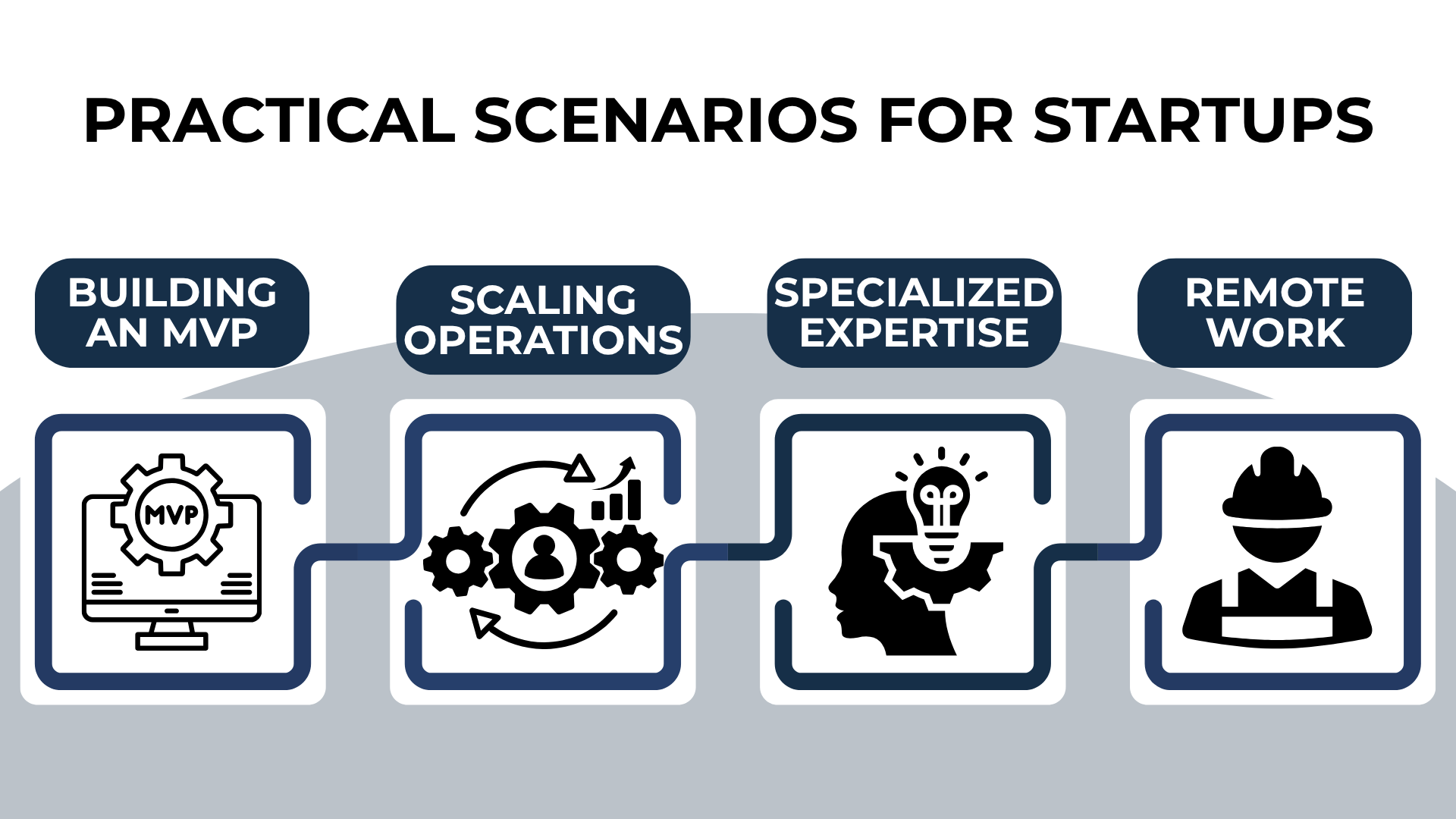
Practical Scenarios for Startups
Building a Minimum Viable Product (MVP)
- Often use freelance developers or designers as contractors
- Cost-effective for limited budgets
- Must clearly define deliverables and IP ownership
Scaling Operations
- Transition to employees for consistency and control
- Better for roles like operations or customer support
- Requires employment agreements with detailed job descriptions
Specialized Expertise
- Contractors ideal for short-term, specialized tasks
- Examples: marketing consultant for product launch
- Employees better for ongoing, integral roles (e.g., full-time CTO)
Remote Work Considerations
- Ensure contractor agreements comply with worker’s jurisdiction laws
- Pay attention to tax reporting requirements like Form 1099
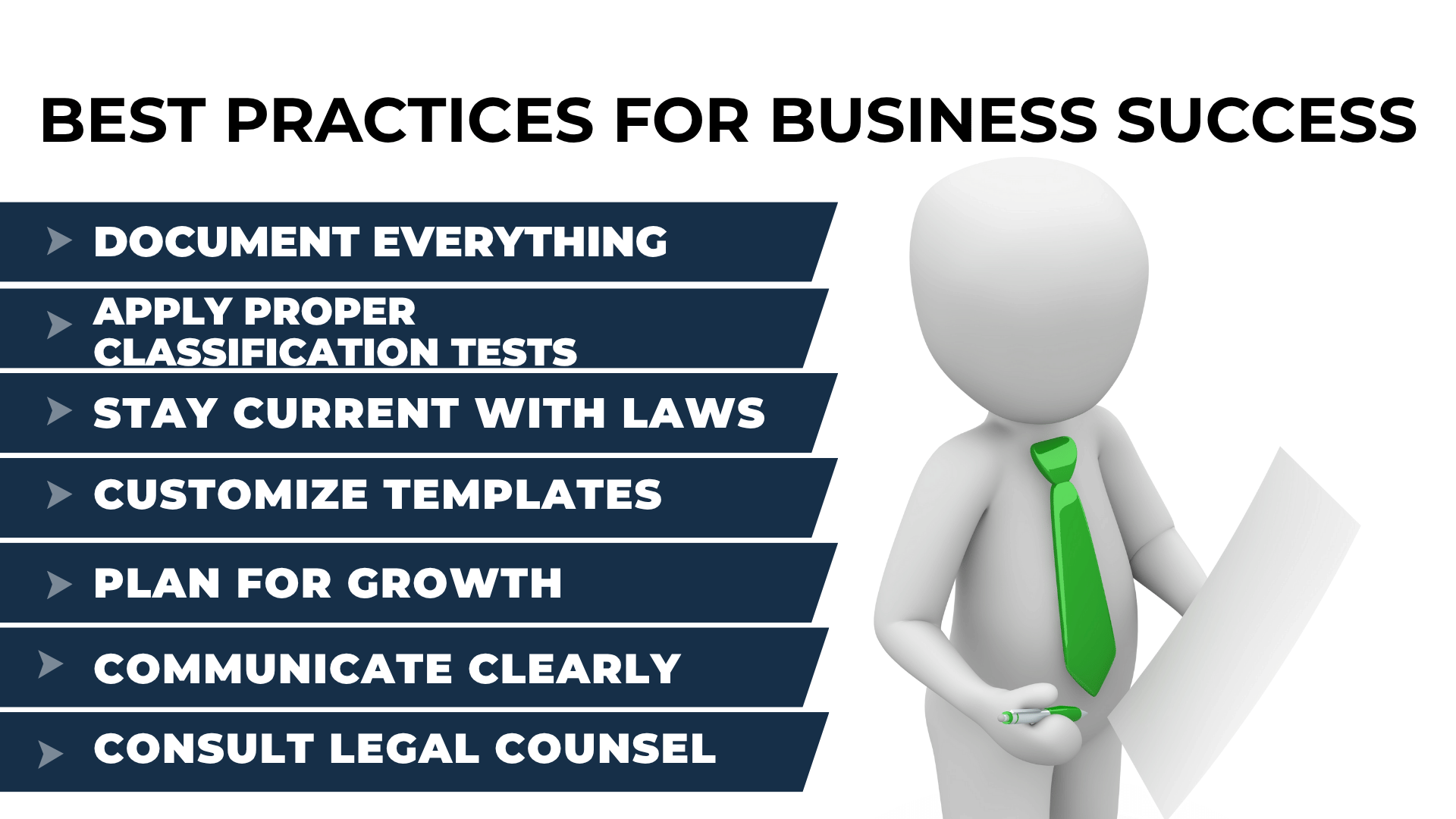
Best Practices for Business Success
1. Document Everything
Use formal written agreements for both employees and contractors to establish clear expectations and protect against disputes.
2. Apply Proper Classification Tests
Use IRS guidelines or state-specific tests (like the ABC test) to classify workers correctly. When uncertain, file IRS Form SS-8 for determination.
3. Stay Current with Laws
Worker classification laws vary by jurisdiction and evolve over time. Monitor changes, especially for remote workers.
4. Customize Templates
While templates from reputable sources can streamline agreement creation, customize them for your specific business needs.
5. Plan for Growth
Early-stage startups may rely on contractors, but plan for transitioning to employees as funding and operations scale.
6. Communicate Clearly
Ensure both parties understand agreement terms, including deliverables, payment schedules, and responsibilities.
7. Consult Legal Counsel
Engage attorneys to draft or review agreements, especially where IP protection and compliance are critical.
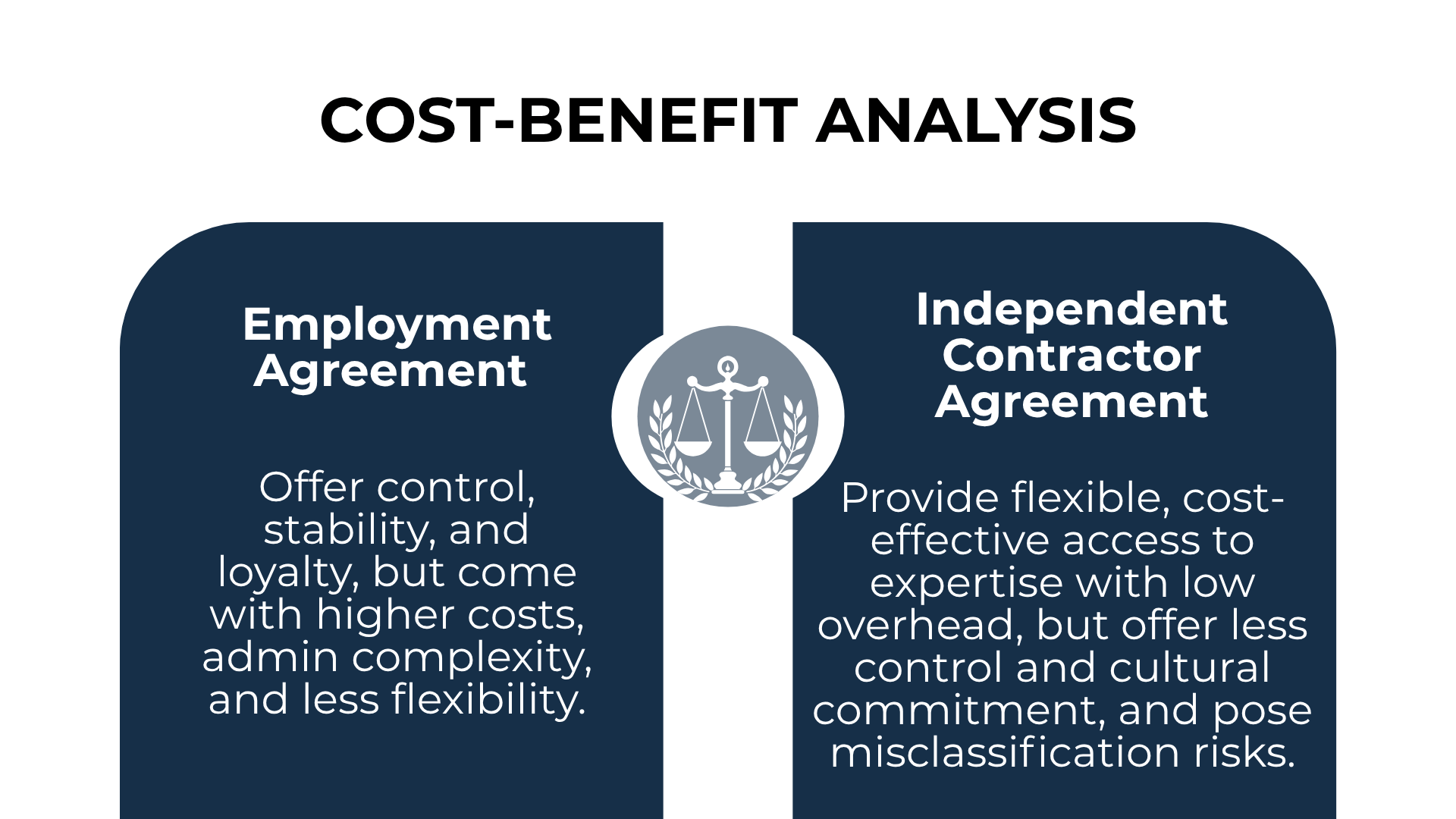
Cost-Benefit Analysis
Employment Agreements
Pros:
- Greater control and integration
- Team stability and loyalty
- Consistent availability
Cons:
- Higher costs (taxes, benefits, overhead)
- More administrative complexity
- Less flexibility for scaling down
Independent Contractor Agreements
Pros:
- Cost-effective for project work
- Flexibility in engagement
- Reduced administrative burden
- Access to specialized skills
Cons:
- Less control over work methods
- Potential misclassification risks
- May lack commitment to company culture
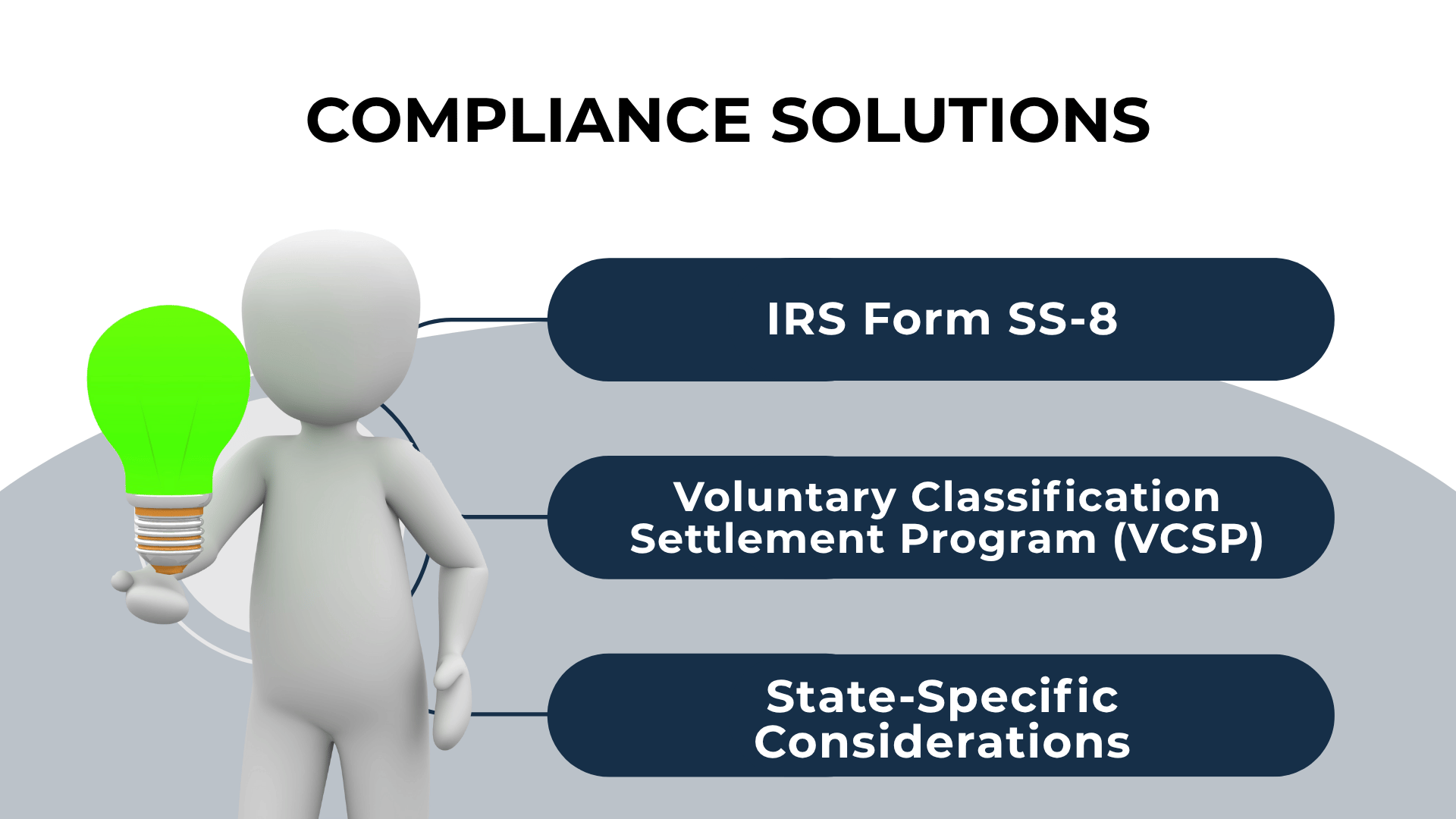
Compliance Solutions
IRS Form SS-8
Request formal determination of worker status (process takes at least six months)
Voluntary Classification Settlement Program (VCSP)
Allows businesses to reclassify workers as employees with partial tax relief
State-Specific Considerations
Some states use stricter tests (like the ABC test) that can complicate compliance for multi-state operations
Frequently Asked Questions
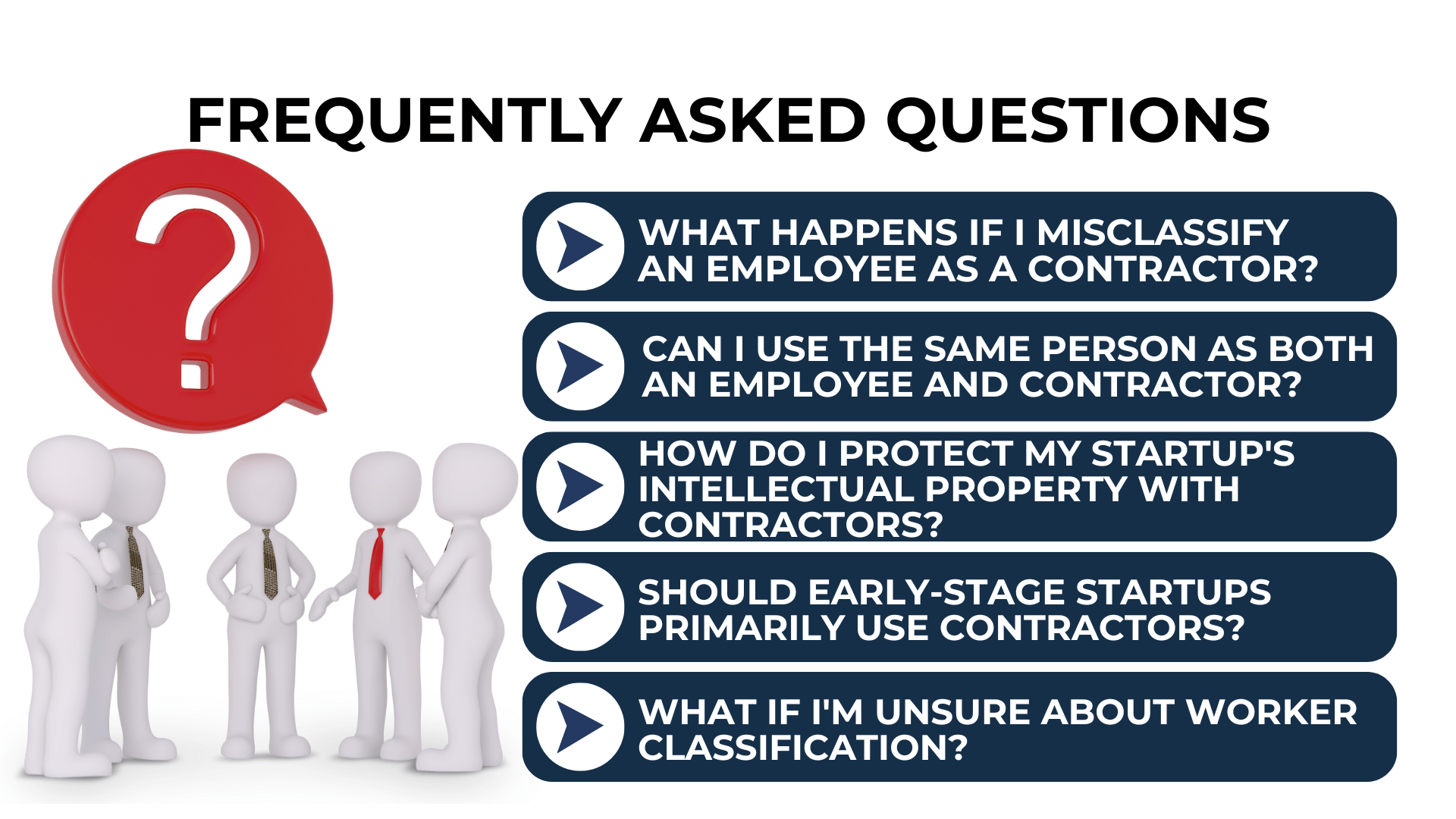
Q: What happens if I misclassify an employee as a contractor?
A: Misclassification can result in audits, fines, back taxes, and reputational damage. The IRS and state authorities may impose penalties and require payment of back employment taxes.
Q: Can I use the same person as both an employee and contractor?
A: While technically possible for completely different types of work, this arrangement invites scrutiny and increases misclassification risk.
Q: How do I protect my startup’s intellectual property with contractors?
A: Include explicit IP assignment clauses in contractor agreements, clearly stating that all work products and deliverables become company property upon payment.
Q: Should early-stage startups primarily use contractors?
A: Many startups begin with contractors due to limited funding and project-based needs. However, plan to transition key roles to employees as you scale for better control and team cohesion.
Q: What if I’m unsure about worker classification?
A: Consult legal or tax professionals, or file IRS Form SS-8 for an official determination. When in doubt, err on the side of caution.
Key Takeaways
Choosing between employment agreements and independent contractor agreements is pivotal for business success. Employment agreements offer stability and control but come with higher costs and responsibilities. Independent contractor agreements provide flexibility and cost savings but require careful management to avoid misclassification.
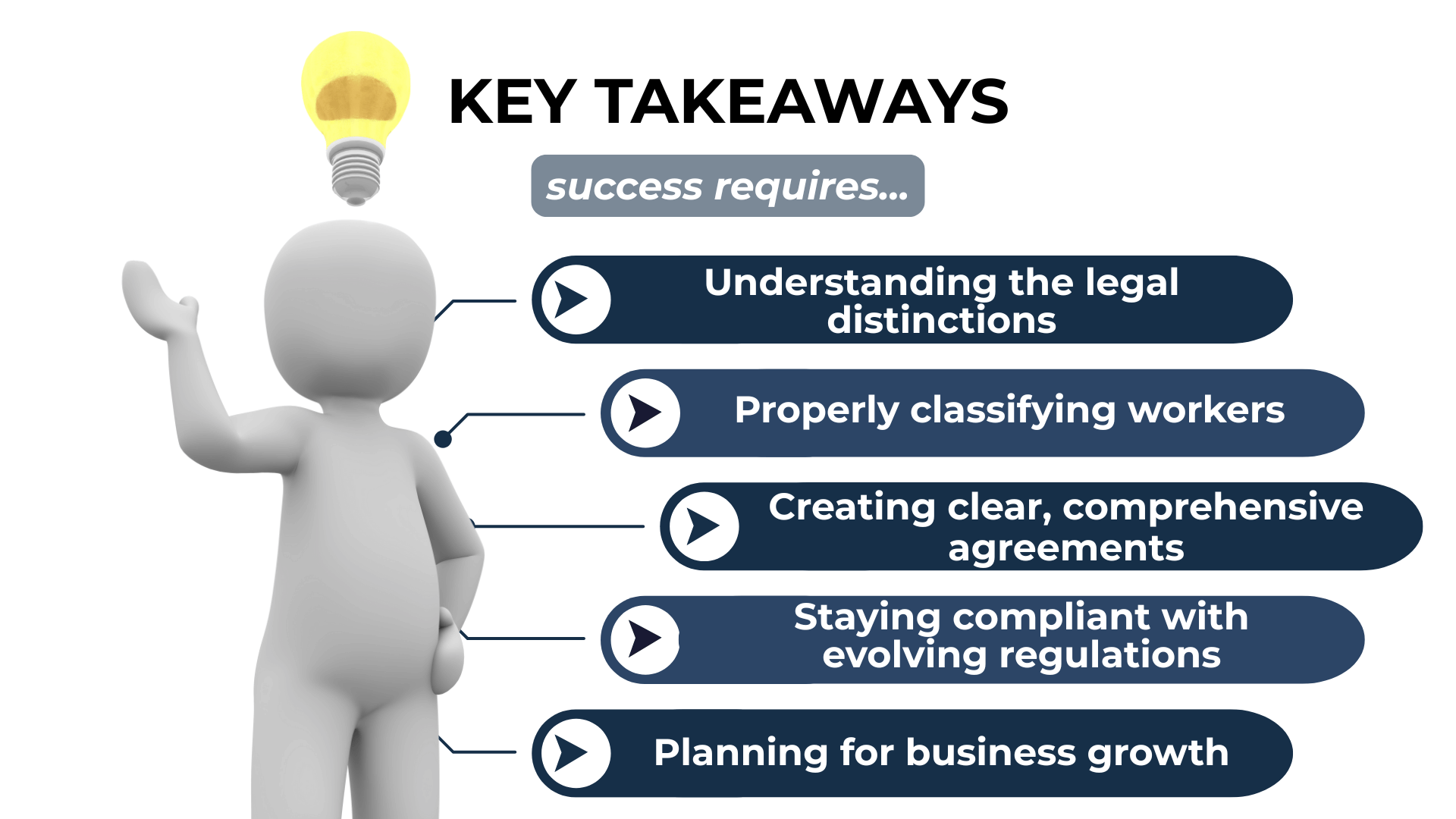
Success requires:
- Understanding the legal distinctions
- Properly classifying workers
- Creating clear, comprehensive agreements
- Staying compliant with evolving regulations
- Planning for business growth
By following these guidelines and best practices, startups and small businesses can make informed decisions that support growth while minimizing legal and financial risks. Remember: when in doubt, consult with legal counsel to ensure your agreements align with business goals and comply with applicable laws.