Executive Summary: The landmark House v. NCAA settlement has transformed college athletics, introducing new NIL compliance rules that take effect July 1, 2025. With schools now able to pay athletes directly and stricter oversight through the NIL Go clearinghouse, understanding these regulations is crucial for avoiding penalties and maximizing opportunities.
Introduction: A New Era Demands New Understanding
The college sports landscape has shifted dramatically. If you’re a student-athlete, parent, or coach, you’re likely feeling overwhelmed by the sweeping changes to Name, Image, and Likeness (NIL) rules. The confusion is understandable—what was once a patchwork of varying regulations has evolved into a more structured, yet complex system.
The House v. NCAA settlement, approved on June 6, 2025, isn’t just another rule change. It fundamentally alters how athletes can earn money and how schools can support them. With the ability for schools to pay athletes directly and new oversight mechanisms in place, the stakes have never been higher. One misstep in compliance could mean lost opportunities, financial penalties, or even ineligibility.
This guide breaks down everything you need to know about NIL compliance rules 2025, providing clear, actionable steps to navigate this new landscape successfully.

Understanding the New NIL Landscape
The House v. NCAA settlement marks a turning point in college athletics. For the first time, Division I schools can directly compensate athletes up to $20.5 million annually per school, starting July 1, 2025. This cap increases by 4% each year for the next decade.
But this newfound opportunity comes with significant responsibilities. The settlement established the College Sports Commission, formed by major conferences, to oversee compliance. This shift means the NCAA no longer serves as the primary enforcement body—a change that many are still adjusting to.
The most significant addition is the NIL Go clearinghouse, managed by Deloitte. This system reviews all third-party NIL deals over $600 to ensure they serve legitimate business purposes and align with fair market value. Think of it as a checkpoint that protects both athletes and the integrity of college sports.
Key Takeaways:
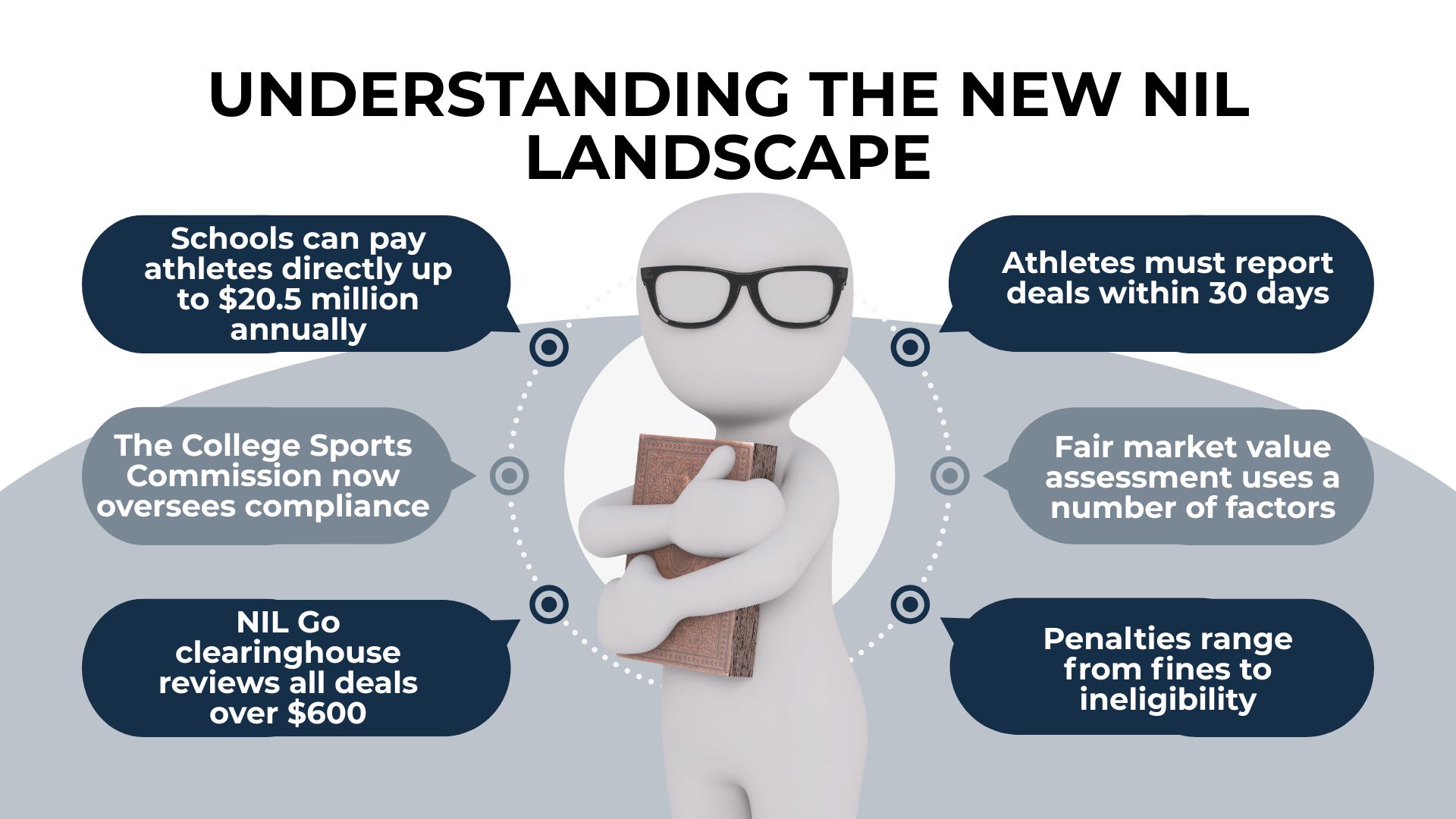
- Schools can pay athletes directly up to $20.5 million annually
- The College Sports Commission now oversees compliance, not the NCAA
- NIL Go clearinghouse reviews all deals over $600
- Athletes must report deals within 30 days
- Fair market value assessment uses a number of factors
- Penalties range from fines to ineligibility
Key Compliance Requirements for Athletes
As an athlete navigating NIL compliance rules 2025, your primary obligation is transparency. Every NIL deal over $600 must be reported to the NIL Go clearinghouse within 30 days. This isn’t just a suggestion—it’s a requirement that could impact your eligibility.
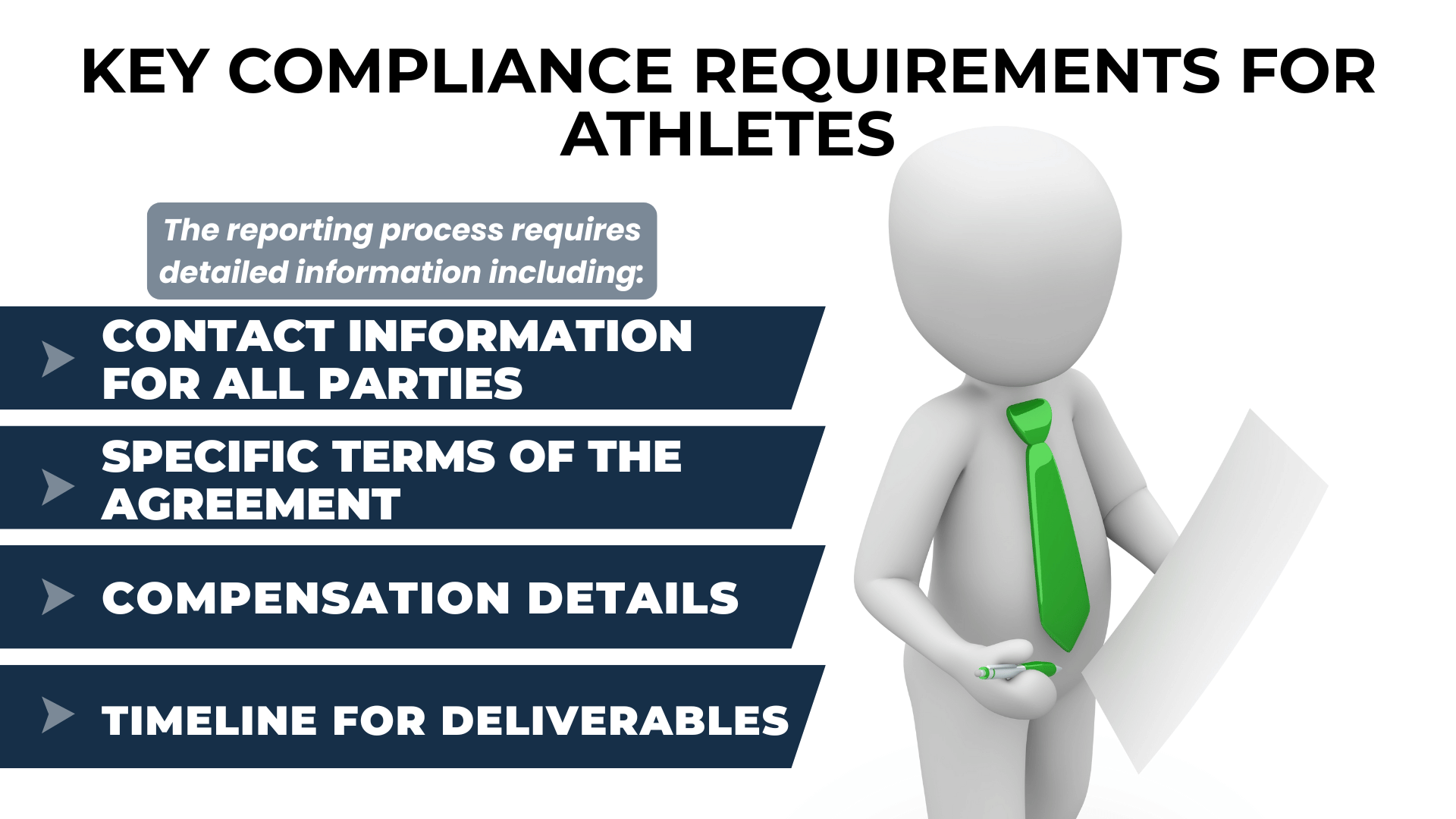
The reporting process requires detailed information including:
- Contact information for all parties involved
- Specific terms of the agreement
- Compensation details
- Timeline for deliverables
Remember, these requirements apply to all types of NIL activities, whether it’s a social media endorsement, a personal appearance, or a long-term partnership with a local business. The key is to think of every opportunity through the lens of compliance first, opportunity second.
The NIL Go Clearinghouse: What You Need to Know
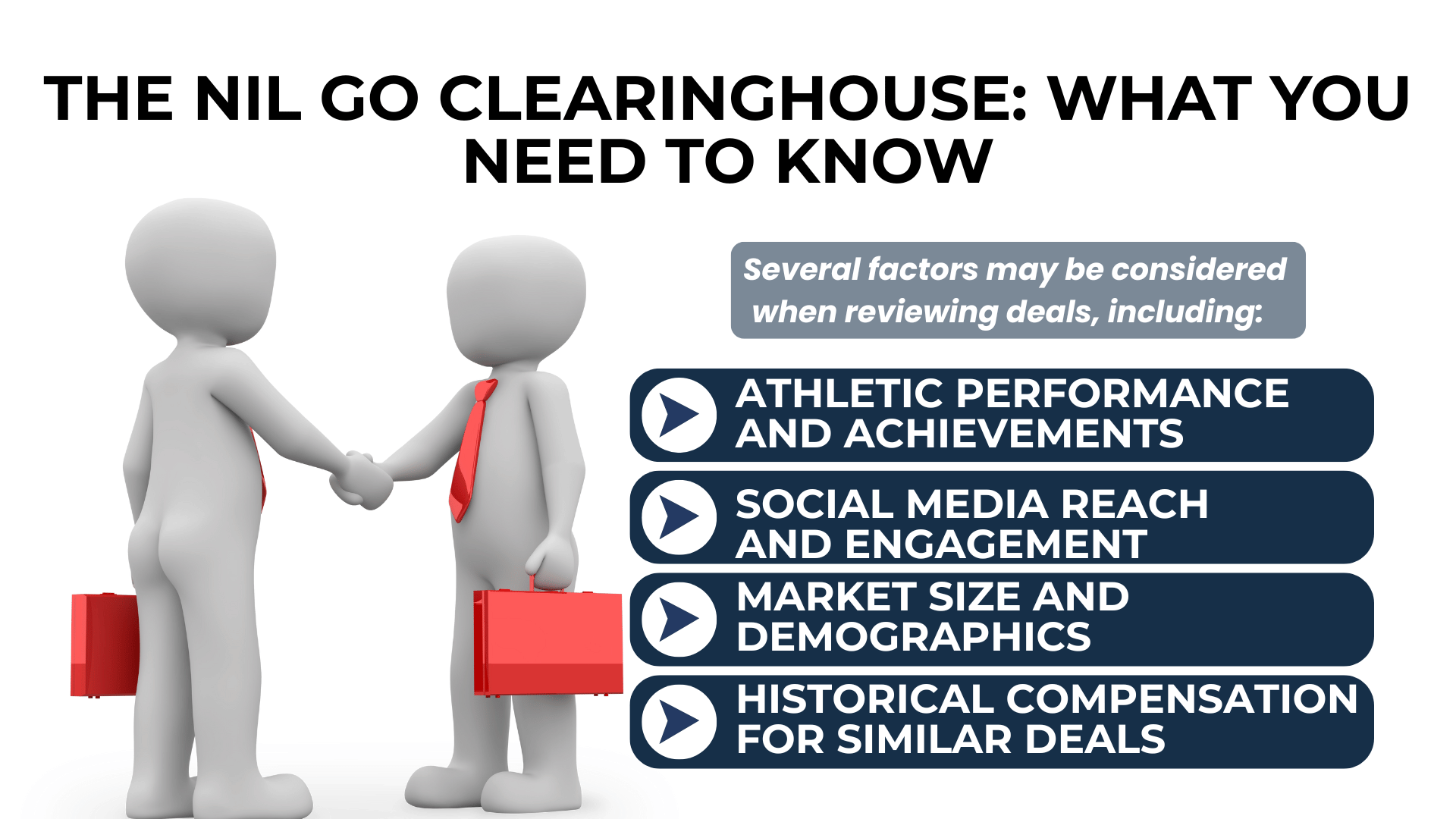
The NIL Go clearinghouse serves as the gatekeeper for NIL deals, using sophisticated analysis to evaluate whether agreements meet fair market value standards. A number of factors may be considered when reviewing deals, including:
- Athletic performance and achievements
- Social media reach and engagement
- Market size and demographics
- Historical compensation for similar deals
Understanding how the clearinghouse operates can help you structure deals that pass review. For instance, a starting quarterback at a major program with 100,000 Instagram followers can reasonably command higher compensation than a backup player with minimal social media presence.
The clearinghouse aims to prevent “pay-for-play” schemes while allowing legitimate business arrangements. Interestingly, approximately 70% of past booster-driven deals would fail under the new system, highlighting the importance of structuring deals properly from the start.
Common Compliance Pitfalls and How to Avoid Them
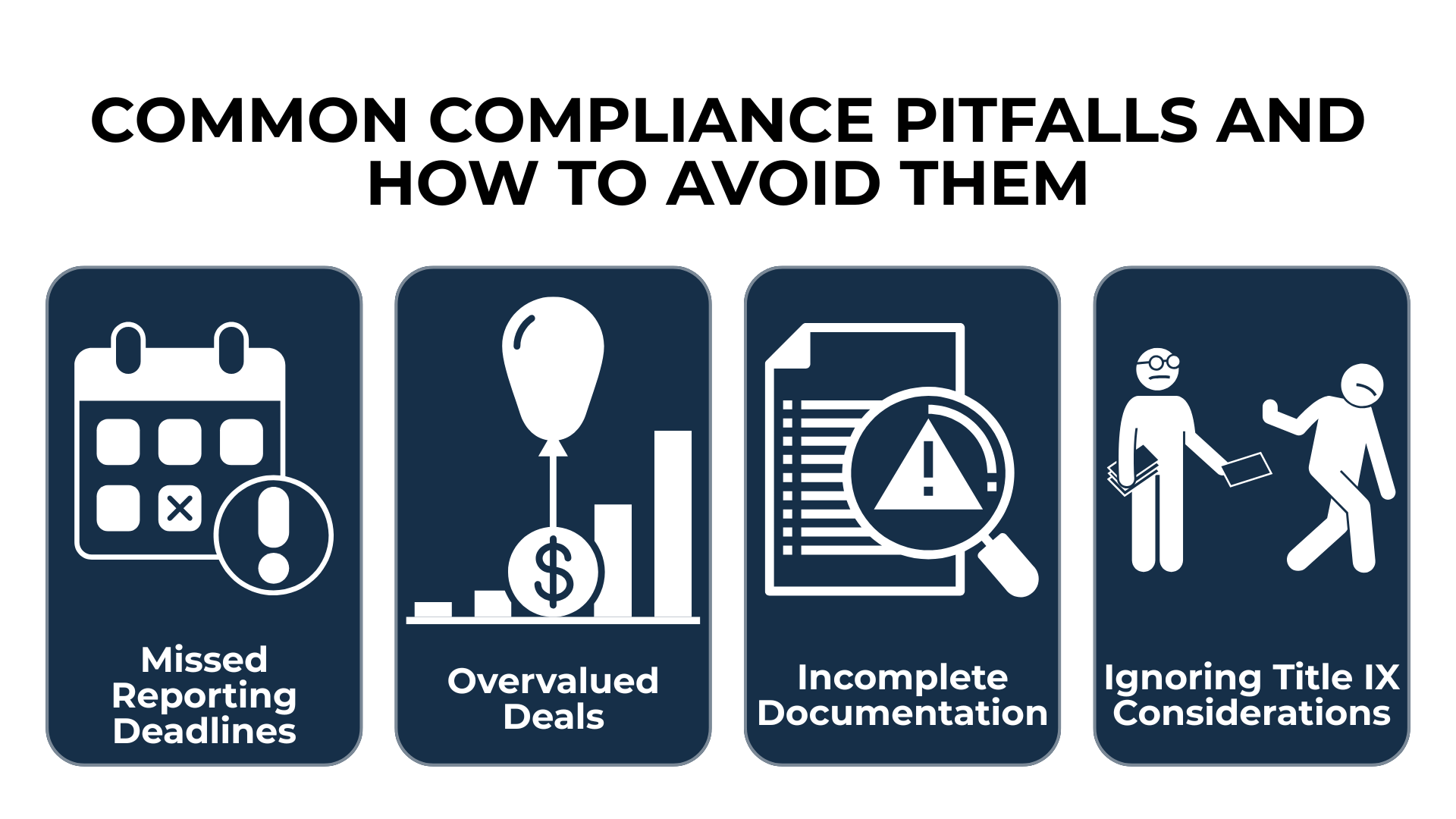
The path to NIL success is littered with potential missteps. Here are the most common pitfalls and how to avoid them:
Missed Reporting Deadlines: The 30-day reporting window is non-negotiable. Set reminders immediately after signing any deal. Consider using a compliance calendar or working with your school’s NIL office to track deadlines.
Overvalued Deals: If a local business offers you $50,000 for a single Instagram post, red flags should wave. Ensure your compensation aligns with your actual market value based on the analysis of NIL Go.
Incomplete Documentation: Submitting partial information to NIL Go often results in delays or denials. Keep detailed records of all communications, contracts, and deliverables.
Ignoring Title IX Considerations: Schools must ensure equitable NIL opportunities across genders. This doesn’t mean identical payments, but it does mean equal access to opportunities and resources.
School Responsibilities and Support Systems
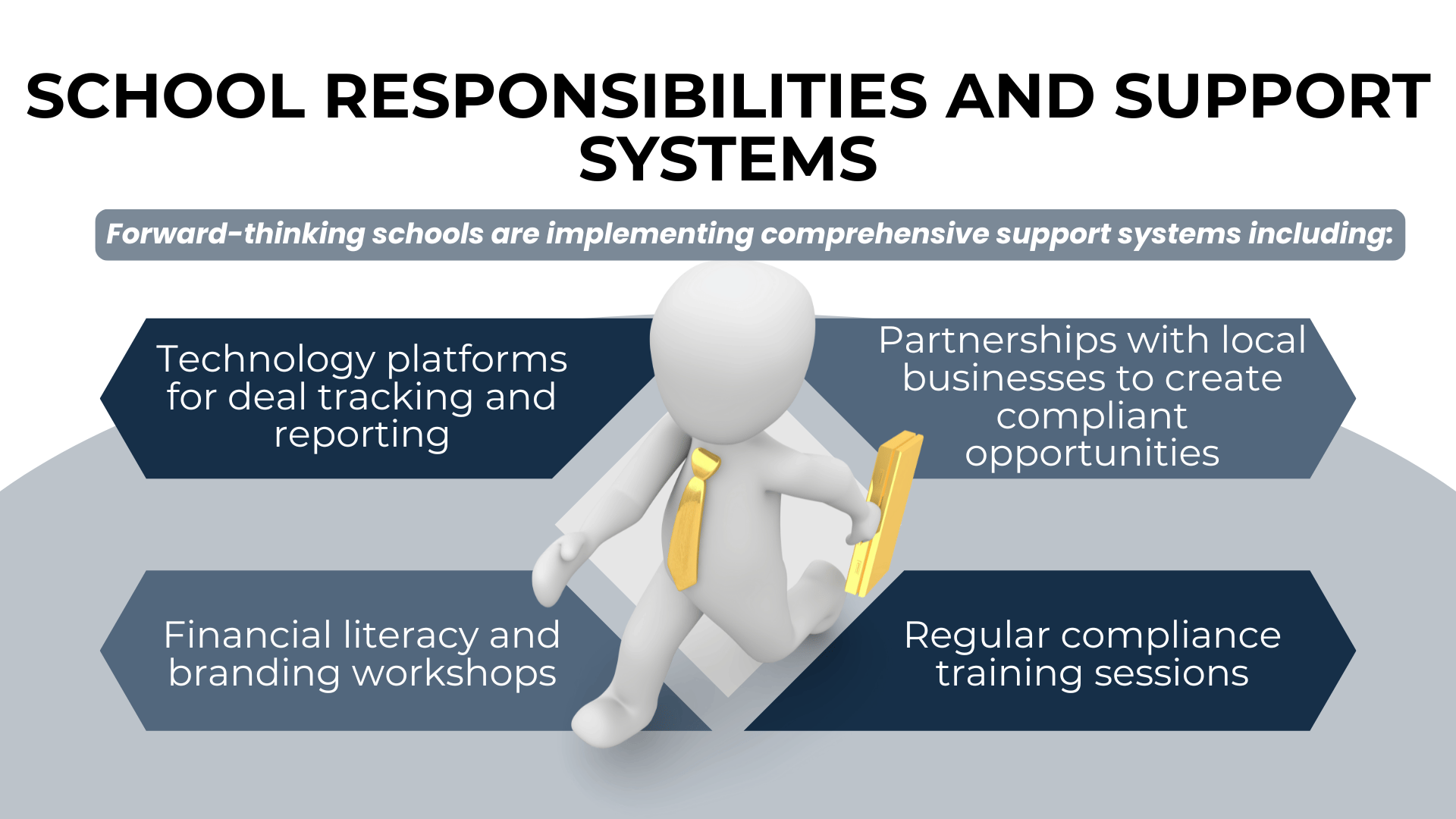
Schools play a crucial role in NIL compliance under the 2025 rules. Institutions must establish dedicated compliance offices to monitor and report all athlete benefits. This includes creating educational programs that help athletes understand their obligations and opportunities.
Forward-thinking schools are implementing comprehensive support systems including:
- Technology platforms for deal tracking and reporting
- Financial literacy and branding workshops
- Partnerships with local businesses to create compliant opportunities
- Regular compliance training sessions
Schools must also report all benefits to the College Sports Commission within 60 days after the academic year ends. This creates a shared responsibility model where both athletes and institutions must work together to ensure compliance.
Penalties and Enforcement: Understanding the Consequences
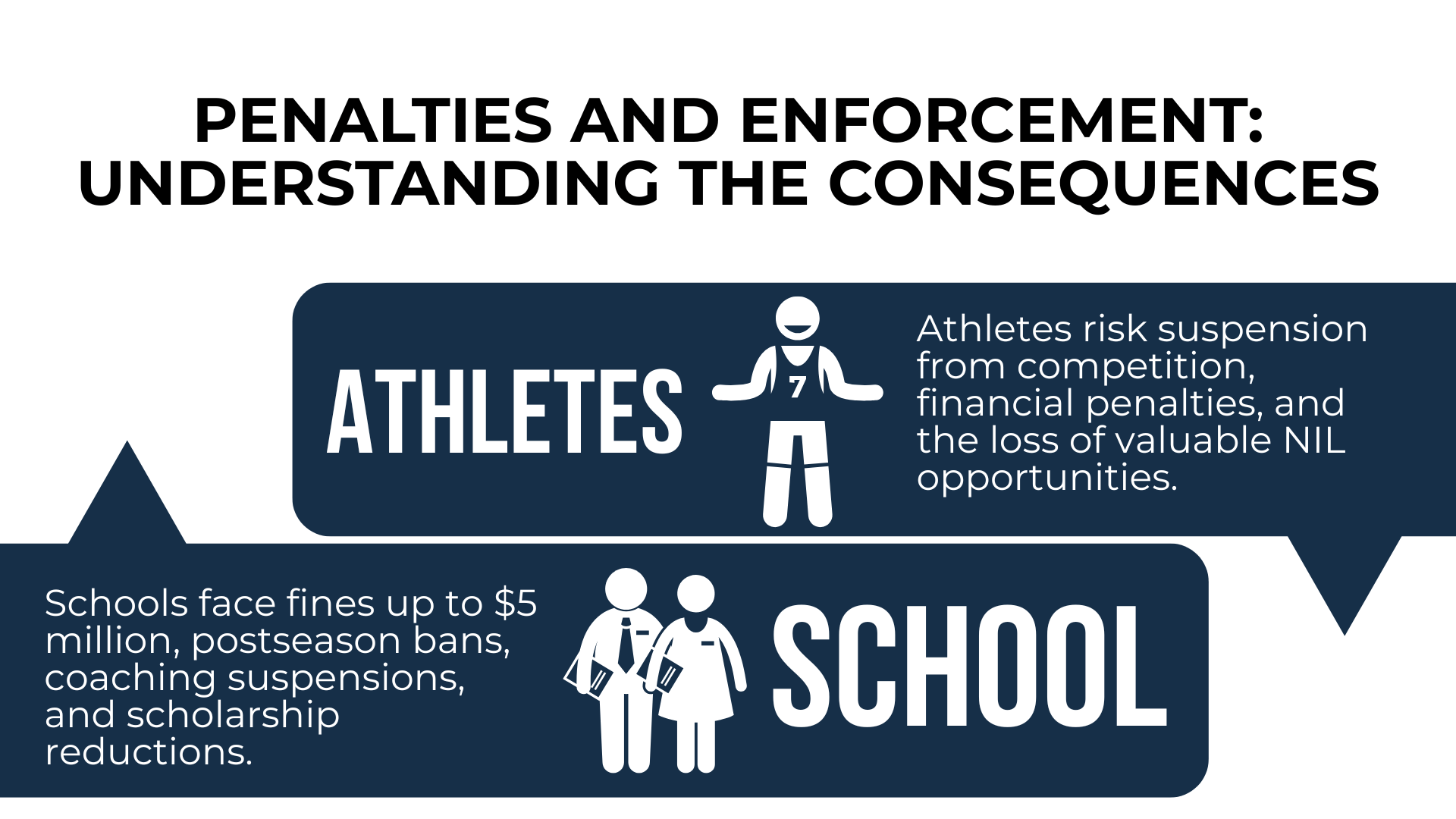
The new enforcement structure under the College Sports Commission brings serious consequences for non-compliance. Penalties can include:
For Athletes:
- Ineligibility for competition
- Financial fines
- Loss of NIL opportunities
For Schools:
- Fines ranging from $100,000 to $5 million
- Postseason bans
- Coaching suspensions
- Scholarship reductions
These aren’t empty threats. The enforcement mechanism is designed to maintain competitive balance while allowing athlete compensation. The severity of penalties reflects the seriousness with which the new system approaches compliance.
Practical Steps for Staying Compliant
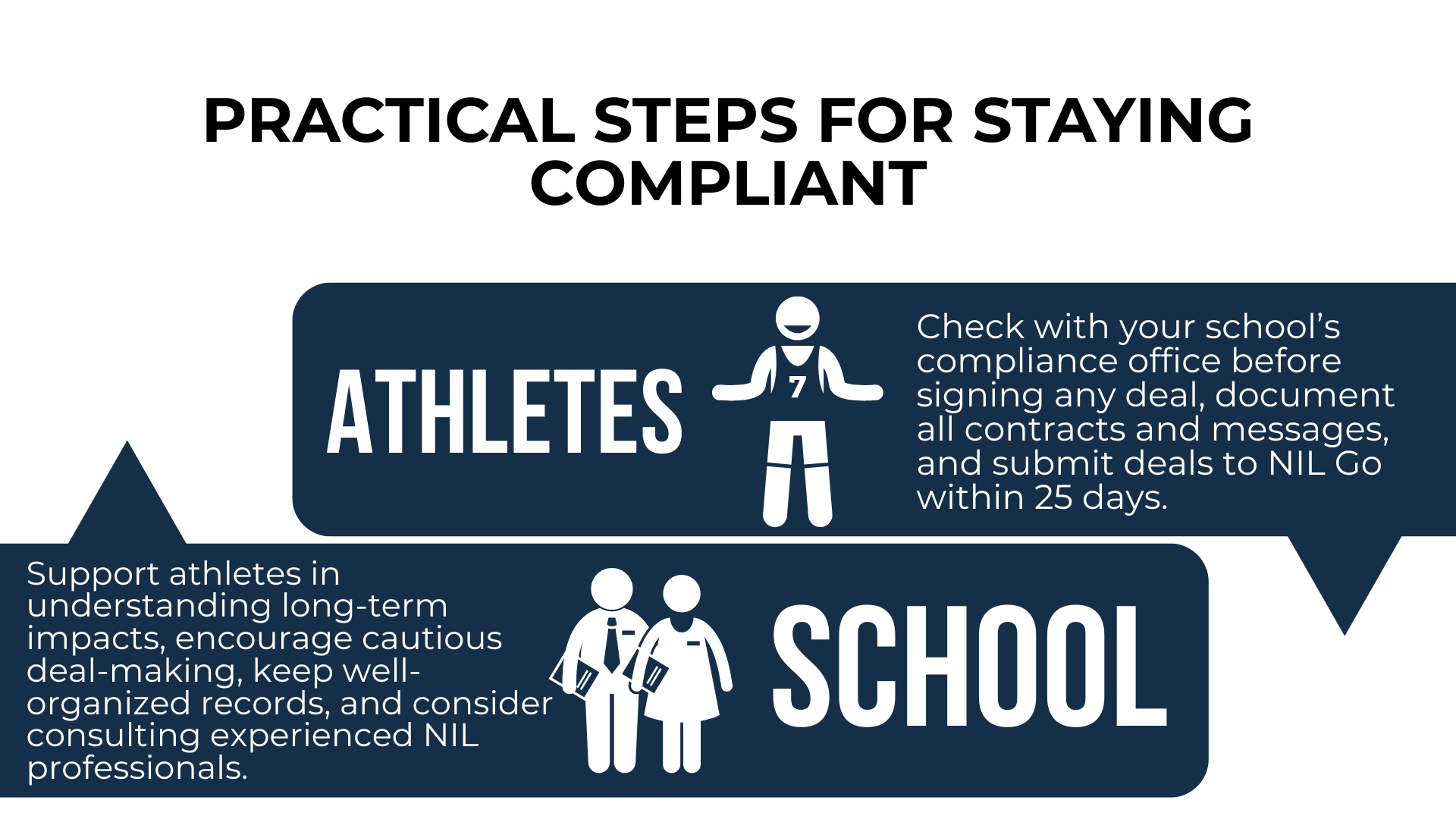
Success under the NIL compliance rules 2025 requires a proactive approach. Here’s your action plan:
For Athletes:
- Before signing any deal, consult with your school’s compliance office
- Document everything—keep copies of all contracts and communications
- Submit deals to NIL Go within 25 days (don’t wait until the deadline)
- Understand your market value and ensure deals align with it
- Attend all NIL education sessions offered by your school
For Parents and Advisors:
- Help athletes understand the long-term implications of NIL decisions
- Encourage conservative approaches to deal valuation
- Maintain organized records of all NIL activities
- Consider working with professionals who understand the new landscape
FAQ Section
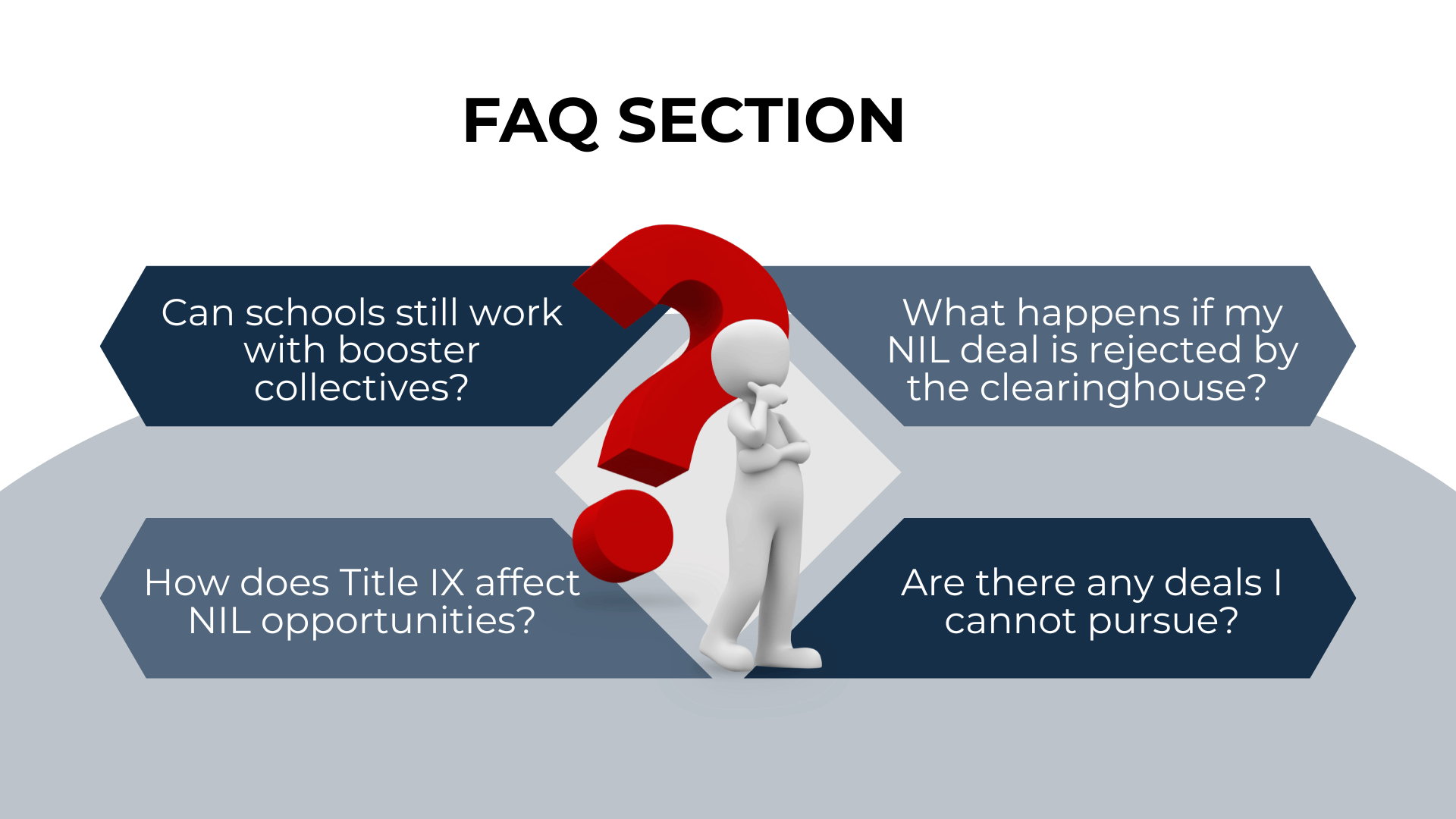
Q: What happens if my NIL deal is rejected by the clearinghouse? A: You can appeal through arbitration, providing additional evidence like emails or contracts to support the deal’s legitimacy. Unapproved deals may lead to ineligibility or fines, so it’s crucial to work through the appeals process.
Q: Can schools still work with booster collectives? A: Yes, but with restrictions. Collectives must ensure their deals serve legitimate business purposes and meet fair market value standards. The days of unchecked booster payments are over.
Q: How does Title IX affect NIL opportunities? A: Schools must ensure proportionate NIL opportunities between male and female athletes. This doesn’t mean identical payments but requires equal access to resources and support.
Q: Are there any deals I cannot pursue? A: While the settlement doesn’t specify prohibited categories, some states may have restrictions on certain endorsements. Always check with your compliance office before pursuing any opportunity.
Conclusion: Your Next Steps Toward NIL Success
The NIL compliance rules for 2025 represent both tremendous opportunity and significant responsibility. Success requires understanding the rules, maintaining meticulous records, and working closely with compliance professionals.
Don’t let the complexity of these regulations prevent you from maximizing your NIL potential. The right legal guidance can make the difference between missed opportunities and sustainable success.
Take Action Today: If you’re an athlete, parent, or institution navigating these new waters, professional legal counsel can provide the clarity and confidence you need. Contact our experienced NIL attorneys for a consultation to ensure you’re positioned for success while maintaining full compliance.
Don’t wait until you face a compliance issue—proactive planning is your best defense and your greatest opportunity. Schedule your consultation today and step confidently into the new era of college athletics.